GS 2: Social JusticeGS 3: EconomyGS 1: Indian SocietyGS 2: GovernancePrelims
As home care needs rise, insurance gaps widen, Pg2
India's burgeoning elderly population faces a critical home care crisis, as insurance models fail to cover post-hospitalization needs, burdening families with lakhs in out-of-pocket expenses.
Practice MCQs
767 Students attempted
Key Highlights:
- India's health insurance system largely overlooks home-based care, despite rising demand from an aging population and increasing disease burden.
- Life expectancy in India has risen to 72 years in 2024, with the senior citizen population projected to reach 347 million by 2050.
- The Indian home healthcare market is expected to grow from $16.3 billion in 2025 to $74.57 billion by 2034.
- Families face significant out-of-pocket expenses, often ₹30,000 to ₹1 lakh monthly, for post-hospitalization home care.
- Existing domiciliary hospitalization provisions are narrow, restrictive, and often excluded by insurers due to verification challenges.
- There is a critical shortage of qualified and trained home healthcare professionals, leading to unregulated and often substandard services.
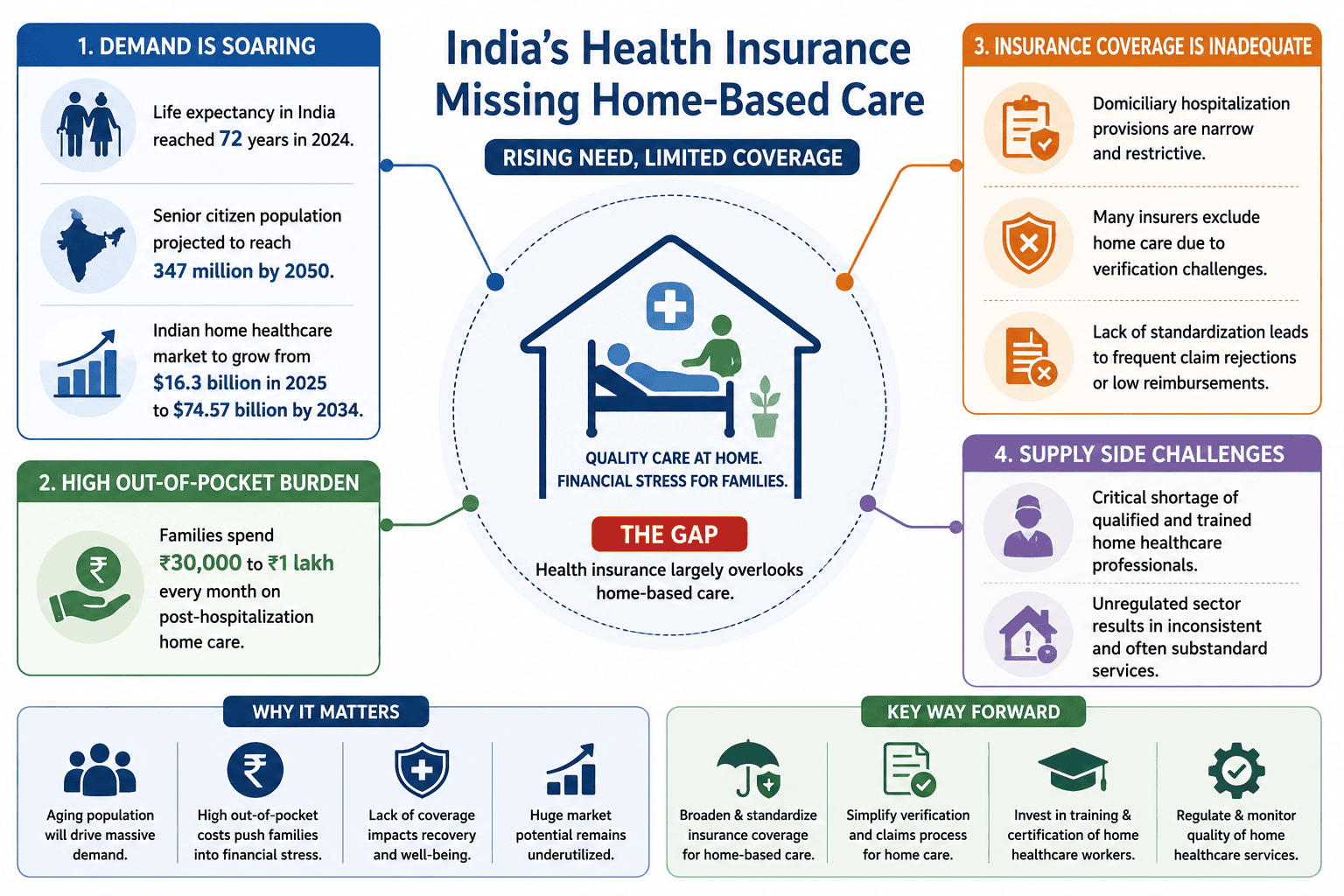
Health Insurance.png
Detailed Insights:
- The current healthcare system primarily focuses on acute care and hospitalizations, neglecting long-term chronic conditions and rehabilitation needs at home.
- Lack of home care coverage leads to compromised recovery, avoidable complications, and increased hospital readmissions, paradoxically spiking overall healthcare costs.
- Many families are forced to give up jobs to care for relatives, causing immense socio-economic and psychological stress.
- Experts advocate for expanding insurance policies to cover home-based care, drawing parallels with long-term care insurance models in countries like Japan and Germany.
- The National Accreditation Board for Hospitals and Healthcare (NABH) accreditation for home care organizations is suggested to standardize and improve service quality.
- Kerala has initiated a government-approved six-month Caregiver Certificate Course to professionalize home nursing care and provide dignified employment.
- NGOs like Self Employed Women’s Association (SEWA), in collaboration with Pallium India, are training women for professional palliative and nursing care.
- Policy recommendations include training workers, ensuring wage guarantees, setting safety rules, providing financial aid for family caregivers, and establishing respite care provisions.
Key Concepts Involved:
- Domiciliary Hospitalization: A specific, narrow health insurance provision for short-term home care, requiring a doctor's certification.
- National Accreditation Board for Hospitals and Healthcare (NABH): An autonomous body under the Quality Council of India that accredits healthcare organizations.
- Caregiver Certificate Course: A vocational training program aimed at professionalizing home-based nursing and palliative care services.
- Self Employed Women’s Association (SEWA): A trade union of poor, self-employed women workers in India, often involved in social welfare initiatives.

SuperKalam is your personal mentor for UPSC preparation, guiding you at every step of the exam journey.
Download the App


STUDY RESOURCES
CONTACT US
ⓒ Snapstack Technologies Private Limited