GS 2: PolityGS 1: Indian SocietyEthics
Balancing faith, dignity and constitutional rights, Pg8
Supreme Court to review Sabarimala verdict amid debate on essential religious practices versus constitutional values and individual dignity.
Practice MCQs
739 Students attempted
Key Highlights:
- In September 2018, the Supreme Court allowed women of all ages to enter the Sabarimala temple in Kerala, sparking protests.
- Review petitions seeking to overturn the 2018 verdict will be heard by the Supreme Court.
- The original ruling had a 4:1 majority, with a dissenting opinion from Justice Indu Malhotra.
- The court ruled that the ban on women violated their right to freedom of religion.
Detailed Insights:
- The core issue revolves around balancing freedom of religion with individual dignity and constitutional rights.
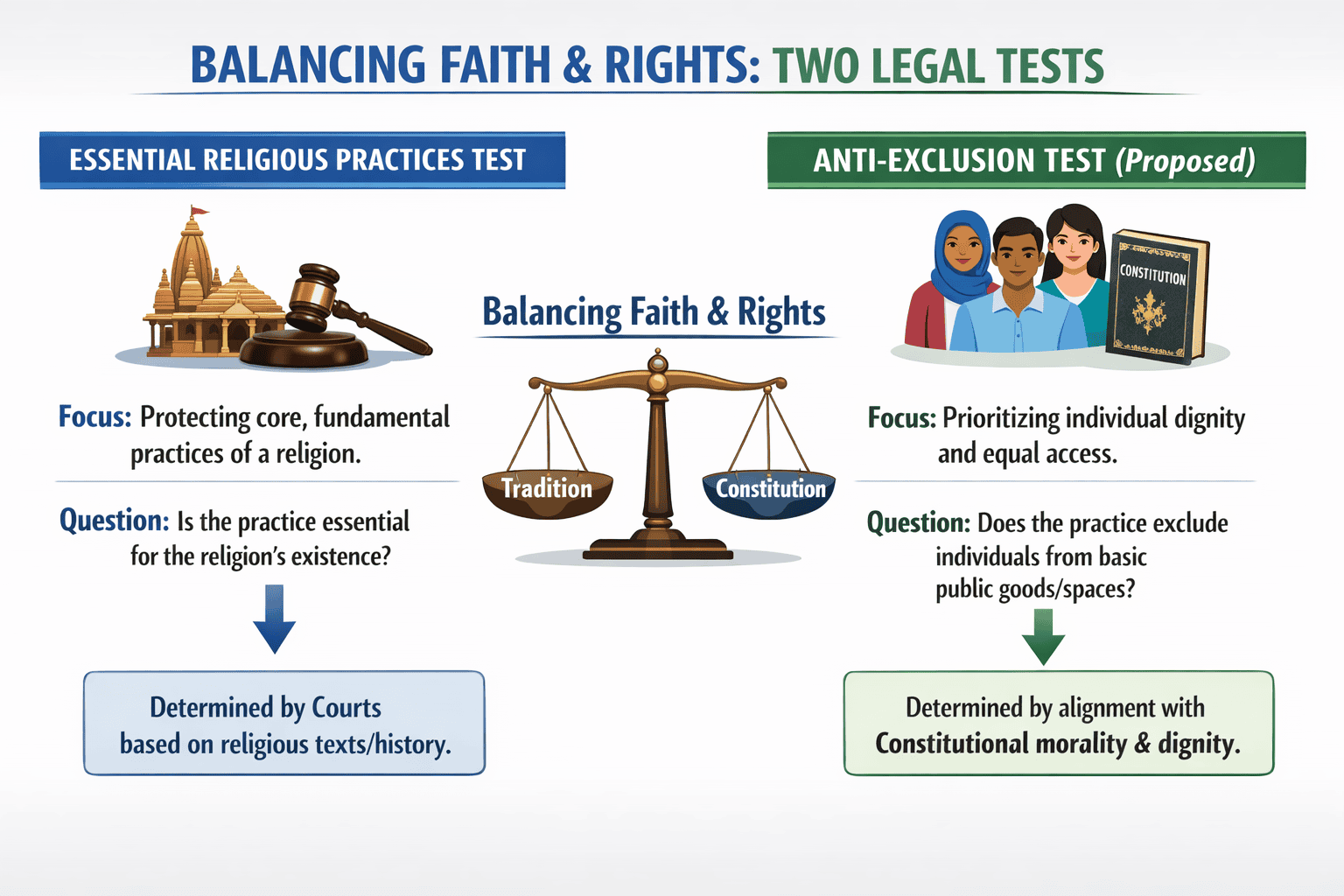
- The Supreme Court has historically used an "essential religious practices test" to determine justifiable state intervention in religious matters.
- Justice Chandrachud proposed an "anti-exclusion test," prioritizing individual dignity and access to basic goods over religious practices that exclude.
- The "anti-exclusion test" assesses whether a practice's consequences align with constitutional guarantees of equal treatment.
- The upcoming hearings could impact various religious controversies, including excommunication within the Dawoodi Bohra community and the rights of Parsi women.
- The Constitution recognizes both individual religious freedom and the rights of religious denominations, subject to public order, morality, and health.
- The "anti-exclusion test" seeks to ensure that religious autonomy does not lead to systematic exclusion from spaces integral to a life of dignity.
Key Concepts Involved:
- Essential Religious Practices: A test used by courts to determine if a religious practice is essential to a religion and deserving of protection.
- Anti-Exclusion Test: A proposed legal standard that prioritizes individual dignity and equal access over religious practices that exclude.
- Freedom of Religion: The constitutional right to practice one's faith, subject to public order, morality, health, and other fundamental rights.
Essential Religious Practices

SuperKalam is your personal mentor for UPSC preparation, guiding you at every step of the exam journey.
Download the App


STUDY RESOURCES
CONTACT US
ⓒ Snapstack Technologies Private Limited