GS 2: Social JusticeGS 3: Science & TechnologyGS 2: GovernancePrelims
A jab well done, Pg8
India rolls out nationwide HPV vaccination for 14-year-old girls, aiming to combat cervical cancer amidst vaccine hesitancy concerns.
Practice MCQs
739 Students attempted
Key Highlights:
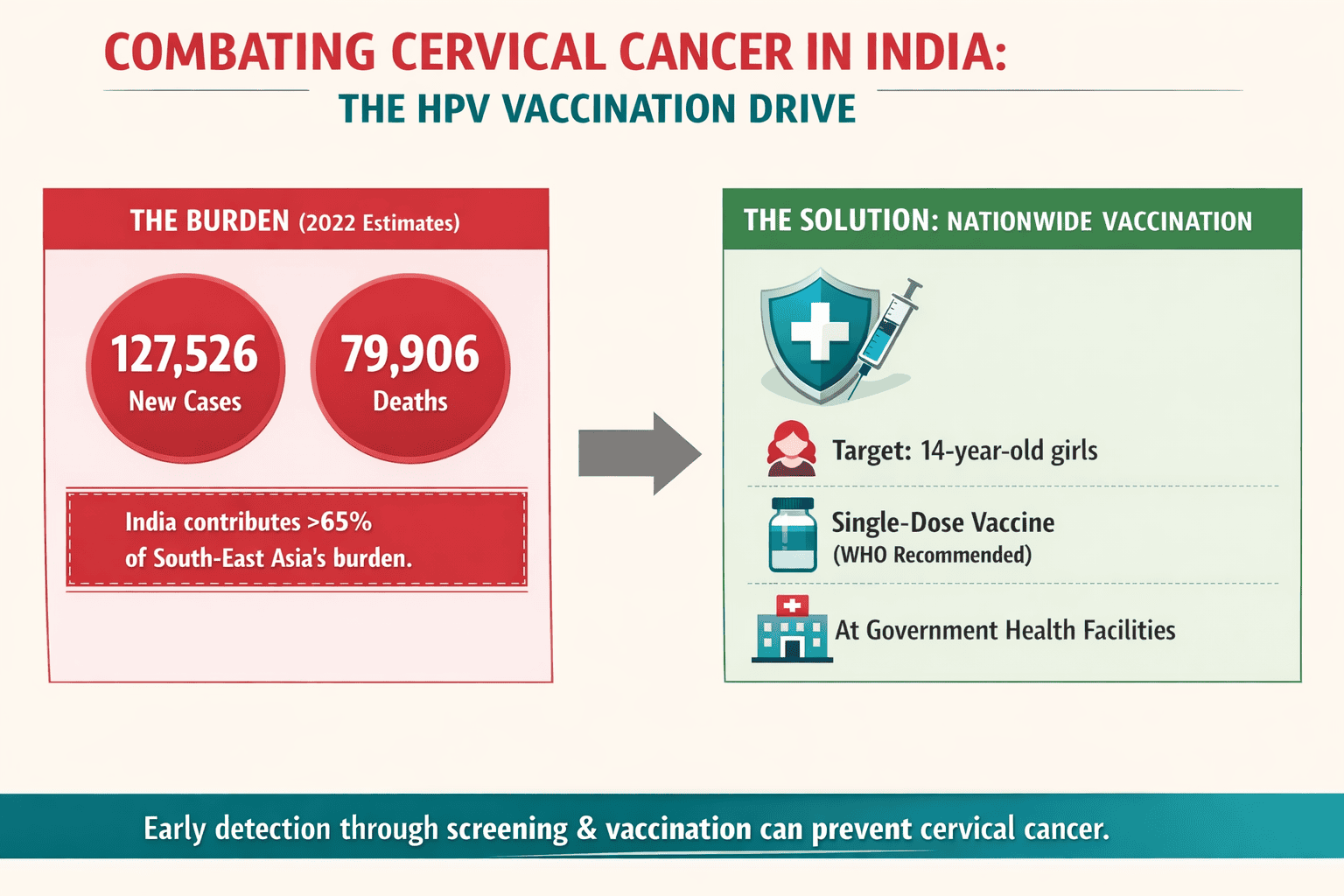
- India is introducing a nationwide Human Papillomavirus (HPV) vaccination programme for girls aged 14.
- The HPV vaccination will occur at government health facilities with trained medical officers.
- A single-dose vaccine, as recommended by the World Health Organization (WHO), will be used.
- In 2022, India had an estimated 127,526 new cases and 79,906 deaths from cervical cancer.
- National screening coverage remains low, with only 1.9% of women aged 30-49 being tested.
Detailed Insights:
- HPV vaccination and regular screening can largely prevent cervical cancer, and early detection enables a cure.
- Over 90 countries globally implement single-dose HPV vaccination schedules, showing reductions in HPV infection and cervical cancer.
- The South-East Asia Region (SEARO) has the second-highest cervical cancer incidence, with India contributing over 65% of the burden.
- An earlier HPV vaccine trial in 2009-10 in Andhra Pradesh and Gujarat saw seven girls' deaths, though likely unrelated to the vaccine.
- The government needs to ensure a working cold chain for vaccine storage, transparency, and meticulous reporting of Adverse Events Following Immunisation (AEFI).
Key Concepts Involved:
- HPV (Human Papillomavirus): A common virus that can cause cervical cancer.
- Cervical Cancer: A type of cancer that occurs in the cells of the cervix.
- AEFI (Adverse Events Following Immunisation): Any untoward medical occurrence which follows immunization.
HPV in India

SuperKalam is your personal mentor for UPSC preparation, guiding you at every step of the exam journey.
Download the App


STUDY RESOURCES
CONTACT US
ⓒ Snapstack Technologies Private Limited