GS 3: Environment & EcologyGS 3: EconomyGS 2: GovernancePrelims
Kingmakers: meet the insects that make India’s favourite mangoes, Pg2
Pesticides imperil India's ₹2.6 lakh crore mango industry as vital insect pollinators face severe threats, new study reveals.
Practice MCQs
760 Students attempted
Key Highlights:
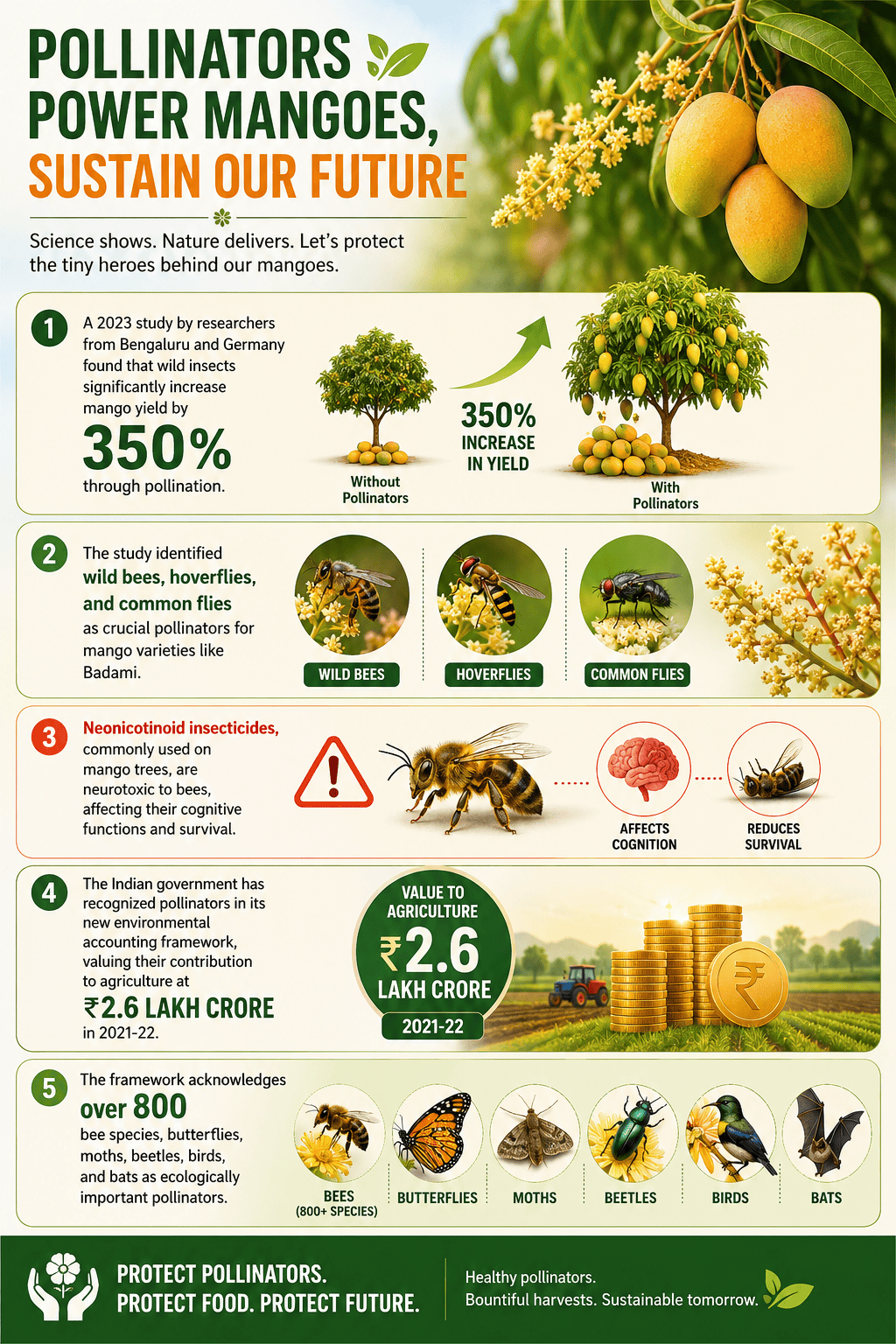
- A 2023 study by researchers from Bengaluru and Germany found that wild insects significantly increase mango yield by 350% through pollination.
- The study identified wild bees, hoverflies, and common flies as crucial pollinators for mango varieties like Badami.
- Neonicotinoid insecticides, commonly used on mango trees, are neurotoxic to bees, affecting their cognitive functions and survival.
- The Indian government has recognized pollinators in its new environmental accounting framework, valuing their contribution to agriculture at ₹2.6 lakh crore in 2021-22.
- The framework acknowledges over 800 bee species, butterflies, moths, beetles, birds, and bats as ecologically important pollinators.
Kingmakers.png
Detailed Insights:
- Mango trees bloom between December and March, producing thousands of small, cream-colored flowers on structures called panicles.
- Pollen transfer between male, female, and hermaphrodite flowers is essential for mango formation, primarily facilitated by insects.
- The study revealed that barring crawling insects like ants also led to a drop in mango yields, highlighting their role as "messy pollinators".
- Non-native bees, such as European honey bees (Apis mellifera), despite their abundance, were found to be less effective pollinators for mangoes compared to native species.
- Native bees transfer pollen between orchards, leading to higher yields of full and juicy fruits, unlike non-native bees that often stay within the same orchard.
- Pesticide use results in a three-way loss for farmers: cost of pesticides, loss of pollinators, and reduced fruit yield (up to 30% lighter fruits observed).
- Monoculture farms are more susceptible to pest attacks and consequently suffer greater pollinator loss.
- Solutions include using bee-safe pesticides and timing sprays to avoid peak pollinator activity, practices already adopted in some Western countries.
- The environmental accounting framework aims to nudge policy towards active pollinator protection through farm and landscape-level changes.
- Recommendations include increasing natural and semi-natural areas near orchards, such as native forest patches and wildflower strips, to attract wild insects.
- In May, stingless bees in Peru were granted legal rights to exist, thrive, and be represented in court, setting a precedent for pollinator conservation.
Key Concepts Involved:
- Pollination: The transfer of pollen from the anther to the stigma of a flower, enabling fertilization and fruit production.
- Neonicotinoid Insecticides: A class of neurotoxic pesticides that negatively impact the central nervous system of insects, including beneficial pollinators.
- Monoculture Farming: The agricultural practice of growing a single crop or raising a single type of livestock on a large area, often leading to increased pest susceptibility.
- Environmental Accounting Framework: A system that integrates environmental assets and services into national economic accounts to measure their monetary value and impact.

SuperKalam is your personal mentor for UPSC preparation, guiding you at every step of the exam journey.
Download the App


STUDY RESOURCES
CONTACT US
ⓒ Snapstack Technologies Private Limited