GS 3: Environment & EcologyGS 2: GovernanceEthics
The judicial push for environmental CSR, Pg7
Supreme Court mandates environmental CSR, shifting focus from charity to constitutional duty for ecological restoration and corporate accountability.
Practice MCQs
739 Students attempted
Key Highlights:
- India's Companies Act, 2013 mandated profit-sharing for social good, but environmental needs are underfunded in Corporate Social Responsibility (CSR).
- The Supreme Court has linked the right to conduct business with the responsibility to restore the planet, invoking Article 51A (g) of the Constitution.
- CSR data reveals skewed funding, with only 7-9% allocated to the environment over the past seven years, while sectors like education and healthcare receive much higher allocations.
- India aims to restore 26 million hectares of degraded land by 2030, but private companies have contributed only 2% to the 9.8 million hectares restored so far.
Detailed Insights:
- Despite India's commitment to net-zero emissions by 2070 and increasing climate challenges, environmental needs are underrepresented in CSR funding.
- The Supreme Court's observations arose from the neglect of the habitats of the Great Indian Bustard by energy firms, leading to a mandate for environmental spending.
- Corporations often view environmental crises as distant threats, preferring social projects with quick visibility and easy reporting over long-term restoration projects.
- Successful environmental initiatives like Mahindra’s ‘Project Hariyali’ and ITC’s forestry program demonstrate the potential for large-scale restoration with measurable impact.
- A significant 'restoration gap' exists between industrial damage and investment in restoration, exacerbated by an urban bias, lack of practical policies, and poor collaboration.
- A transition to an 'ecosystem recovery' strategy is needed, replacing conventional auditing with time-bound restoration initiatives and ecological assessments.
- Establishing a restoration trust or escrow fund can address long-term financing challenges and ensure continuity for landscape-scale restoration projects.
Key Concepts Involved:
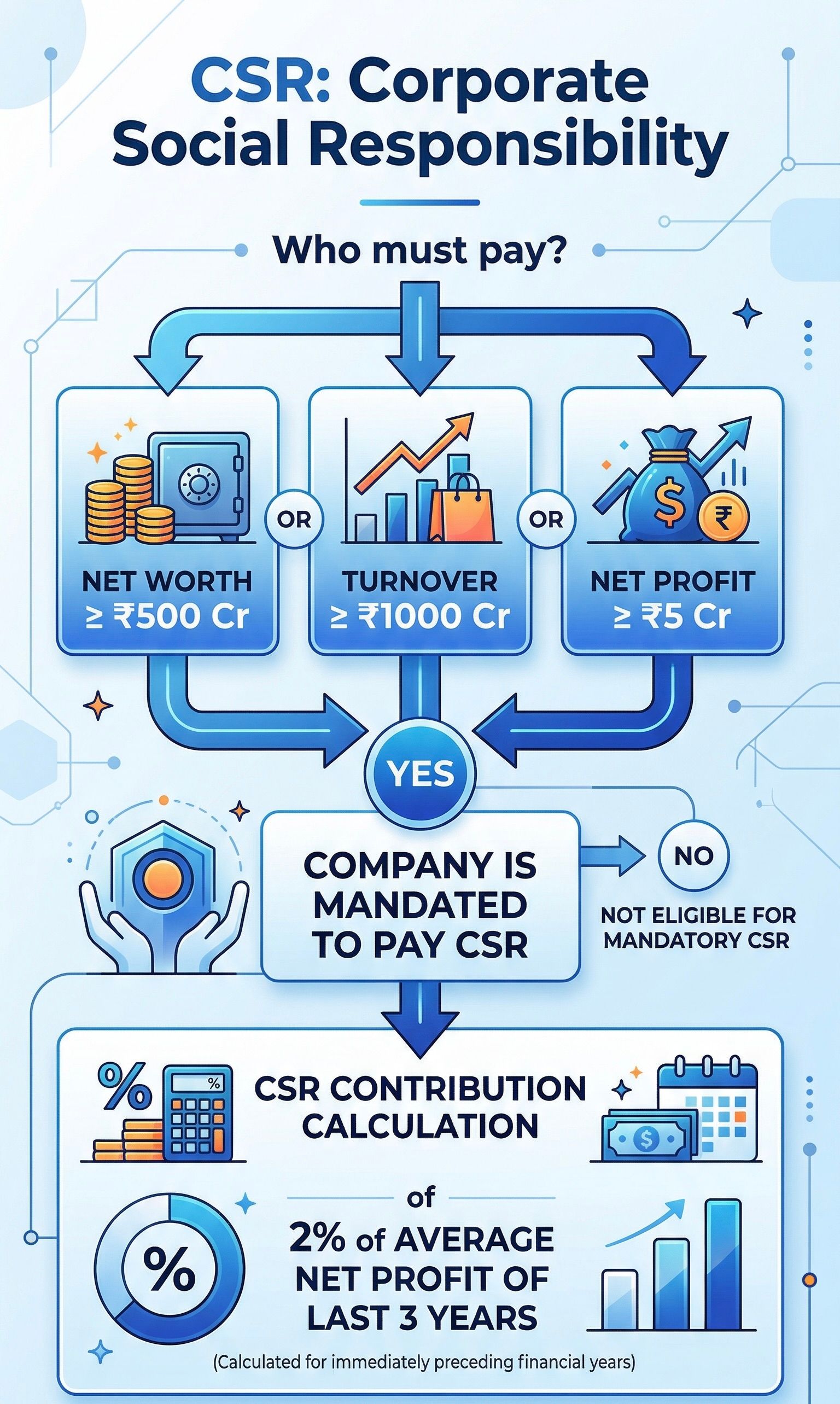
- Corporate Social Responsibility (CSR): A self-regulating business model that helps a company be socially accountable to itself, its stakeholders, and the public.
- Article 51A (g): A constitutional provision that emphasizes the duty of every citizen to protect and improve the natural environment.
- Ecosystem-centric: A business approach that prioritizes the health and sustainability of the environment alongside shareholder interests.
CSR

SuperKalam is your personal mentor for UPSC preparation, guiding you at every step of the exam journey.
Download the App


STUDY RESOURCES
CONTACT US
ⓒ Snapstack Technologies Private Limited