GS 2: GovernanceGS 3: EconomyEthics
Deepening global corruption as a pointer for India, Pg6
Corruption Perceptions Index 2025 reveals India's stagnant score of 39, highlighting governance challenges amidst economic growth.
Practice MCQs
739 Students attempted
Key Highlights:
- The Corruption Perceptions Index (CPI) 2025 reveals a global increase in corruption, with the global average score dropping to 42 out of 100.
- India's CPI score remains stagnant at 39, ranking 91 out of 182 countries, indicating persistent issues in transparency and accountability.
- Corruption is estimated to cost India 0.5% to 1.5% of its GDP annually, impacting resources for development.
- India's digital infrastructure and initiatives like Direct Benefit Transfer (DBT) and Goods and Services Tax (GST) show promise in reducing corruption.
Detailed Insights:
- The CPI measures perceived levels of public sector corruption, influencing investment decisions and sovereign risk assessments.
- Corruption increases transaction uncertainty, raises compliance expenses, and diverts entrepreneurial energy, reducing productivity and discouraging investment.
- India's complex compliance architecture, with over 26,000 imprisonment provisions in business regulations, creates opportunities for rent-seeking.
- Digital initiatives like RBI-DPI, which stood at 516.76 in September 2025, have shown improvements in reducing leakages in welfare schemes.
- Strengthening institutional independence, transparency frameworks, and regulatory predictability are crucial for improving India's CPI score.
- Addressing corruption is essential for India to achieve its goal of becoming a $10 trillion economy and attaining developed nation status by 2047.
Key Concepts Involved:
- Corruption Perceptions Index (CPI): A global index that measures the perceived levels of public sector corruption in different countries.
- Direct Benefit Transfer (DBT): A mechanism to transfer subsidies directly to beneficiaries' bank accounts, reducing leakages and improving efficiency.
- Goods and Services Tax (GST): An indirect tax levied on the supply of goods and services, promoting formalization and traceability in the tax system.
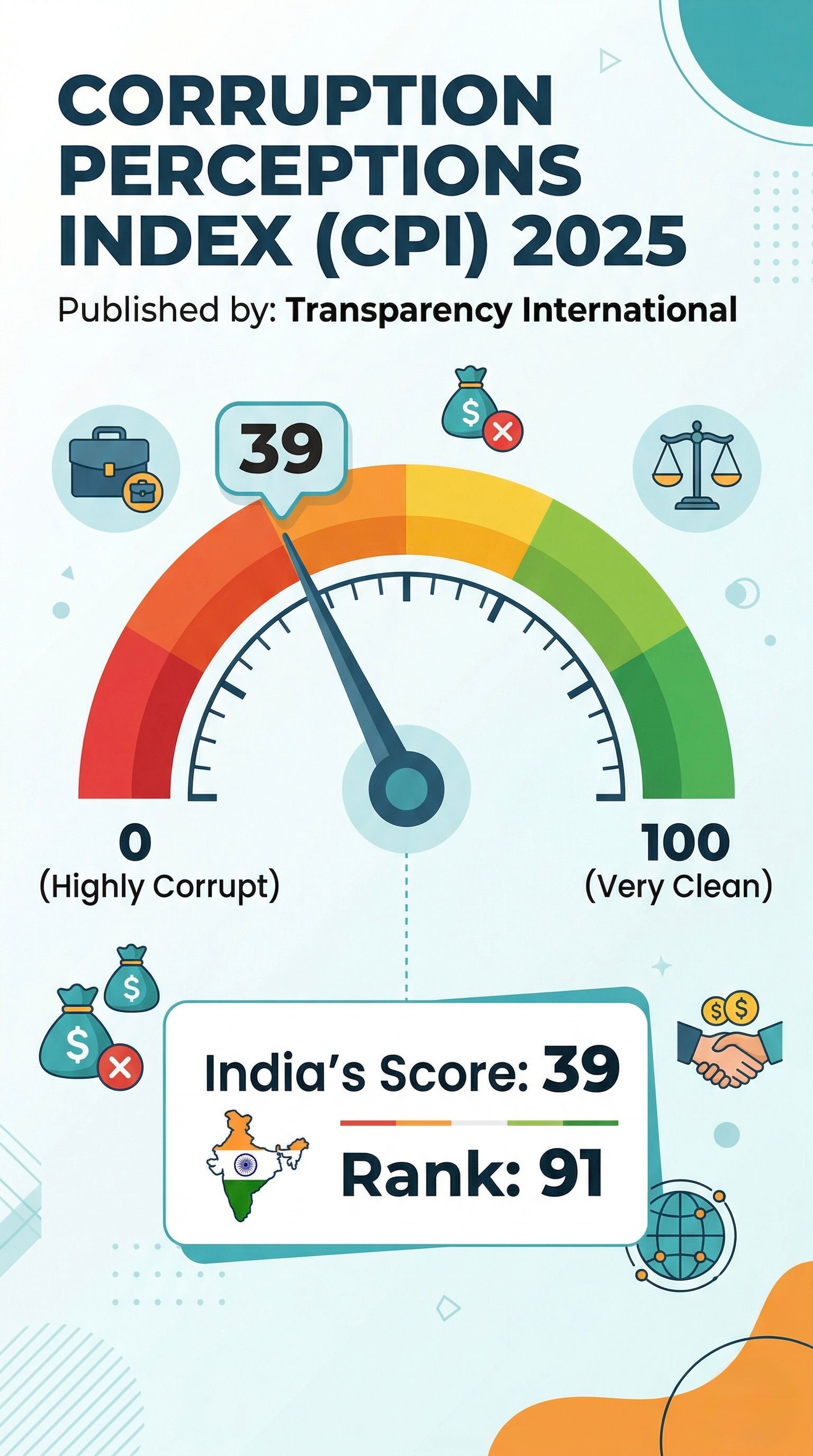
The Corruption Perceptions Index (CPI)

SuperKalam is your personal mentor for UPSC preparation, guiding you at every step of the exam journey.
Download the App


STUDY RESOURCES
CONTACT US
ⓒ Snapstack Technologies Private Limited