GS 2: International RelationsGS 3: Economy
U.S. sanctions Russian oil majors; Indian refiners poised to cut buy, Pg1
US sanctions on Russian oil majors trigger global price surge; Indian refiners poised to cut imports amid geopolitical pressure.
Practice MCQs
775 Students attempted
Key Highlights:
- U.S. imposed sanctions on Russian oil giants Rosneft and Lukoil, causing global oil prices to rise by 3%.
- President Trump claimed India agreed to reduce Russian oil purchases to "almost nothing" by year-end .
- Indian refiners, including Reliance Industries, are set to curtail Russian oil imports to comply with U.S. sanctions.
- The U.S. Treasury has set a deadline of November 21 for companies to end transactions with the sanctioned Russian oil producers.
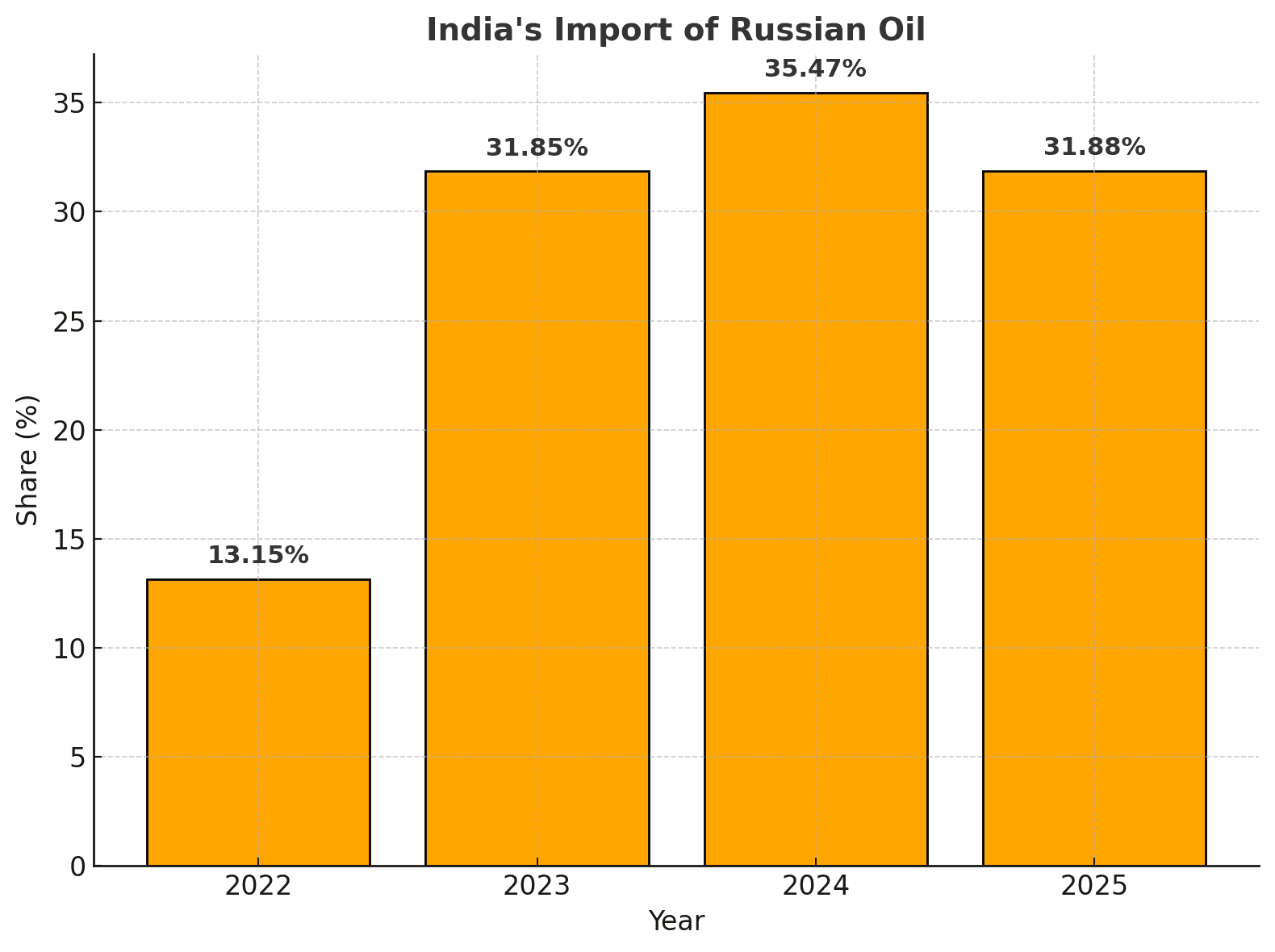
Indian import of Russian Oil .png
Detailed Insights:
- The U.S. sanctions aim to cut off funding for Russia's war in Ukraine, as oil and gas revenues constitute a quarter of Russia's budget.
- Reliance Industries, a major buyer of Russian crude, intends to reduce or halt imports, including those under its deal with Rosneft.
- Nayara Energy, with Rosneft as a major shareholder, also purchases oil from the Russian company.
- State-owned Indian refineries are reviewing trade documents to ensure no direct supply from Rosneft and Lukoil, with expectations of a significant cut in imports.
- Russia's oil and gas revenue has decreased by 21% year-on-year, highlighting the impact of sanctions and global market dynamics.
- The ongoing war in Ukraine is now in its fourth year, underscoring the long-term implications of the conflict on global energy markets and geopolitical relations.
Key Concepts Involved:
- Sanctions: Economic penalties imposed by a country or international body against another, targeting specific sectors or entities.
- Crude Oil: Unrefined petroleum, a key global commodity and a major source of revenue for oil-producing nations.
- Refiners: Companies that process crude oil into usable products like gasoline, diesel, and jet fuel.

SuperKalam is your personal mentor for UPSC preparation, guiding you at every step of the exam journey.
Download the App


STUDY RESOURCES
CONTACT US
ⓒ Snapstack Technologies Private Limited