GS 3: Environment & EcologyGS 3: EconomyGS 2: GovernancePrelims
High heat, Pg8
India grapples with early, intense heatwaves impacting health, economy, and elections, demanding robust heat action plans and climate adaptation strategies.
Practice MCQs
739 Students attempted
Key Highlights:
- Early heat alerts issued by the India Meteorological Department for central and south India, including Vidarbha, Chhattisgarh, Odisha, Telangana, and Kerala.
- Parts of Andhra Pradesh and Gujarat have exceeded 40°C in early April, with Tamil Nadu and Karnataka nearing that mark.
- 247 billion work-hours were lost in 2024 due to heat, impacting construction and agriculture sectors, according to The Lancet Countdown Global Report.
- Experts criticize Heat Action Plans (HAPs) for focusing on emergency response rather than structural interventions like urban re-greening.
Detailed Insights:
- The early arrival of high heat is attributed to a lack of western disturbances and thunderstorms, lower convective activity, and residual effects of the previous El Niño.
- Persistently high heat increases the risk of death from cardiovascular causes and accelerates crop maturity, threatening food security and increasing inflationary pressure.
- Heat stress poses an ongoing concern for farmers during the rabi harvest, potentially impacting agricultural output and livelihoods.
- The Election Commission of India extended polling booth hours during the 2024 general election due to heat concerns, but more proactive measures are needed.
- Heat Action Plans (HAPs) require long-term funding and should focus on structural changes and mandatory heat-safety legislation for informal sector workers.
- Public systems should implement mobile health units and doorstep delivery of essential services during peak heat to reduce barriers to access.
- Colombia has formed a coalition of about 50 countries to accelerate the transition away from fossil fuels, and India should consider joining for access to climate adaptation finance.
Key Concepts Involved:
- Heat Action Plan (HAP): A plan to reduce the impact of heat waves by implementing measures such as public awareness campaigns and providing access to cooling centers.
- El Niño: A climate pattern describing the unusual warming of surface waters in the central and eastern tropical Pacific Ocean.
- Western Disturbances: Storms originating in the Mediterranean region that bring winter rainfall to northern India.
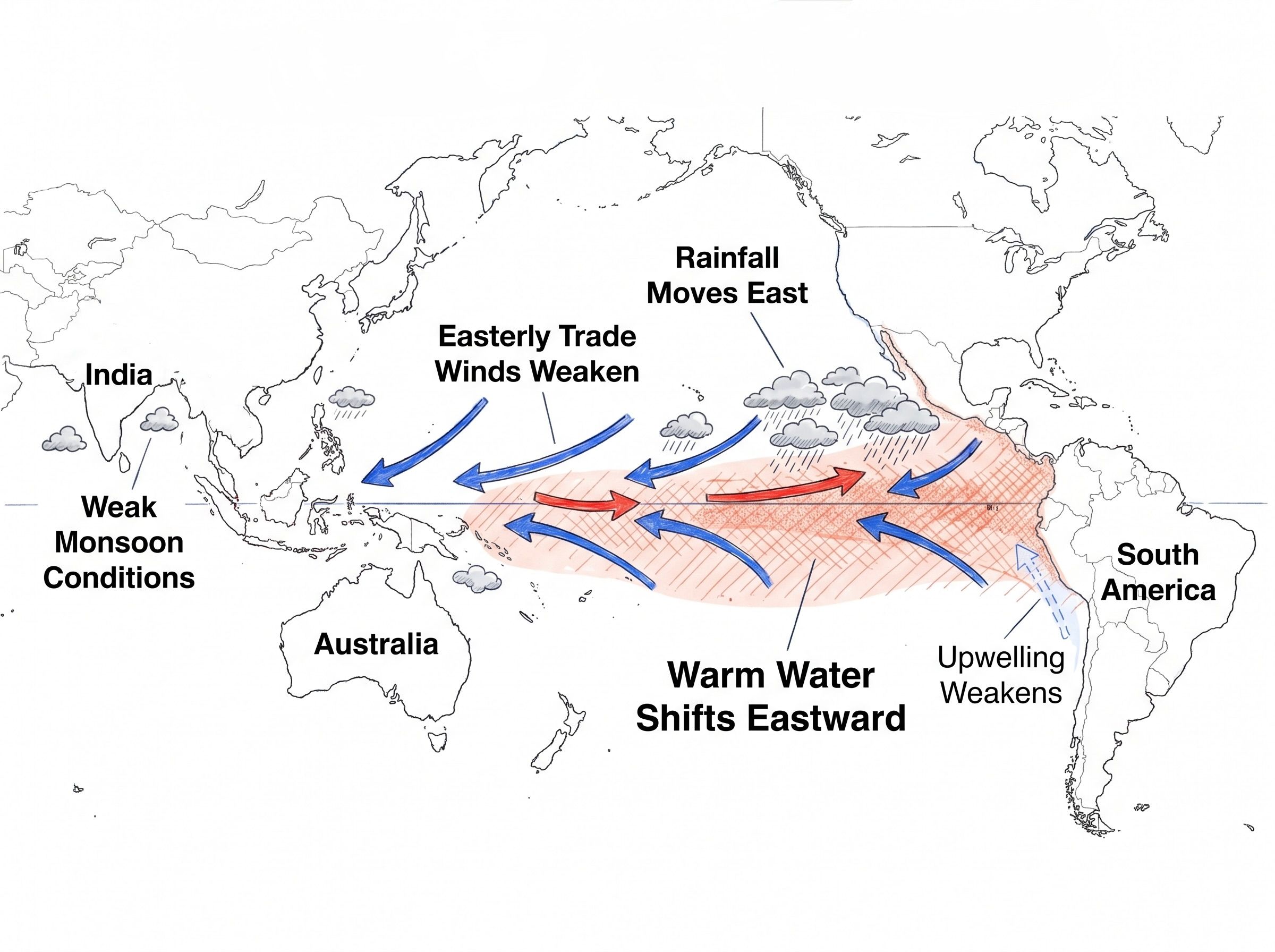
El Nino

SuperKalam is your personal mentor for UPSC preparation, guiding you at every step of the exam journey.
Download the App


STUDY RESOURCES
CONTACT US
ⓒ Snapstack Technologies Private Limited