GS 2: International RelationsGS 3: EconomyPrelims
'Can we turn over a new leaf?': Vance, Ghalibaf lead talks, Pg1
US and Iran hold high-stakes talks in Switzerland for nuclear deal and regional peace, as Trump threatens 'harder' strikes and Strait of Hormuz tolls.
Practice MCQs
739 Students attempted
Key Highlights:
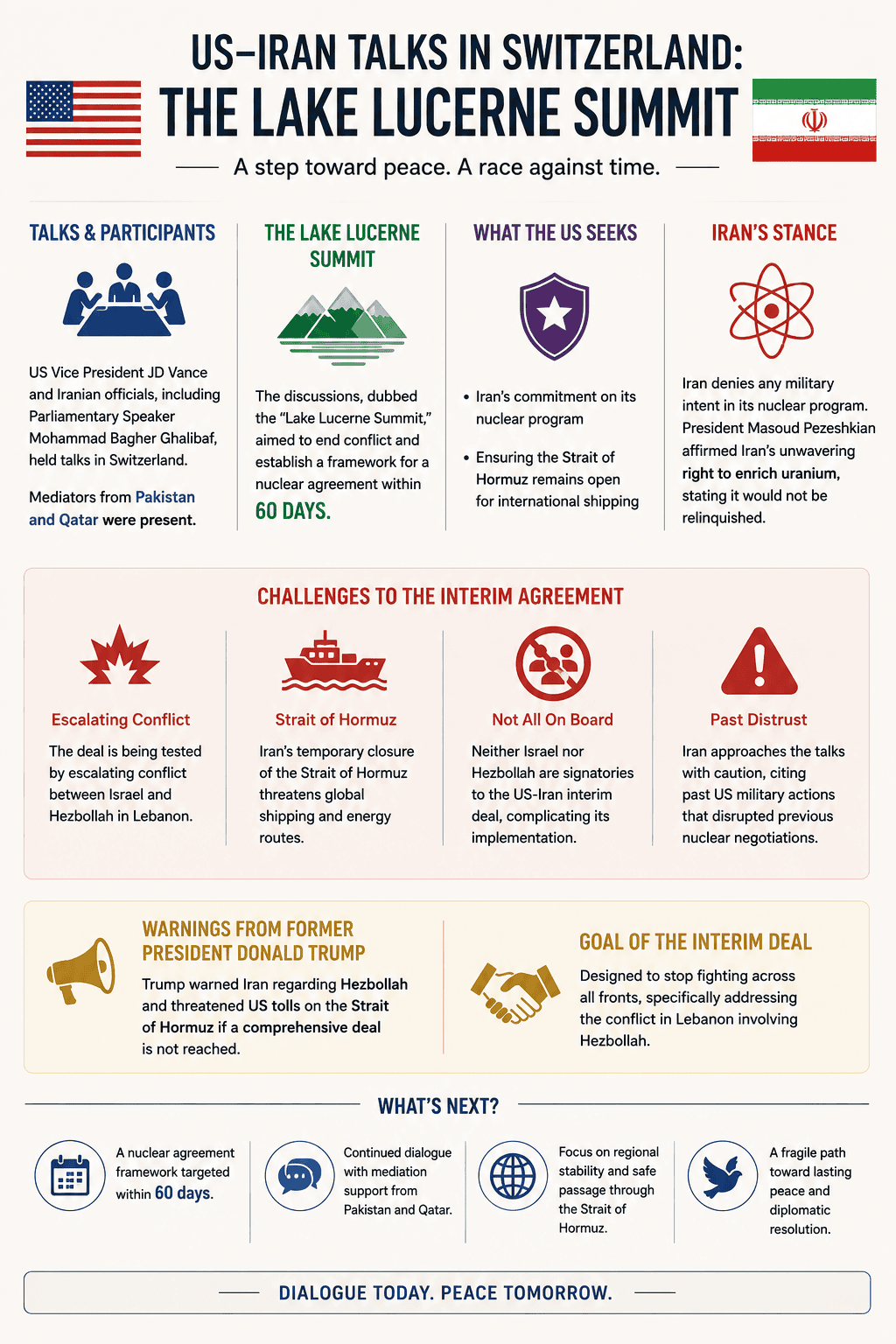
- US Vice President JD Vance and Iranian officials, including Parliamentary Speaker Mohammad Bagher Ghalibaf, held talks in Switzerland to build on an interim deal.
- The discussions, dubbed the "Lake Lucerne Summit," aimed to end conflict and establish a framework for a nuclear agreement within 60 days.
- Mediators from Pakistan and Qatar were present during the direct engagement between the US and Iranian negotiating teams.
- The US seeks Iran's commitment on its nuclear program and ensuring the Strait of Hormuz remains open for international shipping.
- The interim agreement is being tested by escalating conflict between Israel and Hezbollah in Lebanon and Iran's temporary closure of the Strait of Hormuz.
US-Iran.png
Detailed Insights:
- The interim deal is designed to stop fighting across all fronts, specifically addressing the conflict in Lebanon involving Hezbollah.
- The US expresses concerns that Iran's nuclear program could be used for military purposes, a claim Iran consistently denies.
- Iranian President Masoud Pezeshkian affirmed Iran's unwavering right to enrich uranium, stating it would not be relinquished.
- Former President Donald Trump issued warnings to Iran regarding Hezbollah and threatened US tolls on the Strait of Hormuz if a comprehensive deal is not reached.
- Neither Israel nor Hezbollah are signatories to the US-Iran interim deal, complicating its implementation and regional stability.
- Iran is approaching the current negotiations with caution, citing past instances where US military actions disrupted previous nuclear talks.
Key Concepts Involved:
- Interim Deal: A temporary agreement designed to de-escalate conflict and provide a framework for future comprehensive negotiations.
- Nuclear Non-Proliferation: International efforts to prevent the spread of nuclear weapons and related technology.
- Strait of Hormuz: A critical chokepoint for global oil shipments, connecting the Persian Gulf to the open ocean.
- Hezbollah: A Shia Islamist political party and militant group based in Lebanon, backed by Iran.

SuperKalam is your personal mentor for UPSC preparation, guiding you at every step of the exam journey.
Download the App


STUDY RESOURCES
CONTACT US
ⓒ Snapstack Technologies Private Limited