GS 2: International RelationsGS 3: EconomyPrelims
What does the U.S.-Iran agreement say?, Pg13
US and Iran ink MoU ending war, lifting sanctions; Israel's fierce opposition creates Washington rift, complicating nuclear and regional stability.
Practice MCQs
731 Students attempted
Key Highlights:
- The U.S. and Iran signed a Memorandum of Understanding (MoU) on June 15, following a 40-day war, to establish a ceasefire and initiate further negotiations.
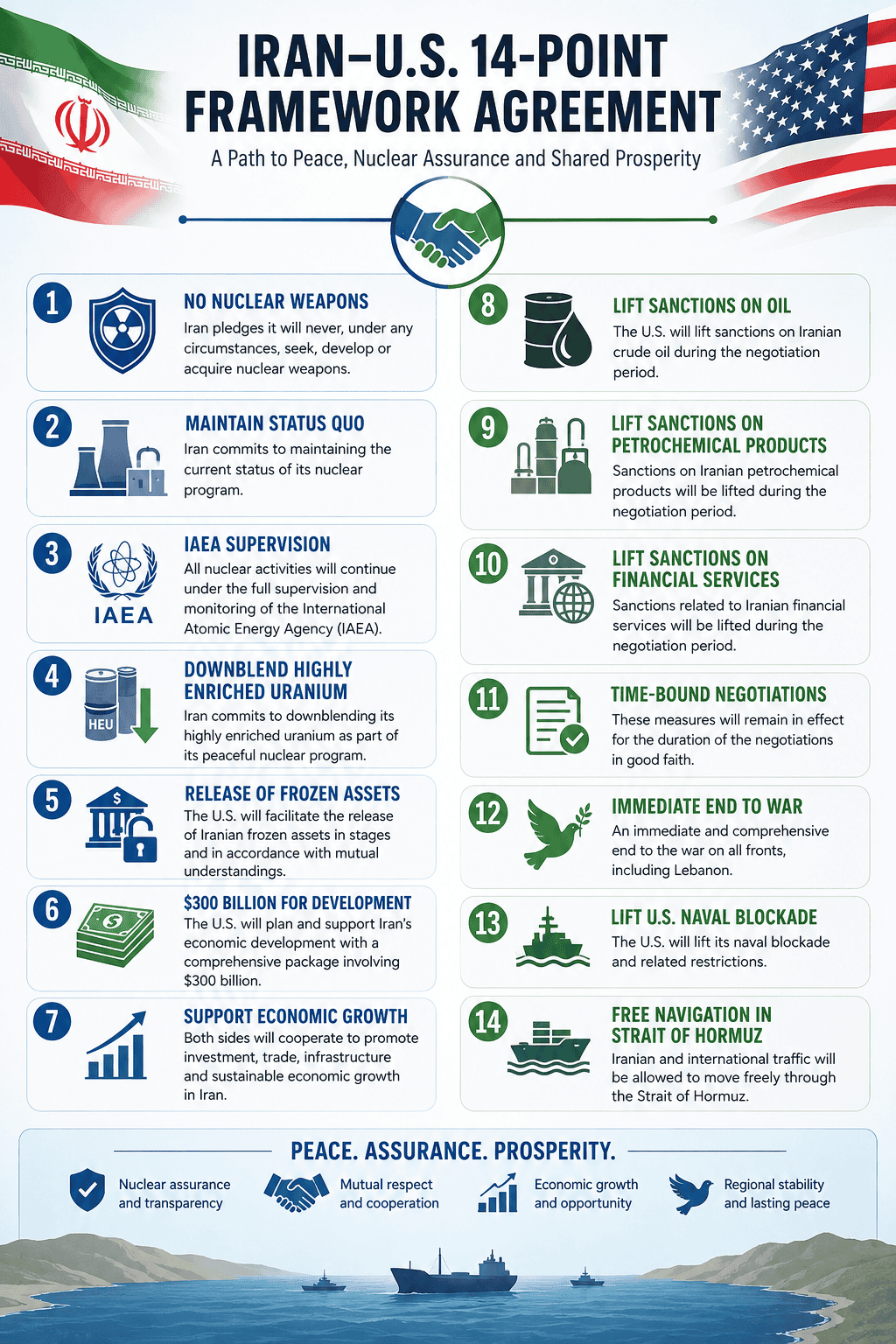
- The agreement calls for a ceasefire on all fronts, including Lebanon, and mutual respect for sovereignty.
- The U.S. lifted its naval blockade of Iranian ports, while Iran agreed to remove restrictions and mines from the Strait of Hormuz.
- Iran pledged not to develop nuclear weapons and agreed to "downblend" its enriched uranium under International Atomic Energy Agency (IAEA) supervision.
- Israel strongly opposes the deal, viewing it as a strategic setback and fearing a stronger Iran.
US-Iran.png
Detailed Insights:
- The MoU aims to end post-ceasefire skirmishes and pave the way for a final settlement on contentious issues.
- Iran's frozen funds, estimated at $24 billion, are contingent on progress in the second phase of talks, with the U.S. clarifying no American money will be paid.
- The U.S. committed to working with regional countries on a $300 billion plan for Iran's reconstruction, accessible upon a final settlement.
- Both sides agreed to maintain the status quo, with Iran not expanding its nuclear program and the U.S. not imposing new sanctions or deploying more troops.
- The U.S. will issue waivers for the export of Iranian crude oil, petroleum products, and associated services like banking and insurance.
- Israel's war on Iran, which began on February 28, aimed for regime change and destruction of nuclear capabilities, but Iran survived the bombing.
- The situation in Lebanon remains a flashpoint, with Israeli troops occupying parts of Southern Lebanon, a stronghold of Hezbollah.
- Iran's highly enriched uranium (HEU) and its right to enrich uranium for civilian purposes are key sticking points for future negotiations.
Key Concepts Involved:
- Memorandum of Understanding (MoU): A formal agreement between two or more parties, indicating an intended common line of action.
- International Atomic Energy Agency (IAEA): An autonomous international organization that seeks to promote the peaceful use of nuclear energy and to inhibit its use for any military purpose.
- Strait of Hormuz: A strategically vital strait connecting the Persian Gulf with the Gulf of Oman and the Arabian Sea, crucial for global oil shipments.
- Downblending: The process of diluting highly enriched uranium with natural or low-enriched uranium to reduce its enrichment level, making it unsuitable for weapons.

SuperKalam is your personal mentor for UPSC preparation, guiding you at every step of the exam journey.
Download the App


STUDY RESOURCES
CONTACT US
ⓒ Snapstack Technologies Private Limited