GS 3: Environment & EcologyGS 2: International RelationsGS 3: EconomyPrelims
The key hurdle to climate targets: Electrification, Pg18
Turkey proposes ambitious 35% global electrification target by 2035 at COP31, highlighting critical hurdle for climate goals amid current 20% rate.
Practice MCQs
724 Students attempted
Key Highlights:
- Turkey proposed at mid-year climate talks in Bonn that the world should aim to meet at least a third of its energy needs from electricity by 2035.
- This target, if adopted, would be an outcome of COP31, which Turkey will co-host with Australia in Antalya in 2026.
- Currently, only about 20% of the world's final energy consumption is met through electricity.
- The proposal is based on a roadmap by the International Renewable Energy Agency (IRENA), which states 35% electrification by 2035 is essential for the 1.5-degrees Celsius pathway.
Electricity Proposal.png
Detailed Insights:
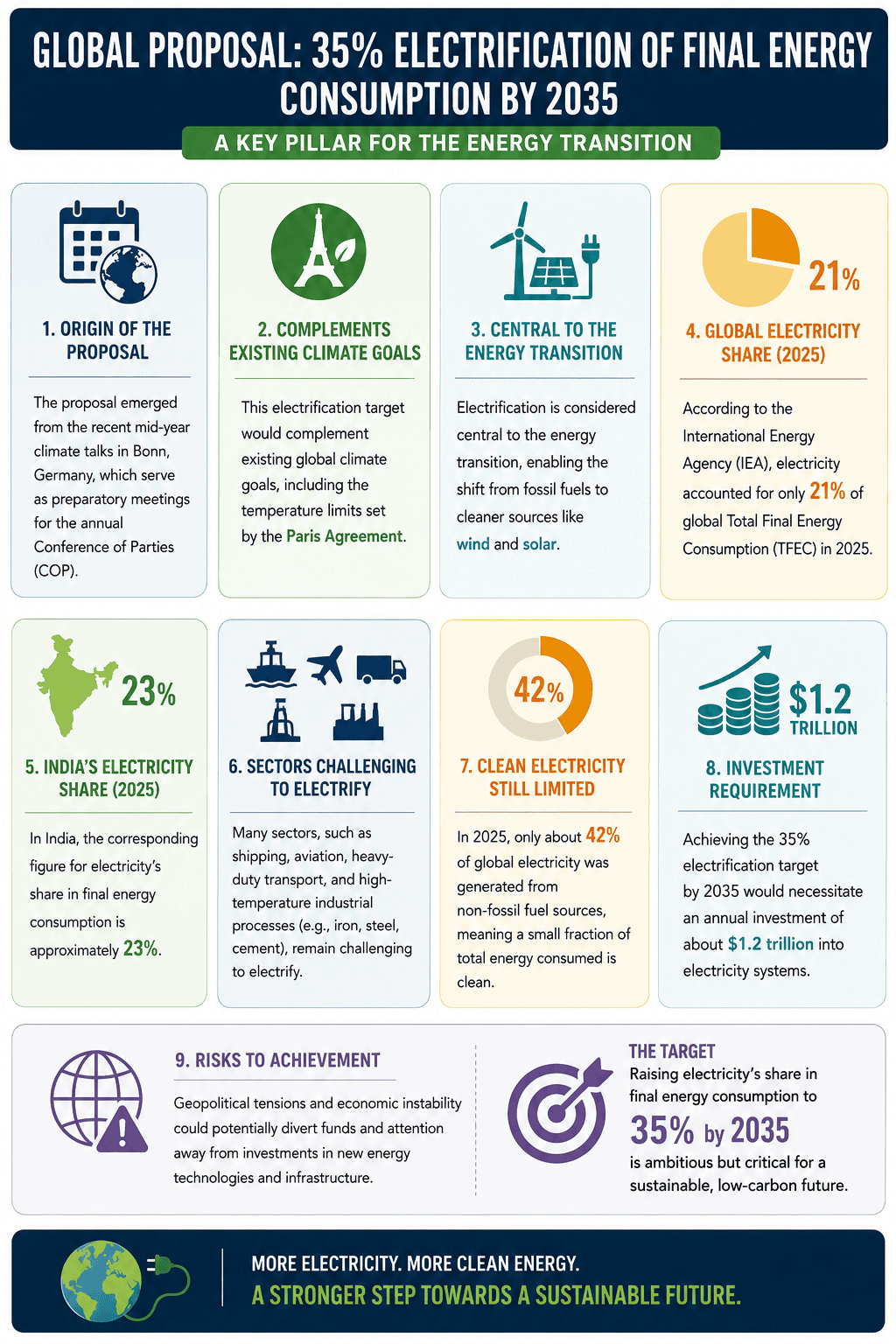
- The proposal emerged from the recent mid-year climate talks in Bonn, Germany, which serve as preparatory meetings for the annual Conference of Parties (COP).
- This electrification target would complement existing global climate goals, including the temperature limits set by the Paris Agreement.
- Electrification is considered central to the energy transition, enabling the shift from fossil fuels to cleaner sources like wind and solar.
- According to the International Energy Agency (IEA), electricity accounted for only 21% of global Total Final Energy Consumption (TFEC) in 2025.
- In India, the corresponding figure for electricity's share in final energy consumption is approximately 23%.
- Many sectors, such as shipping, aviation, heavy-duty transport, and high-temperature industrial processes (e.g., iron, steel, cement), remain challenging to electrify.
- In 2025, only about 42% of global electricity was generated from non-fossil fuel sources, meaning a small fraction of total energy consumed is clean.
- Achieving the 35% electrification target by 2035 would necessitate an annual investment of about $1.2 trillion into electricity systems.
- Geopolitical tensions and economic instability could potentially divert funds and attention away from investments in new energy technologies and infrastructure.
Key Concepts Involved:
- Electrification: The process of converting energy uses from direct combustion of fuels to electricity as the primary energy carrier.
- Energy Transition: The global shift from fossil fuel-based energy systems to renewable and sustainable energy sources to mitigate climate change.
- Total Final Energy Consumption (TFEC): The total energy consumed by end-users in all sectors, excluding energy used in the production, transformation, and delivery of energy itself.
- Paris Agreement: An international treaty adopted in 2015 under the United Nations Framework Convention on Climate Change (UNFCCC), aiming to limit global warming to well below 2°C, preferably to 1.5°C.
- COP (Conference of Parties): The supreme decision-making body of the United Nations Framework Convention on Climate Change (UNFCCC), meeting annually to assess progress on climate change.

SuperKalam is your personal mentor for UPSC preparation, guiding you at every step of the exam journey.
Download the App


STUDY RESOURCES
CONTACT US
ⓒ Snapstack Technologies Private Limited