GS 1: Physical GeographyGS 3: Environment & EcologyPrelims
A weakening wind, PgII
Global warming weakens sea-land breezes near coastal cities, exacerbating urban heat and air pollution, study warns of 4.5x faster decline by 2050.
Practice MCQs
891 Students attempted
Key Highlights:
- A Nature Climate Change study reveals that warming oceans are weakening sea-land breezes in coastal megacities.
- Global warming reduces the thermal contrast between land and sea, diminishing the strength and frequency of these breezes.
- Historical ocean warming has already decreased breeze days by 3% in cities like London, New York, Shanghai, and Buenos Aires.
- By 2050, sea breezes could weaken 4.5 times faster if carbon emissions remain high, threatening the health and habitability of coastal cities.
Detailed Insights:
- Sea-land breezes are crucial for cooling urban areas and improving air quality by circulating air between the sea and land.
- The weakening of these breezes can lead to more intense urban heat islands and increased air pollution, posing risks to public health.
- Reduced thermal contrast disrupts the natural air circulation patterns, impacting the climate and weather conditions of coastal regions.
- Continued high carbon emissions exacerbate the problem, accelerating the weakening of sea breezes and increasing the vulnerability of coastal cities.
Scientific/Technical Concepts Involved:
- Sea-land breeze: Air circulation pattern caused by temperature differences between land and sea.
- Thermal contrast: The temperature difference between land and sea surfaces.
- Urban heat island: Metropolitan area significantly warmer than its surrounding rural areas.
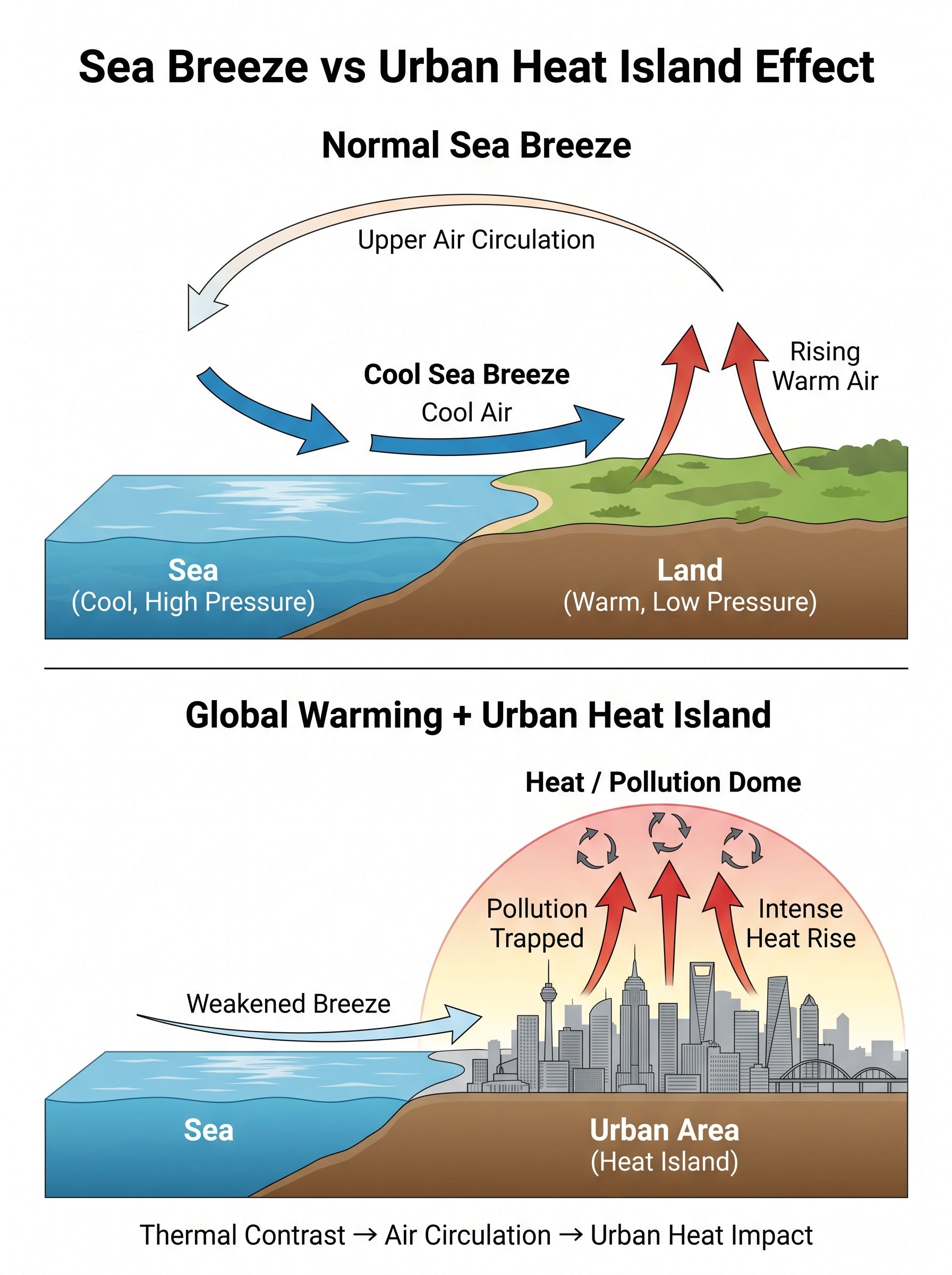
Sea Breeze
Previous8/8

SuperKalam is your personal mentor for UPSC preparation, guiding you at every step of the exam journey.
Download the App


STUDY RESOURCES
CONTACT US
ⓒ Snapstack Technologies Private Limited