GS 3: Science & TechnologyGS 2: GovernanceGS 3: Environment & EcologyGS 3: EconomyPrelims
Special regulatory relaxations unlikely for small N-reactors, Pg13
India's atomic energy regulator mandates rigorous safety and licensing for Small Modular Reactors, ensuring strict oversight despite private sector push for decarbonization.
Practice MCQs
891 Students attempted
Key Highlights:
- India's top atomic energy regulator will apply the same rigorous safety and licensing requirements to Small Modular Reactors (SMRs) as those for large nuclear reactors.
- This stance is maintained despite SMRs being promoted for their advanced designs and passive safety systems, and the government's push for private sector participation.
- The Sustainable Harnessing and Advancement of Nuclear Energy for Transforming India (SHANTI) Act, 2025, assented on December 21, 2025, opened the civil nuclear sector to private entities.
- The regulator mandates design support from foreign or domestic technology providers as a precondition for granting licenses to new entrants lacking nuclear facility experience.
SMR.png
Detailed Insights:
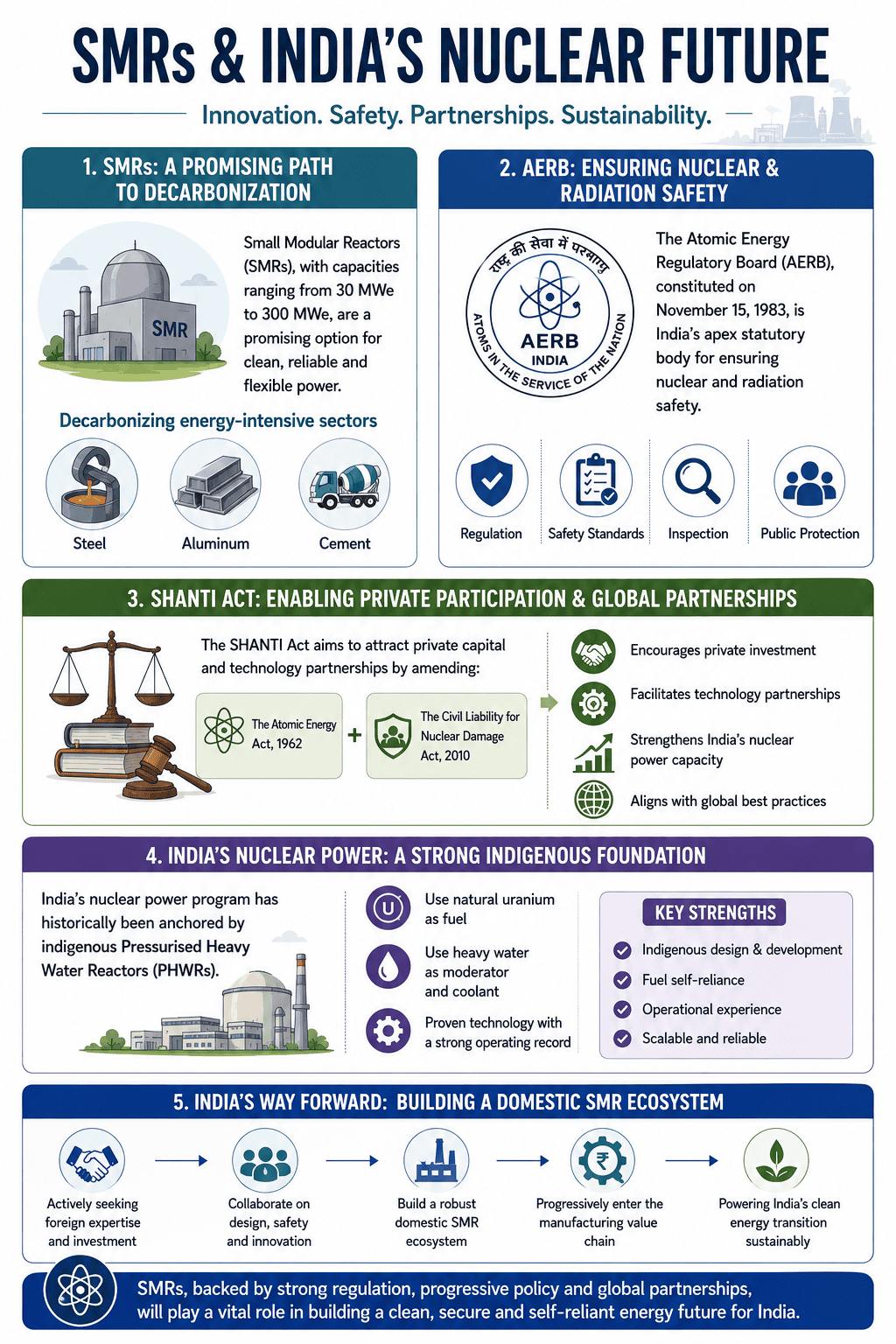
- SMRs, with capacities ranging from 30 MWe to 300 MWe, are considered a promising option for decarbonizing energy-intensive sectors like steel, aluminum, and cement.
- The Atomic Energy Regulatory Board (AERB), constituted on November 15, 1983, is India's apex authority for ensuring nuclear and radiation safety.
- The SHANTI Act aims to attract private capital and technology partnerships by amending the Atomic Energy Act, 1962, and the Civil Liability for Nuclear Damage Act, 2010.
- India's nuclear power program has historically been anchored by indigenous Pressurised Heavy Water Reactors (PHWRs), which use natural uranium and heavy water.
- India is actively seeking foreign expertise and investment to develop a domestic SMR ecosystem and progressively enter their manufacturing value chain.
Key Concepts Involved:
- Small Modular Reactors (SMRs): Advanced nuclear reactors with capacities typically up to 300 MWe, designed for modular construction, enhanced safety, and flexible deployment.
- SHANTI Act, 2025: Legislation that opened India's civil nuclear sector to private participation, amending existing nuclear laws to streamline regulations and liability.
- Atomic Energy Regulatory Board (AERB): India's apex authority for regulating nuclear and radiation safety, constituted under the Atomic Energy Act, 1962.
- Pressurised Heavy Water Reactors (PHWRs): Nuclear reactors forming the backbone of India's nuclear program, using natural uranium as fuel and heavy water as moderator and coolant.

SuperKalam is your personal mentor for UPSC preparation, guiding you at every step of the exam journey.
Download the App


STUDY RESOURCES
CONTACT US
ⓒ Snapstack Technologies Private Limited