GS 2: International RelationsGS 3: EconomyGS 3: Science & TechnologyPrelims
Iran-U.S. framework deal outlines nuclear pledge, financial relief, Pg1
U.S. and Iran forge framework deal: Tehran pledges nuclear restraint for $300 billion asset release and sanctions lift.
Practice MCQs
891 Students attempted
Key Highlights:
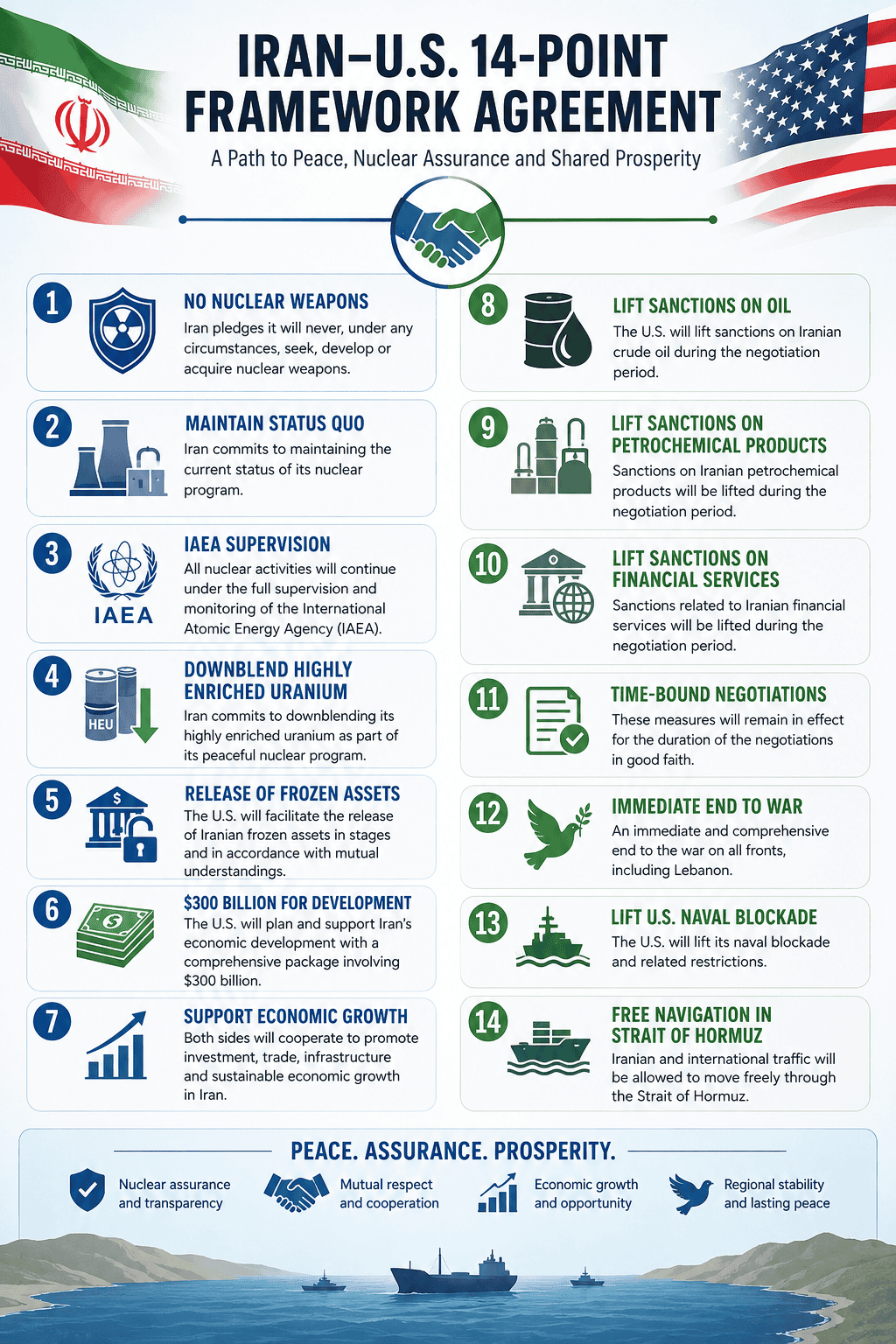
- A 14-point framework agreement between Iran and the U.S. was reported, outlining a nuclear pledge and financial relief for Iran.
- Iran has pledged never to produce nuclear weapons and to maintain the status quo on its nuclear program, with a commitment to downblend highly enriched uranium under International Atomic Energy Agency (IAEA) supervision.
- The U.S. agreed to facilitate the release of frozen Iranian assets and plan for Iran's economic development, involving $300 billion.
- The U.S. will lift sanctions on Iranian crude oil, petrochemical products, and financial services during the negotiation period.
- The draft calls for an immediate end to the war on all fronts, including Lebanon, and for the U.S. to lift its naval blockade, allowing traffic through the Strait of Hormuz.
US-Iran.png
Detailed Insights:
- The memorandum of understanding is expected to be signed in Geneva, though the draft has not been officially released.
- The agreement emphasizes mutual respect for sovereignty and non-interference in internal affairs between the U.S. and Iran.
- Iran's demands for unfreezing assets and war reparations are contentious points addressed in the leaked text.
- The U.S. and Israel have sought to remove or dilute Iran's hundreds of kilograms of highly enriched uranium.
- Traffic through the Strait of Hormuz is expected to reach pre-war volumes within 30 days, with Iran charging a fee for environmental upkeep.
Key Concepts Involved:
- Highly Enriched Uranium (HEU): Uranium processed to increase the concentration of the fissile isotope U-235, suitable for nuclear weapons.
- International Atomic Energy Agency (IAEA): An autonomous intergovernmental organization under the UN, promoting peaceful use of nuclear energy and preventing its use for military purposes.
- Sanctions: Penalties imposed by one country on another, often to compel a change in policy or behavior.
- Strait of Hormuz: A narrow, strategically important waterway connecting the Persian Gulf to the Arabian Sea, crucial for global oil shipments.

SuperKalam is your personal mentor for UPSC preparation, guiding you at every step of the exam journey.
Download the App


STUDY RESOURCES
CONTACT US
ⓒ Snapstack Technologies Private Limited