GS 2: International RelationsGS 3: Science & TechnologyGS 2: GovernancePrelims
Ebola outbreak in Congo is a global emergency, says WHO, Pg1
WHO declares Ebola outbreak in Congo a global health emergency after 300+ cases and 88 deaths, citing international spread risk.
Practice MCQs
883 Students attempted
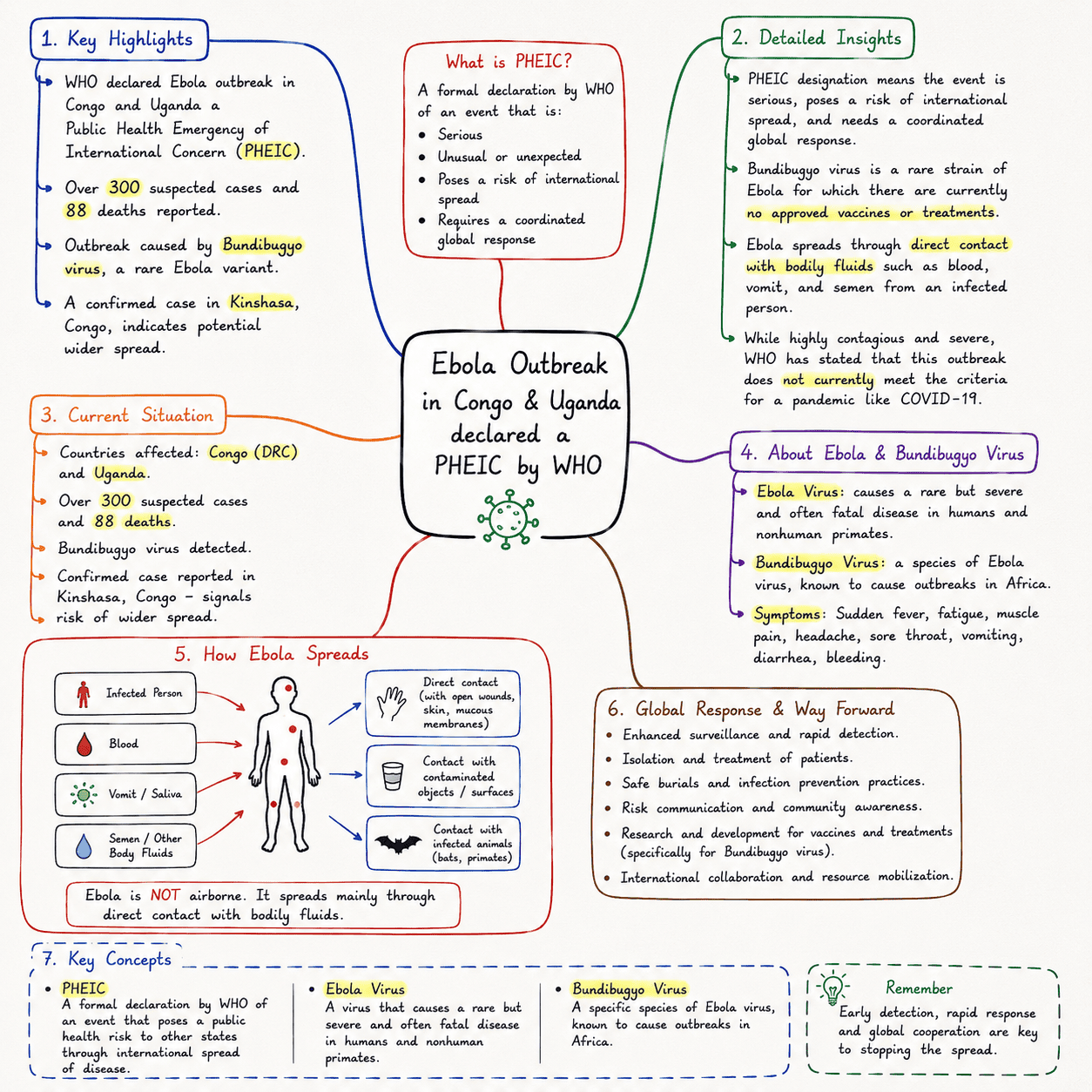
Key Highlights:
- The World Health Organization (WHO) declared the Ebola outbreak in Congo and Uganda a Public Health Emergency of International Concern (PHEIC).
- Over 300 suspected cases and 88 deaths have been reported.
- The outbreak is caused by the Bundibugyo virus, a rare Ebola variant.
- A confirmed case in Kinshasa, Congo, indicates potential wider spread.
Ebola.png
Detailed Insights:
- The Public Health Emergency of International Concern (PHEIC) designation signifies the event is serious, poses a risk of international spread, and necessitates a coordinated global response.
- The Bundibugyo virus is a rare strain of Ebola for which there are currently no approved vaccines or treatments.
- Ebola spreads through direct contact with bodily fluids, such as blood, vomit, and semen, from an infected person.
- While highly contagious and severe, the WHO has stated that this outbreak does not currently meet the criteria for a pandemic like COVID-19.
Key Concepts Involved:
- Public Health Emergency of International Concern (PHEIC): A formal declaration by the WHO of an event that poses a public health risk to other states through the international spread of disease.
- Ebola Virus: A virus that causes a rare but severe and often fatal disease in humans and nonhuman primates.
- Bundibugyo Virus: A specific species of Ebola virus, known to cause outbreaks in Africa.

SuperKalam is your personal mentor for UPSC preparation, guiding you at every step of the exam journey.
Download the App


STUDY RESOURCES
CONTACT US
ⓒ Snapstack Technologies Private Limited