GS 3: Science & TechnologyGS 3: Environment & EcologyGS 2: GovernancePrelims
Primed to treat, Pg8
Kerala's robust health system swiftly contains Nipah virus, a WHO priority pathogen, amidst ecological vulnerability and human encroachment, emphasizing 'One Health' approach.
Practice MCQs
883 Students attempted
Key Highlights:
- A single case of Nipah virus was recently reported in a 43-year-old man from Ramanattukara in Kozhikode, Kerala.
- The World Health Organization (WHO) has classified Nipah as a priority pathogen due to its high lethality and potential to cause outbreaks and pandemics.
- Kerala's robust health system successfully contained the recent case through intensive contact tracing and screening, preventing further spread.
- Nipah virus outbreaks have recurred in Kerala since 2018, with cases reported in 2019, 2021, 2023, 2024, and 2025.
- Historically, India has seen significant Nipah outbreaks in West Bengal in 2001, 2007, and most recently in January 2026.
Nipah.png
Detailed Insights:
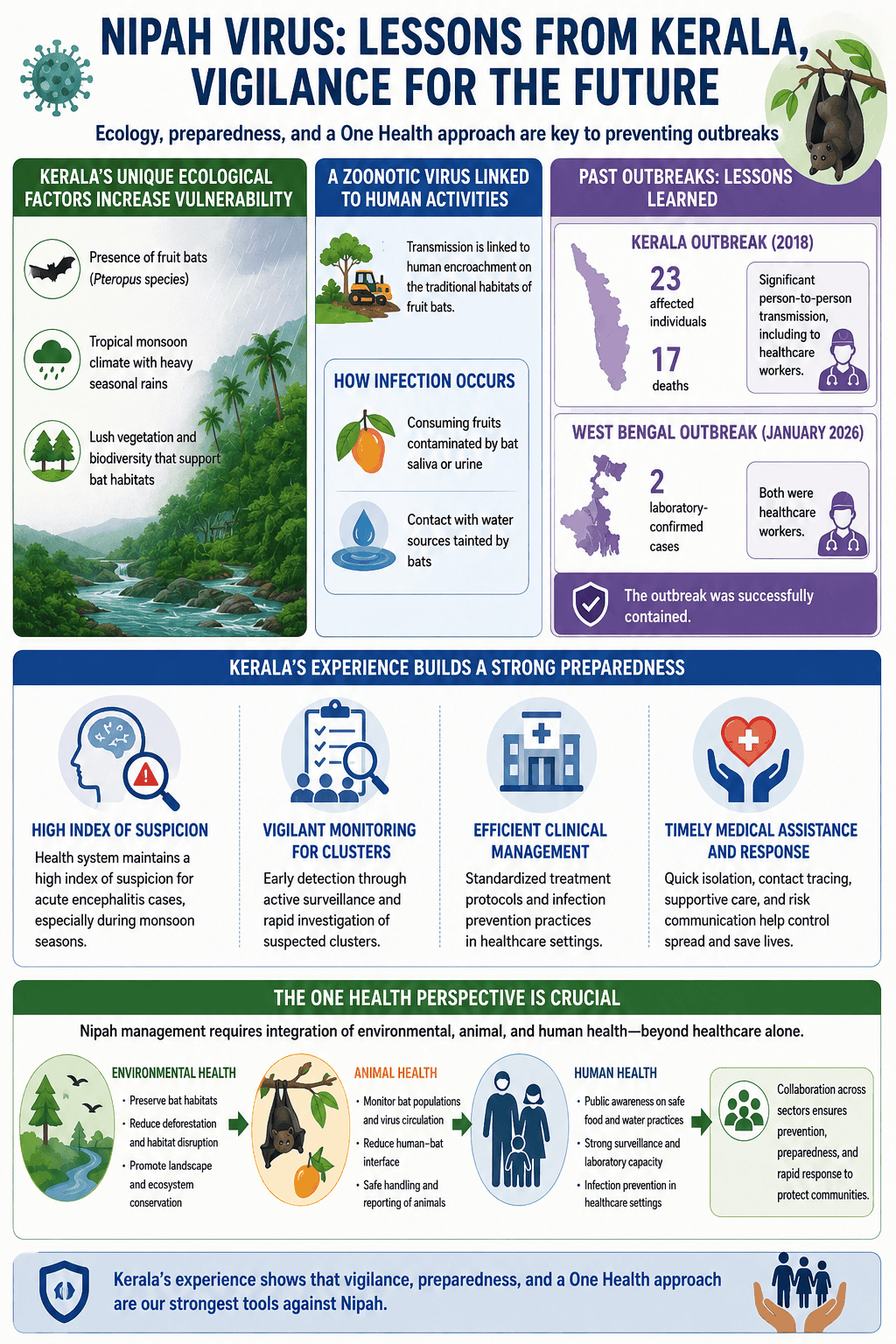
- Kerala's unique ecological factors, including the presence of fruit bats and monsoon seasons, contribute to its vulnerability to Nipah virus outbreaks.
- The virus is primarily zoonotic, with transmission linked to human activity encroaching on the traditional habitats of fruit bats.
- Infection often occurs through consuming contaminated fruits or contact with water sources tainted by bats.
- The 2018 Nipah outbreak in Kerala resulted in 17 deaths among 23 affected individuals, with significant person-to-person transmission, including to healthcare workers.
- The recent West Bengal outbreak in January 2026 involved two laboratory-confirmed cases, both healthcare workers, which were also successfully contained.
- Kerala's experience with repeated outbreaks has enabled its health system to develop strong preparedness, including a high index of suspicion for acute encephalitis cases.
- The state's protocols involve vigilant monitoring for clusters and efficient clinical management to control spread and provide timely medical assistance.
- A One Health perspective is crucial for managing Nipah, integrating environmental, animal, and human health considerations rather than focusing solely on healthcare.
Key Concepts Involved:
- Nipah Virus: A highly lethal zoonotic paramyxovirus transmitted from fruit bats, causing severe encephalitis in humans.
- Zoonotic Disease: An infectious disease that has jumped from an animal to humans.
- One Health: A collaborative, multi-sectoral approach recognizing the interconnectedness of human, animal, and environmental health.
- Priority Pathogen: A pathogen identified by WHO as posing a significant public health risk due to its potential for outbreaks and lack of countermeasures.
- Acute Encephalitis: An acute inflammation of the brain, often caused by viral infection, characterized by fever, headache, and altered mental status.

SuperKalam is your personal mentor for UPSC preparation, guiding you at every step of the exam journey.
Download the App


STUDY RESOURCES
CONTACT US
ⓒ Snapstack Technologies Private Limited