GS 2: International RelationsGS 3: EconomyPrelims
Limits of America, Pg8
US-Iran MoU ends conflict, lifts Strait of Hormuz blockade, signaling diplomatic shift after military failure, isolating Israel.
Practice MCQs
883 Students attempted
Key Highlights:
- The U.S. and Iran reached a Memorandum of Understanding (MoU) on June 15, aiming to end hostilities and lift blockades.
- This agreement followed a period of conflict initiated by the U.S. and Israel on February 28, targeting Iran's nuclear capabilities and support for non-state actors.
- The MoU includes provisions for lifting blockades in the Strait of Hormuz and the Gulf of Oman.
- The deal is expected to involve the release of some Iranian frozen assets and reparations as part of a broader regional ceasefire.
- U.S. President Donald Trump pursued this diplomatic approach despite initial military objectives and objections from Israel.
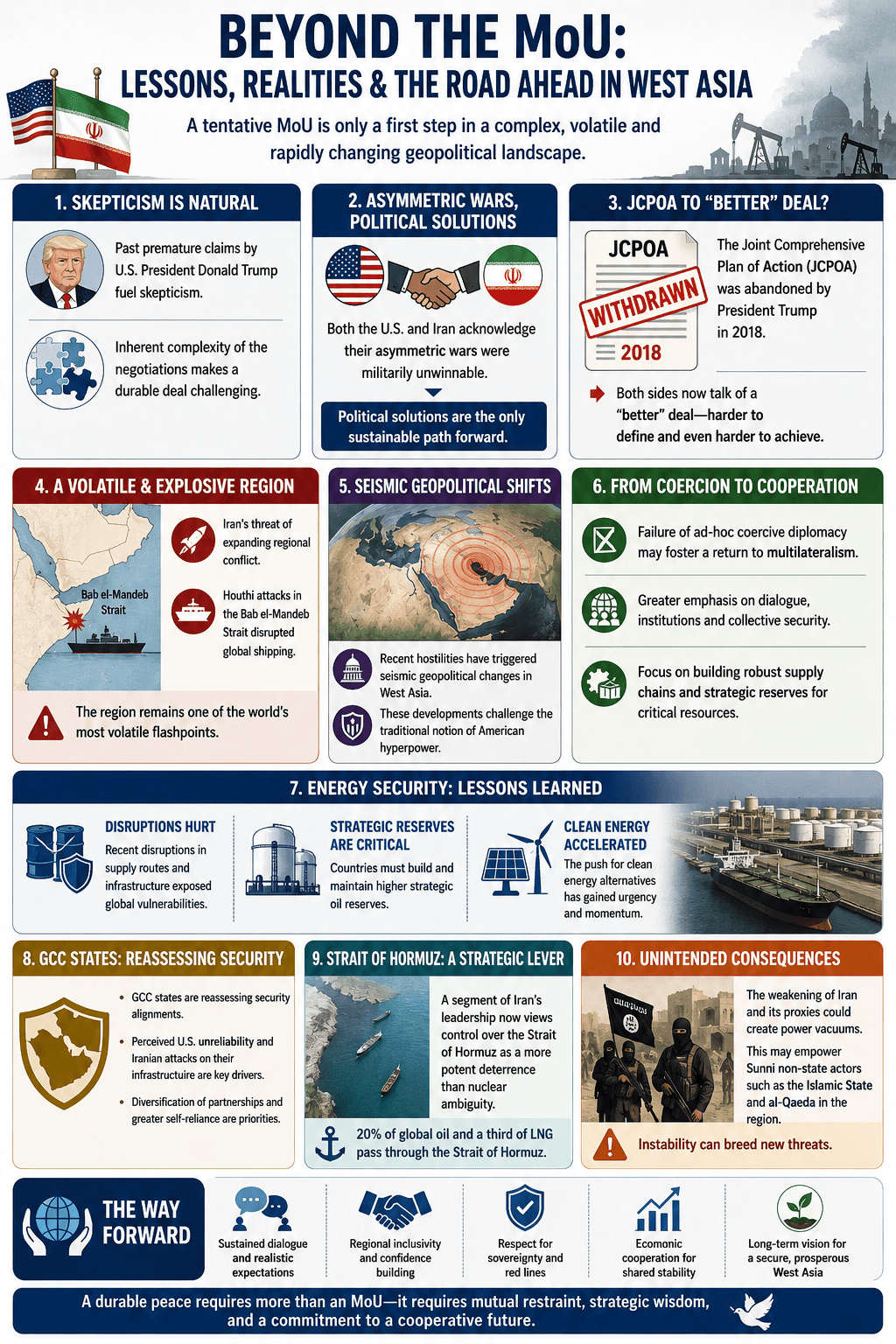
US-Iran.png
Detailed Insights:
- The initial objectives of the U.S. and Israel included regime change in Iran, dismantling its nuclear and missile programs, and curbing its support for groups like Hamas, Hezbollah, and Houthis.
- The Strait of Hormuz and Gulf of Oman are critical maritime chokepoints for global oil trade, which experienced disruptions during the conflict.
- The U.S. shift from military options to a phased diplomatic approach highlights a significant change in the regional strategic landscape.
- Iran's ability to maintain its position and control key waterways demonstrated its strategic resolve against external pressure.
- The MoU is considered a preliminary step, with core issues such as Iran's nuclear program and Western sanctions slated for future negotiations.
- Future challenges include preventing renewed hostilities between the U.S. and Iran, or Israel and Iran, and managing potential disruptions from Israel, particularly concerning Southern Lebanon.
Key Concepts Involved:
- Memorandum of Understanding (MoU): A formal agreement between parties outlining their intent to work together on a common objective.
- Strait of Hormuz: A narrow, strategically vital waterway connecting the Persian Gulf to the Gulf of Oman and the Arabian Sea.
- Frozen Assets: Financial assets belonging to a country or entity that are seized or restricted by another government, often due to sanctions.
- Regime Change: The replacement of one government or political system by another, often through external intervention or force.
- Non-state actors: Groups or entities that play a role in international relations but are not sovereign states, such as Hamas, Hezbollah, and Houthis.

SuperKalam is your personal mentor for UPSC preparation, guiding you at every step of the exam journey.
Download the App


STUDY RESOURCES
CONTACT US
ⓒ Snapstack Technologies Private Limited