GS 3: EconomyGS 3: Science & TechnologyGS 3: Environment & Ecology
Why India must electrify its kitchens, Pg8
India aims kitchen electrification to cut $26.4 billion LPG imports, boost energy sovereignty via solar, smart grids, and OpenADR technology.
Practice MCQs
862 Students attempted
Key Highlights:
- India imports $26.4 billion worth of cooking gas annually, primarily via the Strait of Hormuz.
- While 332 million LPG connections exist, 37% of households still use firewood and dung for cooking.
- A 2025 study indicated electric cooking is 37% cheaper than non-subsidized LPG for a Delhi family of four.
- India's peak electricity demand reached a record 242.5 GW in December 2025.
- The PM-Surya Ghar Yojana aims to provide 300 units of free electricity to 10 million households.
- Uttar Pradesh is the first state to direct all utilities to make provisions for peer-to-peer (P2P) energy trading.
- New York's All-Electric Buildings Act mandates all-electric construction for most new buildings by 2026-2029.
Detailed Insights:
- India's LPG connections nearly doubled between 2015 and 2025, but the country remains heavily reliant on imports, making it vulnerable to price shocks from geopolitical events.
- Induction cooktops are more energy-efficient than LPG burners, transferring approximately 85% of energy compared to 40%, and electric pressure cookers consume less energy than other cooking devices.
- Mass adoption of electric cooking could strain the power grid by increasing evening peak demand, potentially leading to higher costs and outages if not managed intelligently.
- Open Automated Demand Response (OpenADR) is a technology that enables smart devices to automatically adjust electricity consumption, helping to flatten peak demand and reduce grid stress.
- Combining rooftop solar panels with battery storage can transform households into "prosumers," reducing peak load and grid reinforcement costs, as demonstrated by an Australian study.
- Peer-to-peer (P2P) energy trading allows households to sell excess solar electricity directly to neighbors, reducing energy costs and creating micro virtual power plants.
- Policy recommendations include redirecting LPG subsidies to support induction cooktops, mandating time-of-use tariffs, and promoting all-electric construction in urban areas.
Key Concepts Involved:
- Peak Demand: The maximum level of electricity demand during a specific period.
- OpenADR: A communication standard for automated demand response in energy systems.
- Prosumer: An entity that both produces and consumes energy, often through renewable sources.
- Peer-to-peer (P2P) energy trading: Direct selling of excess electricity between households via digital platforms.
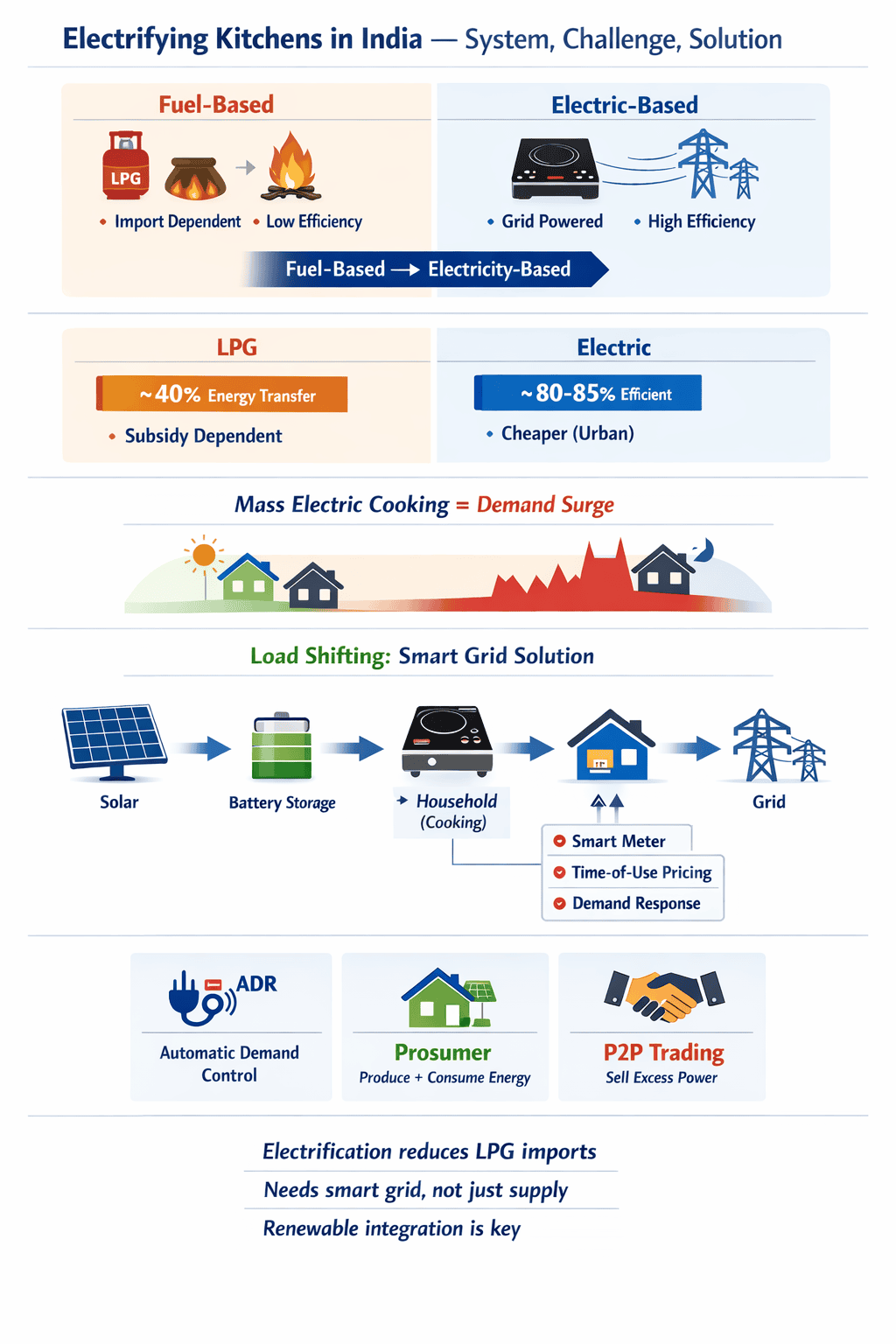
Electrifying Kitchens

SuperKalam is your personal mentor for UPSC preparation, guiding you at every step of the exam journey.
Download the App


STUDY RESOURCES
CONTACT US
ⓒ Snapstack Technologies Private Limited