GS 1: Art & CultureGS 2: GovernanceGS 2: Social JusticePrelims
Dancing Girl, meet modest imagination, Pg10
NCERT controversially covers Mohenjo-daro's iconic Dancing Girl in textbooks, sparking debate on pedagogical philosophy and women's agency.
Practice MCQs
876 Students attempted
Key Highlights:
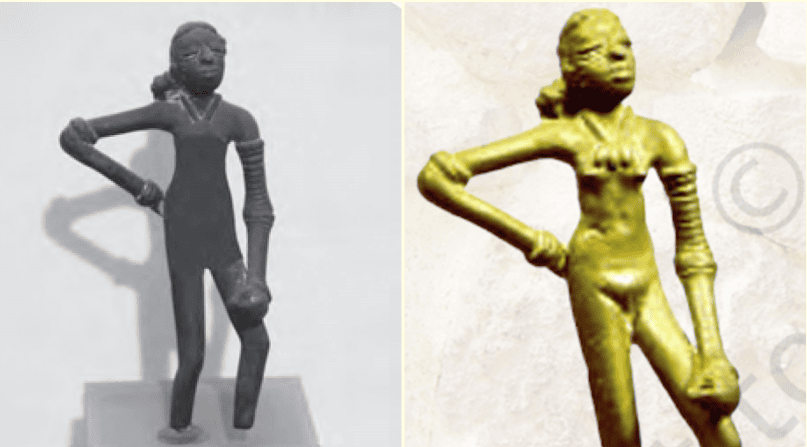
- The National Council of Educational Research and Training (NCERT) has covered the bare torso of the Dancing Girl of Mohenjo-daro in a Class IX art education textbook.
- This 4,500-year-old bronze artifact, discovered in Mohenjo-daro, is a significant representation of the Harappan Civilization's advanced metallurgy and artistry.
- NCERT justified the alteration as being age-appropriate and aimed at creating "positive citizens," according to its Director D.P. Saklani.
Dancing girl.png
Detailed Insights:
- The Dancing Girl of Mohenjo-daro is a 10.5 cm tall bronze sculpture created using the lost-wax casting technique, dating back to approximately 2500 BCE.
- This decision by NCERT is part of broader revisions, which include the deletion of references to the Gujarat riots and the Babri Masjid demolition from Class XII Political Science textbooks.
- NCERT Director D.P. Saklani stated that the purpose of these revisions is to avoid teaching about riots and to foster positive individuals, rather than violent or depressed ones.
- This pedagogical approach is seen by some as contradictory to the National Education Policy (NEP) 2020's emphasis on fostering critical thinking, problem-solving, and creativity among students.
- The NEP 2020 aims to shift education away from rote learning towards experiential and inquiry-based learning, encouraging students to engage with complexity.
- Covering the iconic Dancing Girl is perceived as an unfortunate message regarding women's agency and their representation in public life, especially in contemporary society.
Key Concepts Involved:
- Dancing Girl of Mohenjo-daro: A 4,500-year-old bronze figurine from the Harappan Civilization, renowned for its artistic and metallurgical significance.
- National Council of Educational Research and Training (NCERT): An autonomous organization that advises the Indian government on school education and develops curricula and textbooks.
- National Education Policy (NEP) 2020: A comprehensive framework for India's education system, focusing on holistic development, critical thinking, and experiential learning.
- Harappan Civilization: An ancient Bronze Age civilization (also known as Indus Valley Civilization) in South Asia, noted for its urban planning and advanced metallurgical skills.
- Lost-wax casting (Cire Perdue): An ancient metal casting method used to produce intricate metal sculptures, famously employed for the Dancing Girl.

SuperKalam is your personal mentor for UPSC preparation, guiding you at every step of the exam journey.
Download the App


STUDY RESOURCES
CONTACT US
ⓒ Snapstack Technologies Private Limited