GS 1: Indian GeographyGS 3: Disaster ManagementGS 3: Environment & EcologyPrelims
Ice patches on melting glaciers greater threat than thought: ISRO scientists, PgII
ISRO study links Uttarakhand flash flood to melting ice patches, emphasizing satellite monitoring for early disaster warnings amid Himalayan deglaciation.
Practice MCQs
855 Students attempted
Key Highlights:
- An ISRO study links the August 5, 2025 flash flood in Dharali village, Uttarakhand, to the collapse of an ice patch on the Srikanta glacier, resulting in six fatalities.
- The study highlights the impact of warming temperatures on glaciers, particularly exposed ice patches on retreating glaciers, increasing the risk of such disasters.
- Researchers used satellite observations and topographic analysis to reconstruct the events leading to the flood, emphasizing the importance of monitoring glaciers for early warnings.
- The study identifies exposed ice patches as an under-recognized risk from glacier melt, expanding the range of recognized glacier-related hazards in the Himalaya.
Detailed Insights:
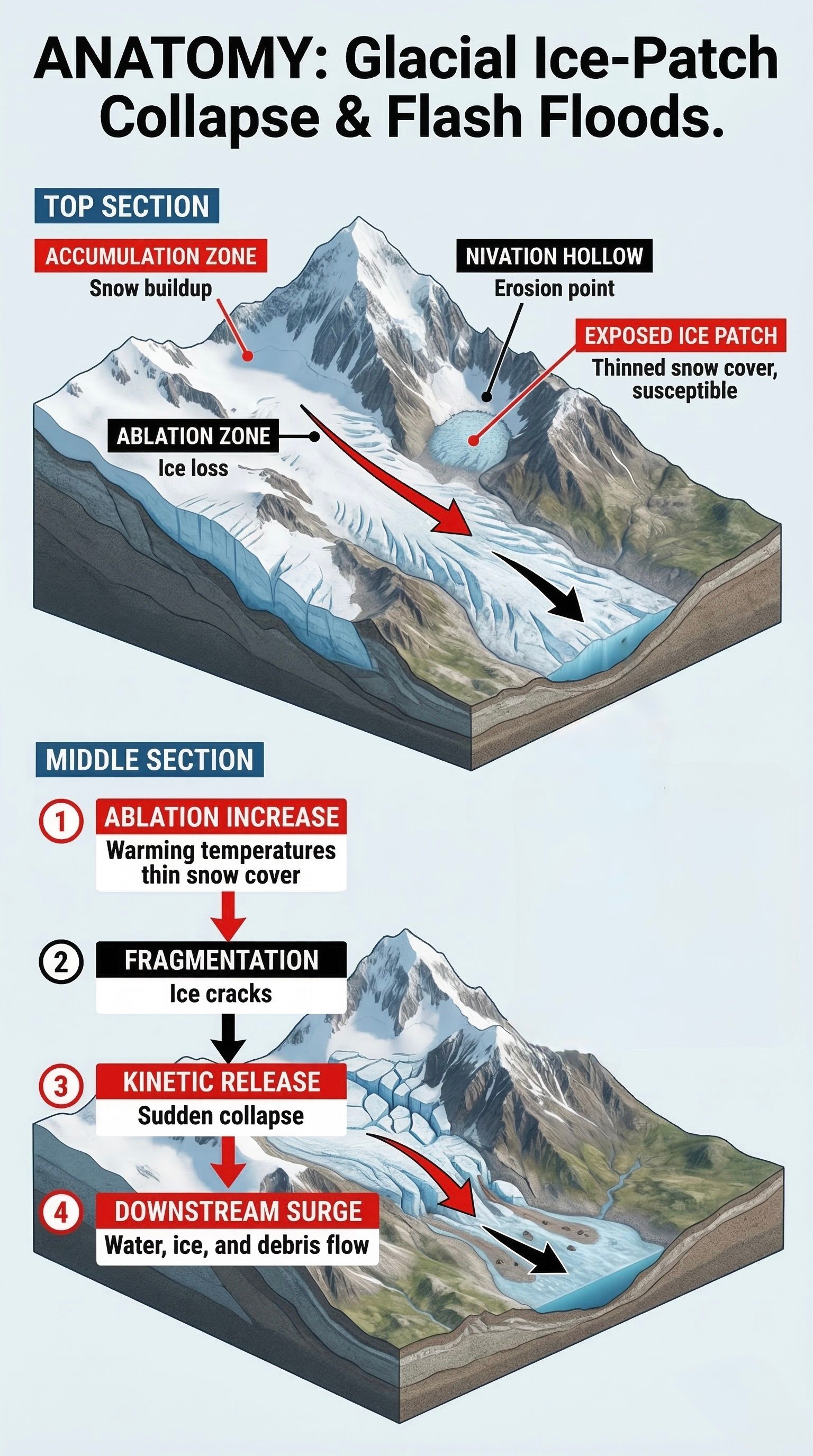
- The flash flood was triggered by the collapse of an ice patch in the nivation area of the Srikanta glacier, an area prone to erosion due to freezing and thawing cycles.
- The study area, located in the upper Bhagirathi river basin, has a history of extreme events, including landslides during the June 2013 Himalayan floods.
- Exposure of ice patches indicates thinning seasonal snow and firn, making the ice more susceptible to melting, fragmentation, and collapse due to temperature changes or heavy rainfall.
- Satellite observations are crucial for early warning, as they can detect exposed ice patches during the ablation period, indicating thinning snow and firn cover.
- The study suggests that monitoring should extend beyond glacial lake outburst floods (GLOFs) to include smaller instabilities in the cryosphere, such as exposed ice patches.
- Identifying nivation hollows is essential, as these are geomorphologically sensitive zones for cryospheric instability, potentially leading to the sudden release of ice, meltwater, and debris.
- Similar events in other cold regions, like the Canadian Arctic and Greenland, demonstrate that the collapse of ice patches can trigger hazards as glaciers lose ice and snow due to regional warming.
Key Concepts Involved:
- Glacier: A slowly moving mass or river of ice formed by the accumulation and compaction of snow on mountains or near the poles.
- Cryosphere: The portions of Earth's surface where water is in solid form, including snow, ice (including glaciers), and permafrost.
- Nivation: Erosion of the ground beneath and around a snow bank, primarily due to alternate freezing and thawing.
- Ablation: The process of snow and ice removal from a glacier or snowfield by melting, evaporation, and sublimation.
Glacial Ice- Patch
Previous10/10

SuperKalam is your personal mentor for UPSC preparation, guiding you at every step of the exam journey.
Download the App


STUDY RESOURCES
CONTACT US
ⓒ Snapstack Technologies Private Limited