GS 1: Modern HistoryGS 1: Post-Independence IndiaGS 2: PolityEthics
Subhas Chandra Bose: the paradox of a revolutionary’s theory and praxis, Pg9
Subhas Chandra Bose's revolutionary ideology promoted equality, scientific planning, and a unified humanity, influencing post-independence India's egalitarian ideals and development.
Practice MCQs
855 Students attempted
Key Highlights:
- Subhas Chandra Bose aimed to dismantle caste, communalism, and gender inequality by applying secular and scientific training to India.
- In 1943, Bose abolished class-based companies within the INA, promoting equality among soldiers regardless of religion or ethnicity.
- Bose advocated for a living wage for workers and positioned his socialist views between Moscow-aligned Communism and reformism.
- Despite allying with Axis powers, Bose criticized their ideologies and actions, prioritizing India's freedom above all else.
- Bose envisioned a free India contributing to a global "higher synthesis," bridging Western advancements with Eastern spiritual insights.
Detailed Insights:
- Bose's approach to equality was evident in the INA's daily life, using a Hindustani adaptation of Jana Gana Mana as its anthem and popularizing Jai Hind.
- He recognized the significant role of Indian women in the national struggle, inaugurating the Rani of Jhansi Regiment in 1943 to encourage their participation.
- Bose's alliance with the Axis powers was a pragmatic decision driven by the principle of "enemy of my enemy" rather than ideological alignment.
- He criticized Japan's imperialism in China and condemned Hitler's racial philosophy, emphasizing the need for peace between Europe and Asia.
- Bose believed that India's liberation was essential for a global "higher synthesis," challenging the notion that nations cannot act morally.
How UPSC asks Questions on this:
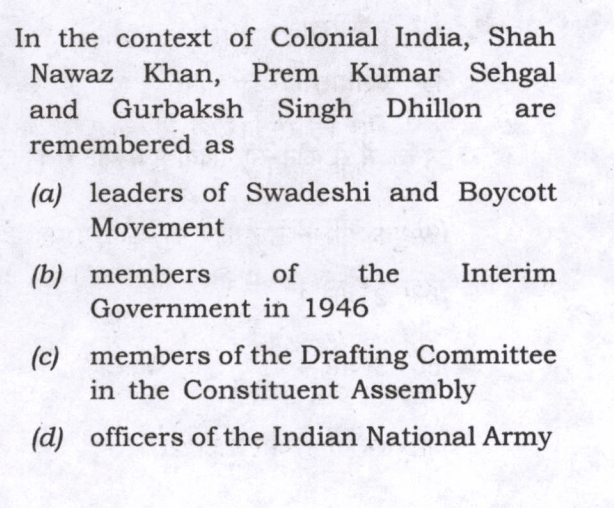
UPSC Prelims 2021
Key Concepts Involved:
- Samyavada: A concept of equality and harmony that Subhas Chandra Bose sought to implement in India.
- Azad Hind Fauj (INA): The army formed by Subhas Chandra Bose to fight for India's independence.
- Provisional Government: The government established by Indian nationalists in exile during World War II.

SuperKalam is your personal mentor for UPSC preparation, guiding you at every step of the exam journey.
Download the App


STUDY RESOURCES
CONTACT US
ⓒ Snapstack Technologies Private Limited