GS 3: Environment & EcologyGS 2: GovernanceGS 1: Indian SocietyPrelims
Balancing faith and ecology: are rivers taking the brunt?, Pg8
Religious rituals polluting rivers: 11,000 litres of milk poured into Narmada sparks debate over faith versus environmental protection.
Practice MCQs
855 Students attempted
Key Highlights:
- 11,000 litres of milk were poured into the Narmada River in Madhya Pradesh on April 8 as part of a religious ritual.
- The ritual was part of a 21-day ceremony at the Pataleshwar Mahadev Temple, intended to purify the river.
- Environmental experts have raised concerns about the biochemical oxygen demand (BOD) from dairy effluents impacting aquatic ecosystems.
- The Central Pollution Control Board (CPCB) identified 296 polluted river stretches across 271 rivers in 2025.
Detailed Insights:
- Dairy effluents can elevate BOD levels beyond those of domestic sewage, depleting dissolved oxygen and stressing aquatic life.
- Ritual offerings accelerate microbial activity, increasing pollution and reducing dissolved oxygen, which can lead to algal blooms and biodiversity loss.
- The Yamuna River in Delhi has recorded BOD levels as high as 83 mg/l, far exceeding safe limits and rendering stretches ecologically "dead".
- The National Green Tribunal (NGT) has previously noted increased pollution in the Yamuna after idol immersions, including rises in heavy metals.
- India's environmental laws, including the Water Act of 1974 and Article 21 of the Constitution, establish environmental protection as a legal obligation.
- While the NGT enforces guidelines for idol immersion, no specific law regulates offerings like milk, flowers or mass bathing.
- Even minimal per capita offerings can create a significant pollution load, necessitating site-specific caps and waste management strategies.
- The debate centers on balancing religious practices with the recognition of ecological limits to ensure sustainable river management.
Key Concepts Involved:
- Biochemical Oxygen Demand (BOD): The amount of oxygen required by microorganisms to decompose organic matter in water.
- Water Act (1974): Indian legislation providing for the prevention and control of water pollution.
- Article 21: A section of the Indian Constitution guaranteeing the right to protection of life and personal liberty, interpreted to include a clean environment.
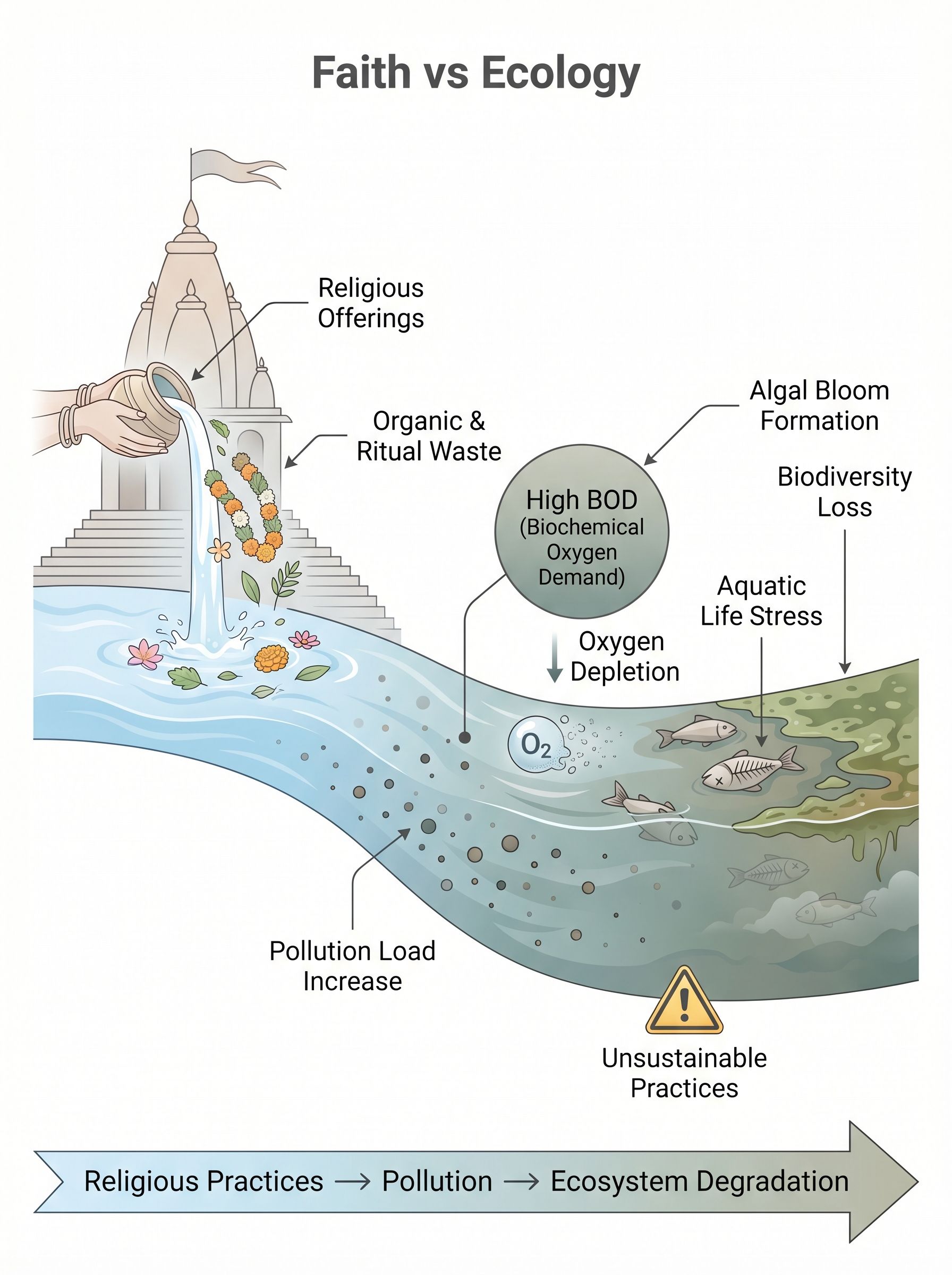
Faith vs Ecology

SuperKalam is your personal mentor for UPSC preparation, guiding you at every step of the exam journey.
Download the App


STUDY RESOURCES
CONTACT US
ⓒ Snapstack Technologies Private Limited