GS 3: Science & TechnologyGS 2: Social JusticePrelims
Can a hospital gas help fight drug-resistant pneumonia?, Pg12
High-dose inhaled nitric oxide shows promise in combating drug-resistant pneumonia in ICU settings, reveals study on pigs.
Practice MCQs
840 Students attempted
Key Highlights:
- Researchers found that high doses of inhaled nitric oxide reduced drug-resistant Pseudomonas aeruginosa in a large-animal ICU model.
- The study, conducted at Massachusetts General Hospital, tested nitric oxide at 300 ppm on ventilated pigs with pneumonia.
- Treated animals showed 99% lower lung bacterial counts, improved oxygenation, and better lung function.
- A phase 1 study on humans showed that nitric oxide at 300 ppm could be administered without immediate serious complications.
Detailed Insights:
- Drug-resistant pneumonia, particularly caused by Pseudomonas aeruginosa, poses a significant challenge in intensive care units due to limited treatment options.
- Nitric oxide is naturally produced by the human body and is used at low doses (20-80 ppm) to widen blood vessels in the lungs of patients with acute respiratory failure.
- The decision to test higher concentrations of nitric oxide (300 ppm) was based on a 2021 mouse study that suggested this threshold is required for antimicrobial activity.
- While the treated animals initially improved, concerns remain about the potential toxic effects of nitric oxide, such as elevated methemoglobin levels and direct lung injury.
- Practical barriers to implementing this treatment include the need for specialized machinery, trained staff, and continuous monitoring to prevent nitrogen dioxide formation and methemoglobin accumulation.
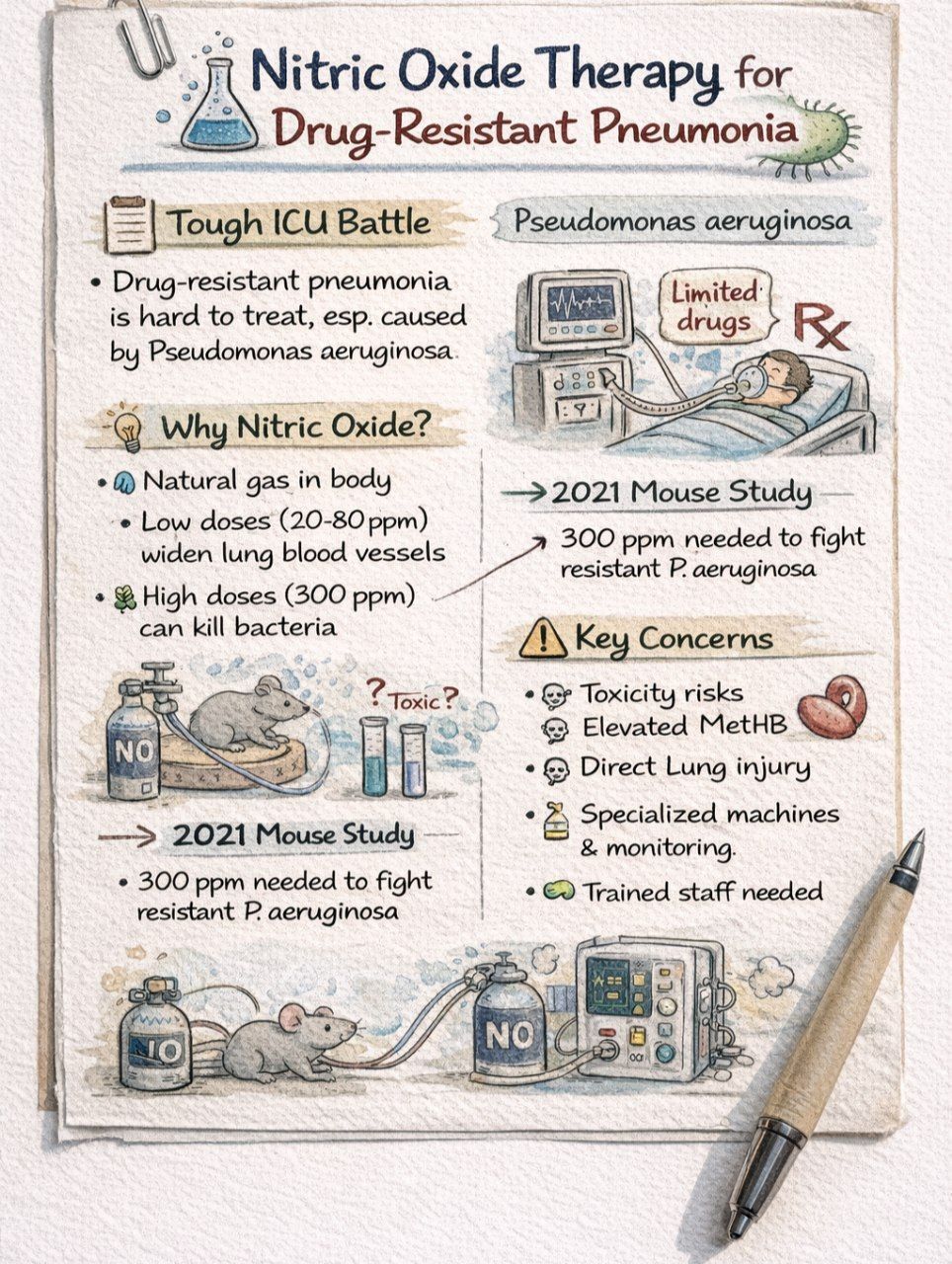
IMAGE 2026-02-15 08:57:50.jpg
Scientific/Technical Concepts Involved:
- Nitric Oxide: A gas produced by the body and used medically to widen blood vessels.
- Pseudomonas aeruginosa: A bacterium that causes pneumonia and is often drug-resistant.
- Methemoglobin: A form of hemoglobin that cannot effectively carry oxygen to tissues.

SuperKalam is your personal mentor for UPSC preparation, guiding you at every step of the exam journey.
Download the App


STUDY RESOURCES
CONTACT US
ⓒ Snapstack Technologies Private Limited