GS 3: Environment & EcologyGS 1: Indian GeographyPrelims
Oak trees felling case: Their ecological importance for Himalayas, Pg18
Uttarakhand HC halts oak tree felling, spotlighting their crucial role in Himalayan ecology and biodiversity conservation amidst degradation concerns.
Practice MCQs
840 Students attempted
Key Highlights:
- The Uttarakhand High Court stayed the felling of oak trees in Mussoorie for a construction project following a PIL petition.
- Oak trees are ecologically important in the Indian Himalayan region, providing vital ecosystem services.
- There are 35 species of oaks reported in the Indian Himalayan regions at altitudes of 800-3,000 meters.
- Forest degradation in the Indian Himalayas occurs at a rate of 0.36 sq km per year due to natural and human factors.
Detailed Insights:
- Oak species in the Himalayas provide crucial ecosystem services like soil and water conservation, supporting local biodiversity and recharging springs.
- These forests create layered microhabitats that support diverse flora and fauna, including birds, mammals, insects, and microorganisms.
- Oak forests face degradation due to human activities like excessive lopping, grazing, fuel wood consumption, and the invasion of alien species like chir pine.
- The replacement of oak forests by chir pine increases the risk of forest fires, as chir pine is highly inflammable, further damaging the oak ecosystems.
Key Concepts Involved:
- Ecosystem Services: The benefits that humans derive from ecosystems, including provisioning, regulating, and cultural services.
- Alien Invasive Species: Non-native organisms that cause harm to the environment, economy, or human health.
- PIL Petition: A lawsuit filed in the public interest, often to address issues of environmental protection or human rights.
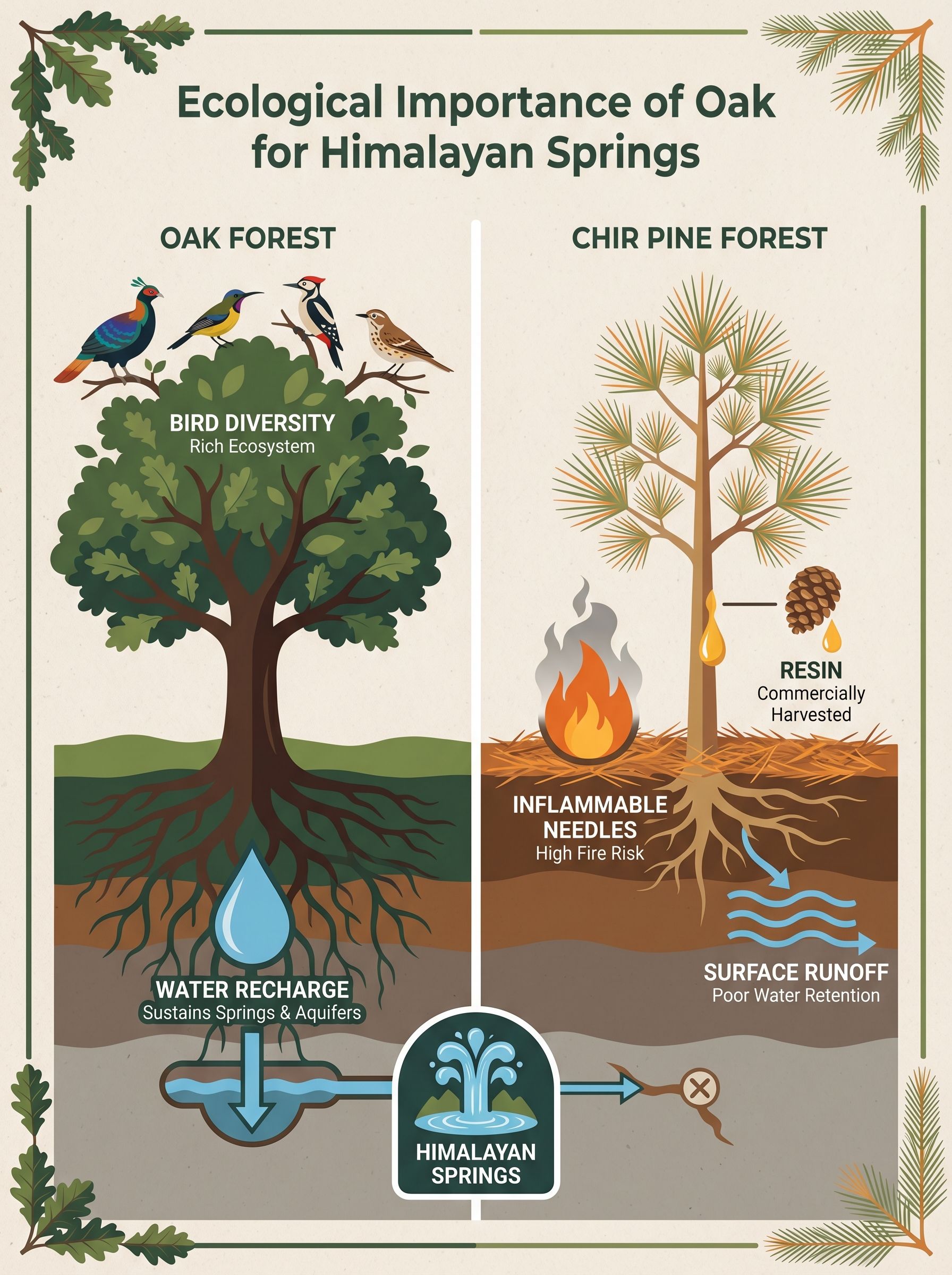
Oak vs Chir Pine

SuperKalam is your personal mentor for UPSC preparation, guiding you at every step of the exam journey.
Download the App


STUDY RESOURCES
CONTACT US
ⓒ Snapstack Technologies Private Limited