GS 1: Indian GeographyGS 3: Environment & EcologyGS 2: GovernanceGS 1: Indian Society
Draft master plan for Great Nicobar Island projects tourism as primary growth driver, Pg1
Great Nicobar Island development plan targets tourism, faces tribal challenges over forest rights and environmental impact, population displacement, and ecological concerns.
Practice MCQs
826 Students attempted
Key Highlights:
- Draft master plan for Great Nicobar Island (GNI) development projects focuses on tourism as the primary economic driver.
- The plan aims for a projected population of 3.36 lakh by 2055, including 11,500 Nicobarese.
- The project includes an international container transshipment port, an airport, power plants, and a township.
- Local Nicobarese population withdrew consent due to unsettled forest rights, challenging the project in the Calcutta High Court.
- The project is expected to span 166.10 sq. km, with 40.8% designated as "urbanisable".
Detailed Insights:
- The draft master plan envisions developing the island as a "seaside destination" with various tourism models like wellness, beach, nature, adventure, business, and gaming tourism.
- The plan hints at developing the Pemmaya buffer area for possible tribal settlements, potentially conflicting with a relocation plan to shift tribes to Pulobhabi.
- The township will be divided into clusters: administrative, multi-modal logistic, and tourism/entertainment/processing clusters.
- The project requires diverting 121.86 sq km of forest areas, raising environmental concerns and potential ecological impact.
- The ₹92,000-crore mega-infrastructure project aims to create both permanent and temporary jobs to attract population settlement.
Key Concepts Involved:
- Transshipment Port: A port where cargo is transferred from one ship to another.
- Forest Rights: Rights of forest-dwelling communities to access, manage, and conserve forests.
- Sustainable Tourism: Tourism that minimizes environmental and cultural impact while benefiting local communities.
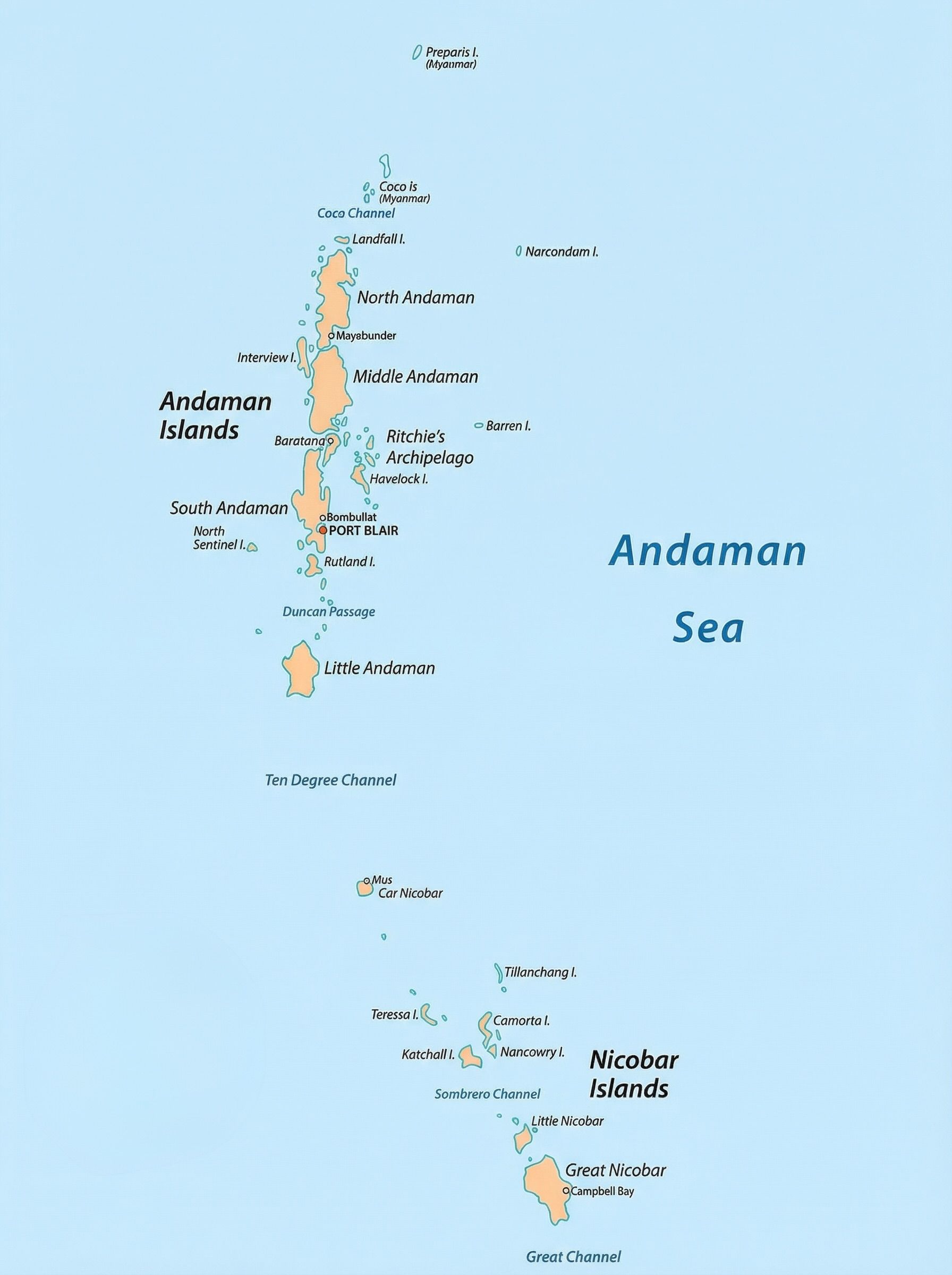
Andaman and Nicobar Islands

SuperKalam is your personal mentor for UPSC preparation, guiding you at every step of the exam journey.
Download the App


STUDY RESOURCES
CONTACT US
ⓒ Snapstack Technologies Private Limited