GS 2: Social JusticeGS 2: GovernanceGS 1: Indian SocietyPrelims
What is lost and gained in NFHS-6, Pg10
NFHS-6 reports health gains but controversially omits 30 key indicators like anaemia, mortality, and sanitation, raising concerns over policy tracking.
Practice MCQs
826 Students attempted
Key Highlights:
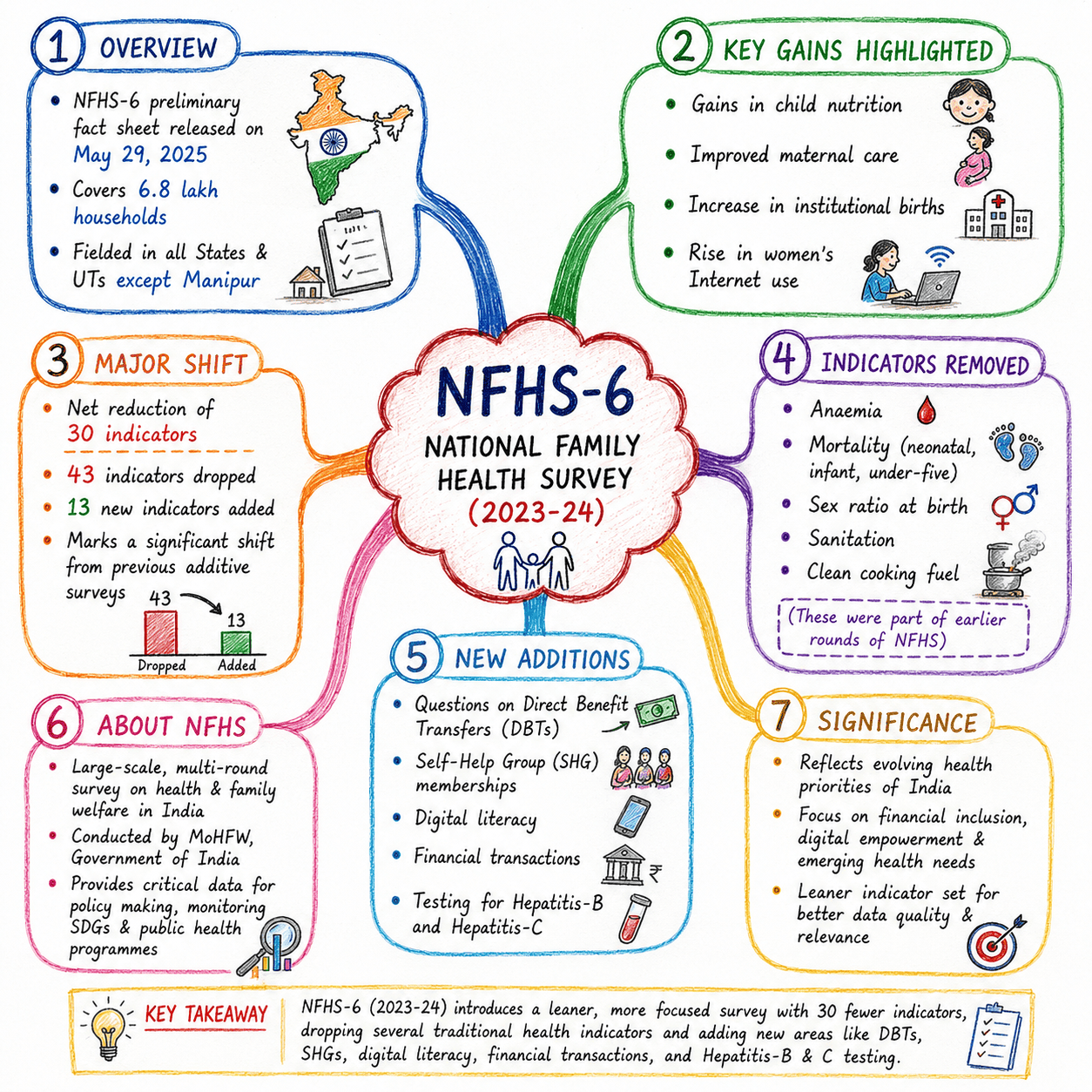
- The National Family Health Survey (NFHS-6) preliminary fact sheet for 2023-24 was released on May 29, covering 6.8 lakh households across all States and Union Territories except Manipur.
- NFHS-6 shows gains in child nutrition, maternal care, institutional births, and women's Internet use.
- The survey recorded a net reduction of 30 indicators, with 43 indicators dropped and 13 new ones added, marking a significant shift from previous additive surveys.
- Key indicators removed include anaemia, mortality (neonatal, infant, under-five), sex ratio at birth, sanitation, and clean cooking fuel.
- New additions include questions on direct benefit transfers, self-help group memberships, digital literacy, financial transactions, and testing for Hepatitis-B and Hepatitis-C.
NFHS-6.png
Detailed Insights:
- The Union Health Ministry commissions the NFHS, with the International Institute for Population Sciences (IIPS) conducting the survey.
- The removal of the anaemia indicator is attributed to concerns over its measurement methodology, as NFHS used finger-prick blood samples which researchers believe overstated prevalence.
- Anaemia will now be tracked separately by a dedicated Diet and Biomarkers Survey in India, launched in December 2022 by the ICMR-National Institute of Nutrition, using venous blood samples for more accurate data.
- Other dropped indicators like mortality rates will be tracked by the Sample Registration System, though it lacks district-level data and socio-economic breakdowns provided by NFHS.
- The absence of sanitation coverage and clean cooking fuel use indicators removes direct measures of the success of government initiatives like Swachh Bharat Abhiyan and Pradhan Mantri Ujjwala Yojana.
- NFHS-6 reported a decline in spousal violence to 22.3% from 29.3% and a significant drop in child stunting by over six percentage points.
- The survey also noted declines in exclusive breastfeeding among infants under six months and the use of modern contraception.
Key Concepts Involved:
- National Family Health Survey (NFHS): A large-scale, multi-round survey conducted in a representative sample of households throughout India, providing data on health and family welfare.
- Indicators: Specific, measurable variables used to track progress, identify trends, and assess the status of health, social, or economic conditions.
- Anaemia Mukt Bharat Campaign: A flagship program launched in 2018 by the Government of India to reduce the prevalence of anaemia across various demographics.
- Diet and Biomarkers Survey in India: A specialized survey designed to collect detailed dietary intake data and biological markers to assess nutritional status more accurately.

SuperKalam is your personal mentor for UPSC preparation, guiding you at every step of the exam journey.
Download the App


STUDY RESOURCES
CONTACT US
ⓒ Snapstack Technologies Private Limited