GS 2: International RelationsGS 3: EconomyPrelims
Israel, Iran trade strikes, warn each other against escalation, Pg1
West Asia on edge as Israel and Iran trade missile strikes, raising oil prices and prompting India to issue travel advisories.
Practice MCQs
826 Students attempted
Key Highlights:
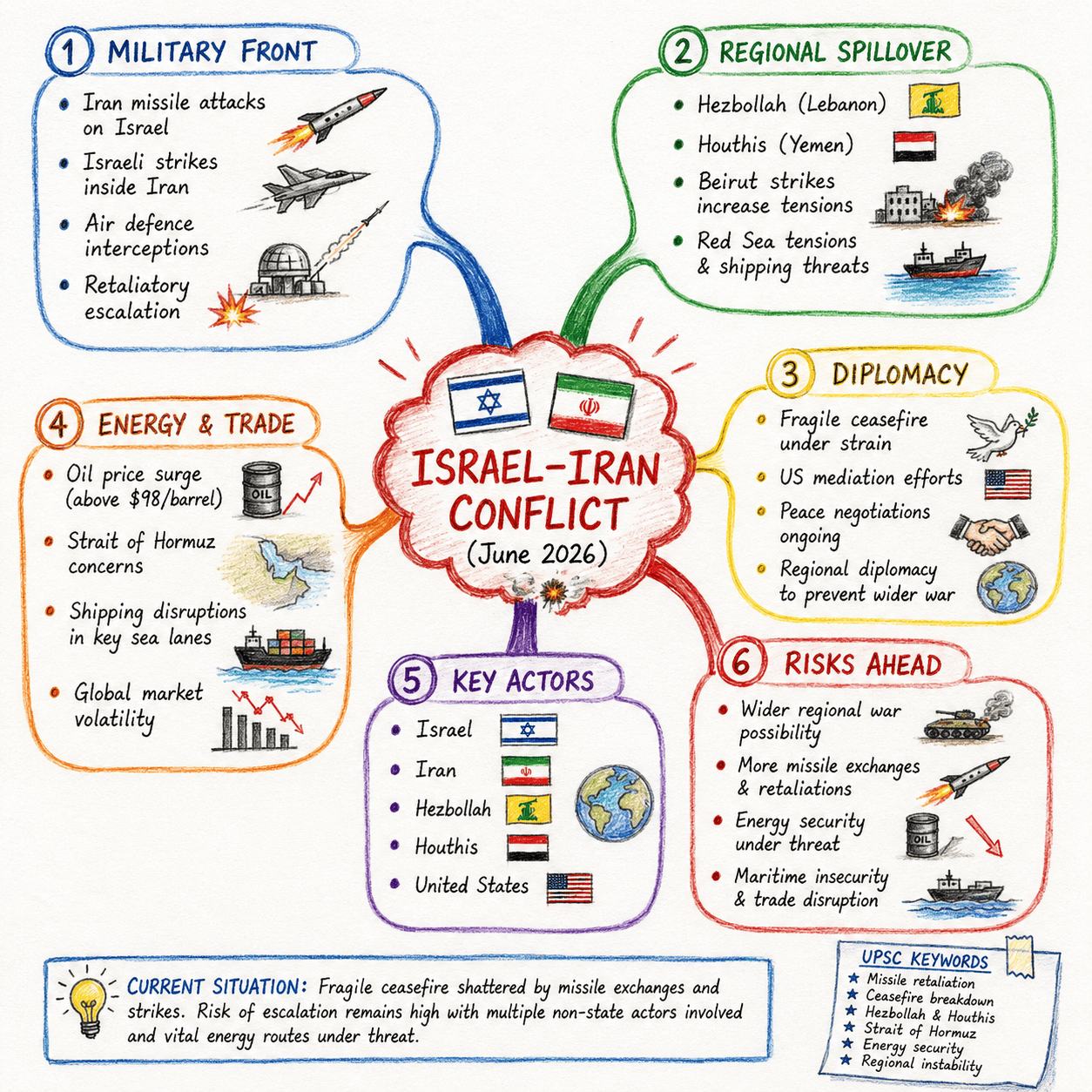
- Israel and Iran exchanged direct strikes on Monday, marking their first attacks since a U.S.-brokered ceasefire in April.
- Iran announced a halt to offensive operations but warned of severe retaliation for future Israeli aggression.
- Israel confirmed targeting sites in Iran producing materials for ballistic missiles and truck-based missile launchers.
- India issued a fresh advisory, urging its citizens to avoid unnecessary travel to Israel and Iran and advising nationals in these countries to exercise caution.
- The renewed hostilities caused oil prices to rise by approximately 4% and threatened efforts for a peace deal.
Israel-Iran.png
Detailed Insights:
- The recent exchange of fire between Israel and Iran escalated tensions in West Asia, raising concerns about a broader regional conflict.
- Iran's military stated its intention to halt offensive operations, while simultaneously issuing a strong warning against further Israeli actions.
- Israeli Defence Minister Israel Katz affirmed continued operations against Hezbollah in Lebanon, a group backed by Tehran.
- The U.S. President Donald Trump called for an immediate cessation of hostilities between the two nations.
- India's travel advisory reflects the international community's concern over the safety of its citizens amidst the volatile situation.
- The strikes followed an Iranian warning of retaliation after an Israeli attack on Beirut's southern suburbs.
Key Concepts Involved:
- Hezbollah: A powerful Shi'a Islamist political party and militant group based in Lebanon, supported by Iran.
- Ballistic Missiles: Rocket-propelled weapons that follow a ballistic trajectory to deliver warheads to a target.
- West Asia: A geopolitical region encompassing countries like Iran, Israel, Lebanon, and others, often a focal point of international relations.

SuperKalam is your personal mentor for UPSC preparation, guiding you at every step of the exam journey.
Download the App


STUDY RESOURCES
CONTACT US
ⓒ Snapstack Technologies Private Limited