GS 1: Indian SocietyGS 2: Social JusticeGS 2: GovernanceGS 3: EconomyPrelims
To ensure a quality creche is the employer's job, Pg13
Capgemini creche abuse exposes India's childcare crisis; urgent call for robust regulation, professionalization, and treating childcare as essential public infrastructure for women's empowerment.
Practice MCQs
826 Students attempted
Key Highlights:
- Capgemini shut down its on-campus creche in Bengaluru following allegations of child abuse, highlighting systemic issues in childcare.
- India's childcare system is largely underregulated, undervalued, and lacks adequate accountability and safety standards.
- A robust childcare ecosystem is crucial for children's holistic development and to boost female labor force participation.
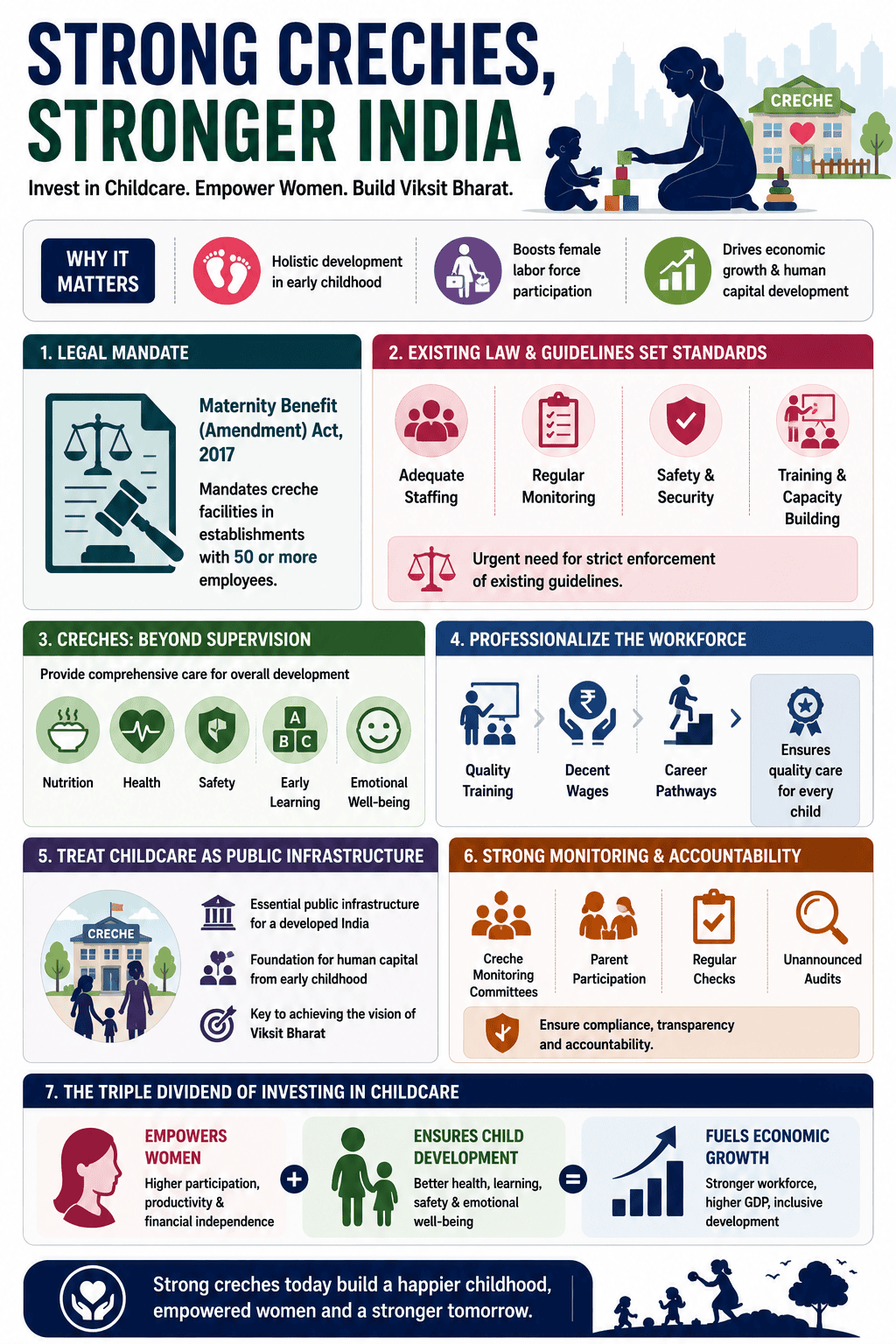
- The Maternity Benefit (Amendment) Act, 2017 mandates creche facilities in establishments with 50 or more employees.
- There is an urgent need for strict enforcement of existing guidelines and professionalization of the childcare workforce.
Creche.png
Detailed Insights:
- The Capgemini incident underscores the critical need for a safe, accountable, and dignified childcare environment across the country.
- Approximately 86 million children under six years old in India lack access to quality early care, despite 85% of brain development occurring during this period.
- Low female labor force participation, particularly in urban India, is partly due to inadequate childcare, forcing mothers to choose between work and caregiving.
- India's urban female labor force participation rate reached 27.2% in 2025, an eight-year high, yet a significant gender gap persists with men's participation at 75.9%.
- Countries like Singapore demonstrate that childcare is essential public infrastructure, supporting working families and national productivity.
- The Maternity Benefit (Amendment) Act, 2017, along with its guidelines, sets standards for staffing, monitoring, safety, and training in creches.
- Creches are intended to provide comprehensive care, including nutrition, health, safety, early learning, and emotional well-being, not just supervision.
- Professionalizing the childcare workforce through training, decent wages, and career pathways is vital for ensuring quality care.
- Treating childcare as essential public infrastructure is key to achieving the vision of Viksit Bharat, fostering human capital development from early childhood.
- Creche Monitoring Committees, with parent participation, regular checks, and unannounced audits, are crucial for ensuring compliance and accountability.
- Investing in childcare yields a "triple dividend" by empowering women, ensuring child development, and contributing to economic growth.
Key Concepts Involved:
- Maternity Benefit (Amendment) Act, 2017: A legal framework in India that mandates creche facilities in establishments employing 50 or more individuals.
- Viksit Bharat: India's vision to become a developed nation by 2047, emphasizing human capital development and societal progress.
- Female Labour Force Participation Rate (FLFPR): The proportion of the female working-age population that is either employed or actively seeking employment.
- Creche Monitoring Committees: Bodies established to oversee the functioning, safety, and quality standards of creche facilities, often including parent representatives.

SuperKalam is your personal mentor for UPSC preparation, guiding you at every step of the exam journey.
Download the App


STUDY RESOURCES
CONTACT US
ⓒ Snapstack Technologies Private Limited