GS 3: EconomyGS 3: Science & TechnologyGS 2: GovernancePrelims
On ethanol, make haste slowly, Pg12
Centre halts rapid ethanol blending beyond 20% in petrol, addressing motorist concerns over mileage and engine damage, urging a calibrated biofuel roadmap.
Practice MCQs
826 Students attempted
Key Highlights:
- The Centre is reportedly slowing down the implementation of ethanol blending in petrol beyond the current E20 level.
- India achieved a 20% ethanol-petrol blending ratio, making E20 mandatory for all petrol sold from April 2026, significantly ahead of the original 2030 target.
- The Finance Ministry had recently exempted higher ethanol blends (22%, 25%, 27%, 30%) from excise duty after the Bureau of Indian Standards issued specifications.
- Concerns include lower mileage due to ethanol's 30-35% lower calorific value and potential engine corrosion from its hygroscopic nature.
- Only vehicles sold in India after April 2023 are fully compatible with E20, raising issues for owners of older vehicles.
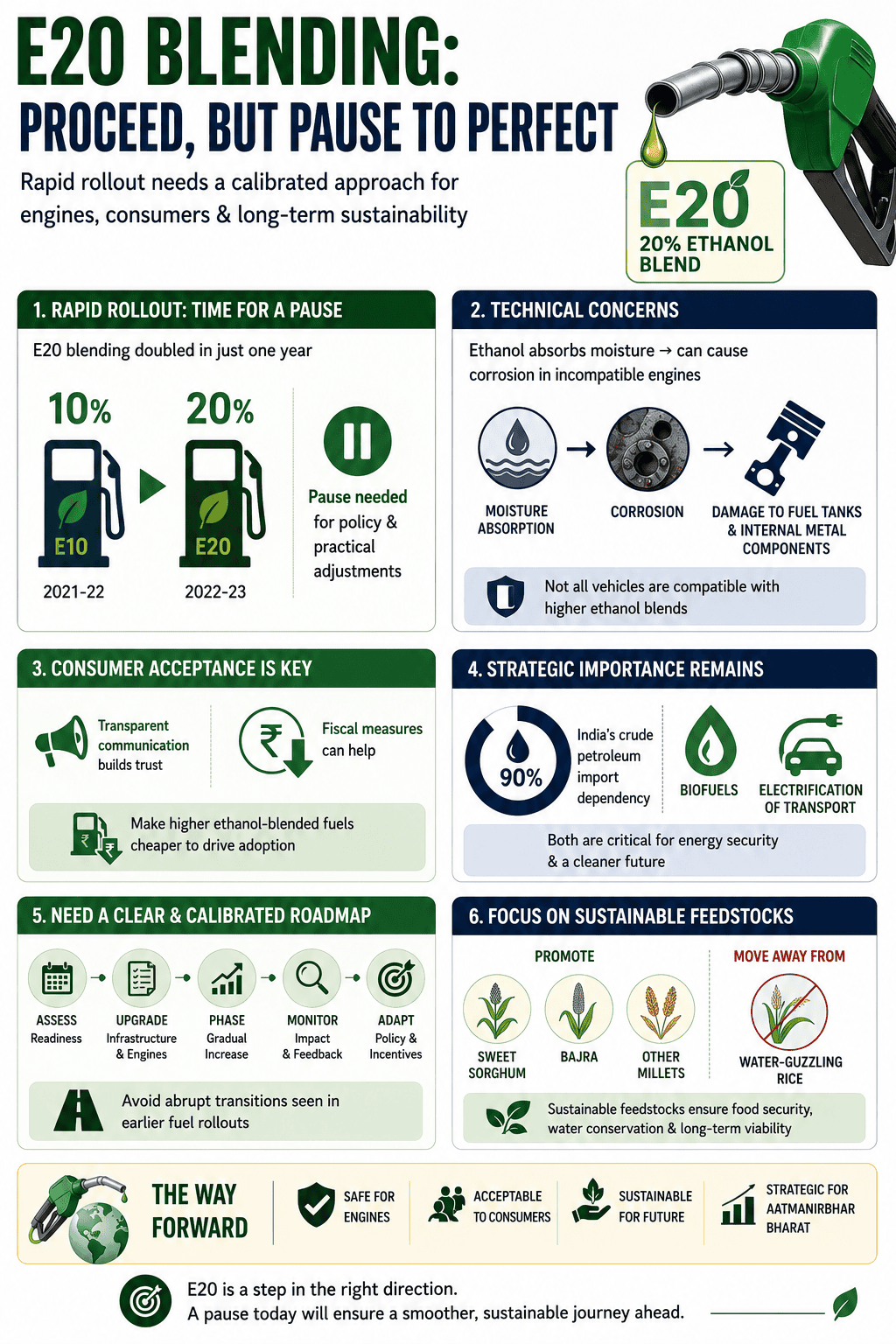
E20.png
Detailed Insights:
- The rapid rollout of E20 blending, which doubled from 10% to 20% between 2021-22, warrants a pause for policy and practical adjustments.
- Ethanol's moisture-absorbing property can lead to corrosion of steel fuel tanks and internal metal components in incompatible engines.
- Transparent communication and potential fiscal measures, such as making higher ethanol-blended fuels cheaper, are suggested to gain consumer acceptance.
- India's high 90% crude petroleum import dependency underscores the continued strategic importance of biofuels and electrification of transport.
- A clear, calibrated, and forward-looking roadmap is essential for higher ethanol blends to avoid abrupt transitions experienced in earlier rollouts.
- Promoting sustainable feedstocks like sweet sorghum, bajra, and other millets is crucial, moving away from water-guzzling rice for ethanol production.
Scientific/Technical Concepts Involved:
- Calorific Value: The amount of heat energy released when a specific amount of fuel is completely combusted.
- Hygroscopic: The property of a substance to attract and hold water molecules from the surrounding environment.
- Internal Combustion Engine (ICE): An engine in which the combustion of a fuel occurs with an oxidizer (usually air) in a confined space.
- Biofuels: Fuels derived from biomass, such as plants or animal waste, used as an alternative to fossil fuels.

SuperKalam is your personal mentor for UPSC preparation, guiding you at every step of the exam journey.
Download the App


STUDY RESOURCES
CONTACT US
ⓒ Snapstack Technologies Private Limited