GS 3: EconomyGS 3: Environment & EcologyGS 2: GovernanceGS 3: Science & TechnologyPrelims
India’s EV transition cannot afford to ignore retrofitment, Pg9
India's EV transition must embrace retrofitting 30 crore ICE vehicles, offering a cost-effective path to energy security, decarbonization, and decentralized employment.
Practice MCQs
826 Students attempted
Key Highlights:
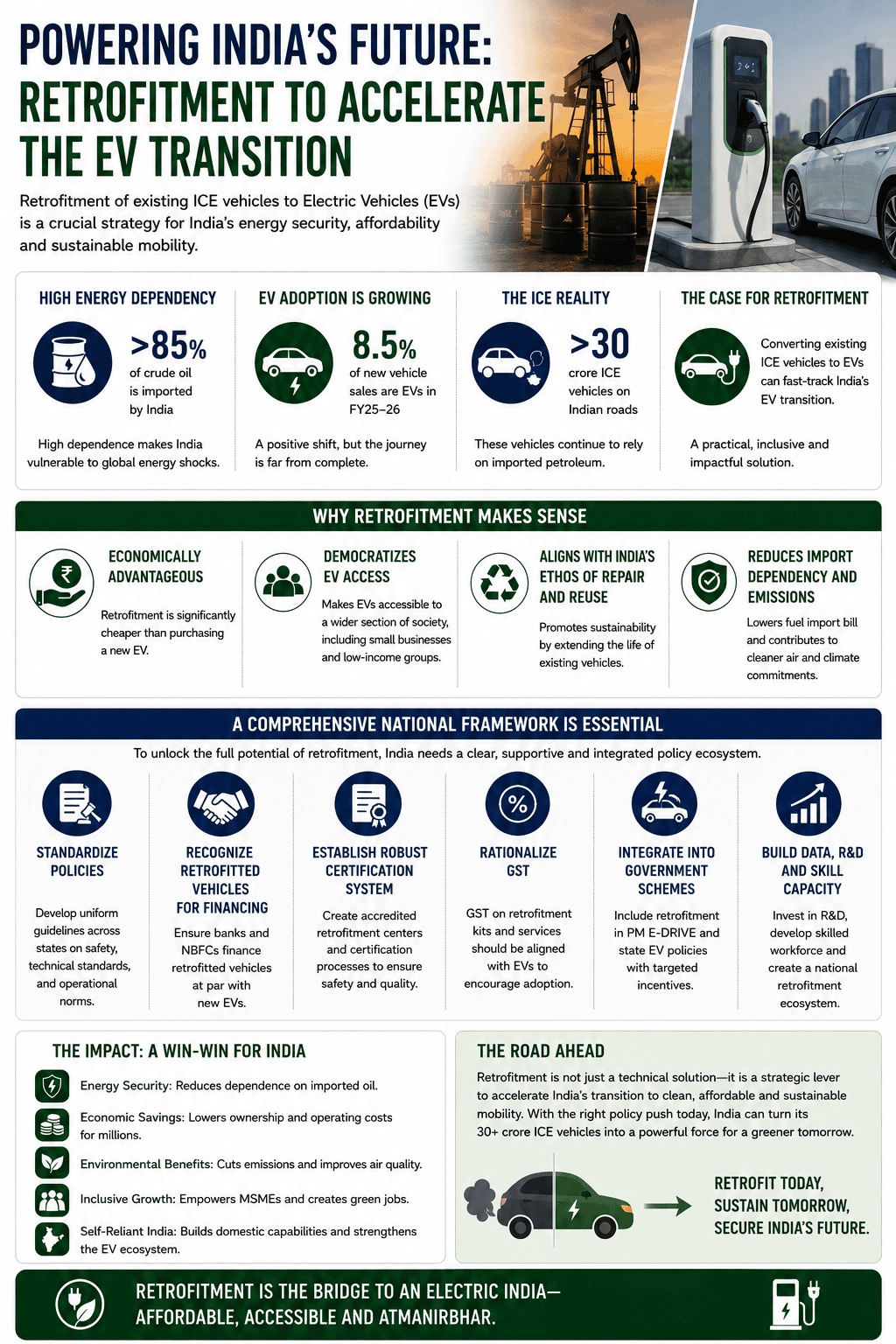
- India faces significant energy dependency, importing over 85% of its crude oil, making it vulnerable to global energy shocks.
- Electric Vehicles (EVs) now constitute 8.5% of new vehicle sales in India for FY25-26, but over 30 crore existing Internal Combustion Engine (ICE) vehicles continue to rely on imported petroleum.
- Vehicle retrofitment, converting existing ICE vehicles to EVs, is proposed as a crucial strategy to accelerate India's EV transition.
- Retrofitment offers economic benefits by being cheaper than new vehicles and democratizes EV access, aligning with India's ethos of repair and reuse.
- A comprehensive national framework is needed to standardize policies, recognize retrofitted vehicles for financing, establish certification, rationalize GST, and integrate retrofitment into schemes like PM E-DRIVE.
Retrofitment.png
Detailed Insights:
- The conflict in West Asia highlights energy dependency as a structural vulnerability for emerging economies like India.
- The Indian government has emphasized transport-sector decarbonization through various schemes to support EVs.
- Retrofitment involves replacing an ICE vehicle's engine with an electric battery pack, motor, and control systems.
- This approach prevents premature retirement of functioning vehicles, addressing rising fuel costs and maintenance pressures for owners.
- Environmentally, retrofitment extends asset life, reduces waste, and supports a more circular mobility economy.
- A strong retrofit ecosystem can generate decentralized employment across technicians, service centers, and related supply chains.
- Globally, countries in Europe are exploring circular mobility models, and Nepal permits retrofit solutions.
- The Faster Adoption and Manufacturing of Hybrid and Electric Vehicles (FAME) scheme initially included retrofitment support.
- Madhya Pradesh has taken steps to build a favorable ecosystem through subsidies and statewide agency registration.
- The market for retrofitment is maturing rapidly, with certified companies working with testing agencies, insurers, and financiers.
- Proposed policy changes include standardizing retrofit policies across states and formally recognizing retrofitted vehicles as financeable assets.
- Robust certification and safety standards are essential to prevent low-quality conversions and build consumer trust.
- Rationalizing Goods and Services Tax (GST) on retrofitment kits would ensure they are not at a disadvantage compared to new EVs.
- Making retrofitment data publicly available is crucial for informed policy-making and market development.
Key Concepts Involved:
- Internal Combustion Engine (ICE) vehicles: Traditional vehicles that generate power by burning fossil fuels like petrol or diesel.
- Electric Vehicles (EVs): Vehicles powered by electric motors, using energy stored in rechargeable battery packs.
- Vehicle Retrofitment: The process of converting an existing ICE vehicle into an EV by replacing its powertrain components.
- Circular Mobility Economy: An economic model in the transport sector focused on maximizing resource utility, minimizing waste, and extending the lifespan of vehicles and components.

SuperKalam is your personal mentor for UPSC preparation, guiding you at every step of the exam journey.
Download the App


STUDY RESOURCES
CONTACT US
ⓒ Snapstack Technologies Private Limited