GS 3: EconomyGS 1: Indian GeographyPrelims
Mango big money spinner for country, Pg9
Mango exports projected to hit Rs 10 crore this year, with India producing 80% of world's output, despite northern crop damage.
Practice MCQs
819 Students attempted
Key Highlights:
- India stands as the world's largest mango producer, contributing nearly 50% of the global output.
- The country's annual mango production is estimated at over 22 million metric tons for the 2024-25 fiscal year.
- Mango exports from India reached approximately USD 154.4 million in 2024, with over 32,000 metric tonnes of fresh mangoes exported in FY 2023-24.
- Uttar Pradesh is the leading mango-producing state, accounting for about 25% of the national output.
- Key export varieties include Alphonso, Kesar, and Totapuri, primarily destined for the UAE, USA, and UK.
Detailed Insights:
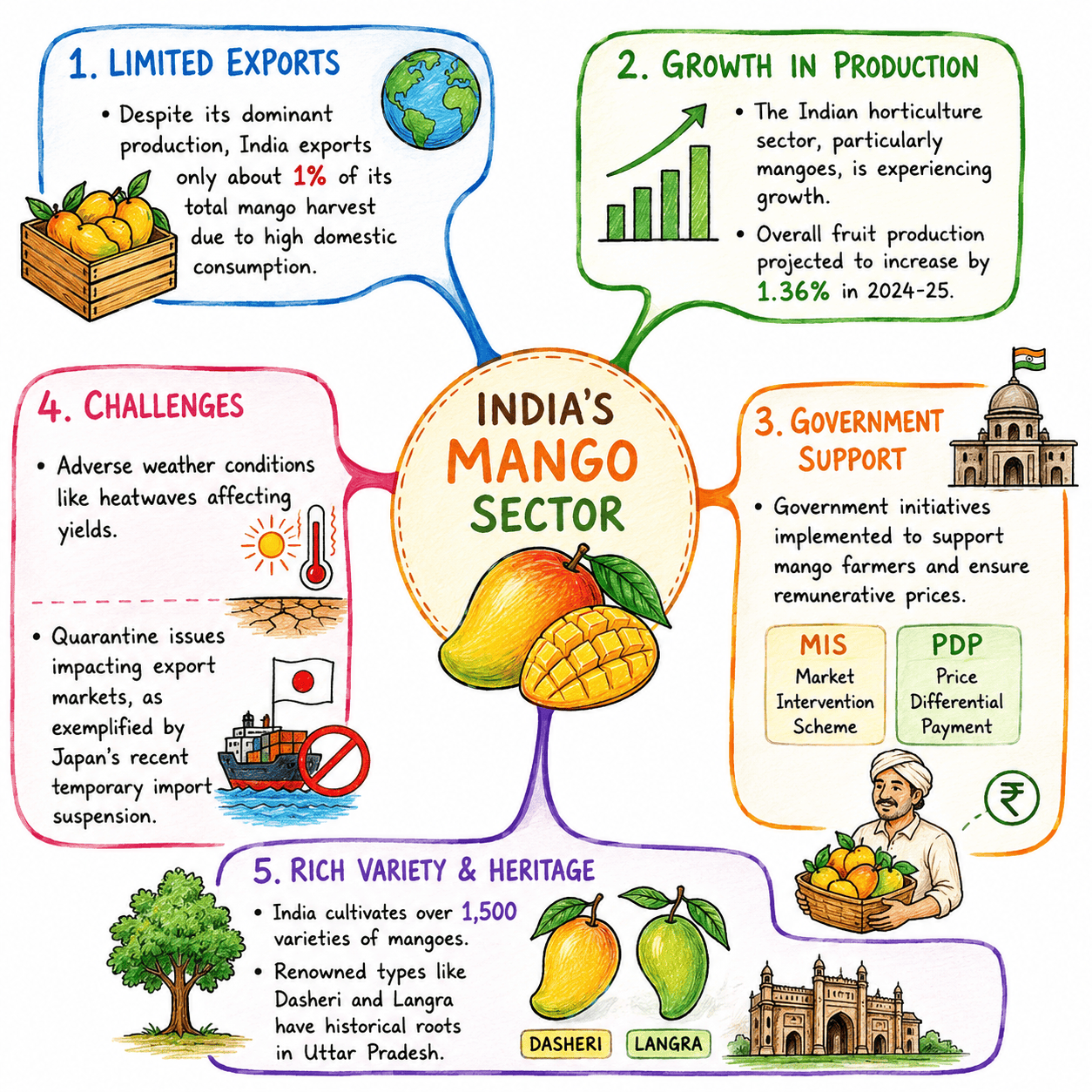
- Despite its dominant production, India exports only about 1% of its total mango harvest due to high domestic consumption.
- The Indian horticulture sector, particularly mangoes, is experiencing growth, with overall fruit production projected to increase by 1.36% in 2024-25.
- Government initiatives such as the Market Intervention Scheme (MIS) and Price Differential Payment (PDP) are implemented to support mango farmers and ensure remunerative prices.
- The mango industry faces challenges including adverse weather conditions like heatwaves affecting yields and quarantine issues impacting export markets, as exemplified by Japan's recent temporary import suspension.
- India cultivates over 1,500 varieties of mangoes, with renowned types like Dasheri and Langra having historical roots in Uttar Pradesh.
Mango.png
Key Concepts Involved:
- Horticulture: The branch of agriculture dealing with the cultivation of garden plants, including fruits, vegetables, and ornamental plants.
- Agricultural Exports: The trade of agricultural products from a country to international markets, generating foreign exchange earnings.
- Market Intervention Scheme (MIS): A government program designed to procure perishable agricultural and horticultural commodities to prevent distress sales by farmers during bumper harvests.
- Food Processing: The transformation of raw agricultural products into value-added food items such as mango pulp, juice, jams, and pickles.

SuperKalam is your personal mentor for UPSC preparation, guiding you at every step of the exam journey.
Download the App


STUDY RESOURCES
CONTACT US
ⓒ Snapstack Technologies Private Limited