GS 2: International RelationsGS 3: Internal SecurityPrelims
BRICS nations call for stronger ties to curb drug trafficking, Pg14
BRICS nations convene in Guwahati, India, to strengthen international cooperation against drug trafficking, targeting darknet and maritime routes.
Practice MCQs
819 Students attempted
Key Highlights:
- BRICS nations convened in Guwahati for the Heads of Anti-Drug Agencies’ Meeting in 2026 to discuss combating drug trafficking.
- The meeting underscored the necessity for stronger international cooperation, law enforcement collaboration, and intelligence sharing.
- India, through the Narcotics Control Bureau (NCB), hosted this significant event for the first time.
- The expanded BRICS group now comprises Brazil, Russia, India, China, South Africa, Egypt, Ethiopia, Iran, Saudi Arabia, UAE, and Indonesia.
BRICS.png
Detailed Insights:
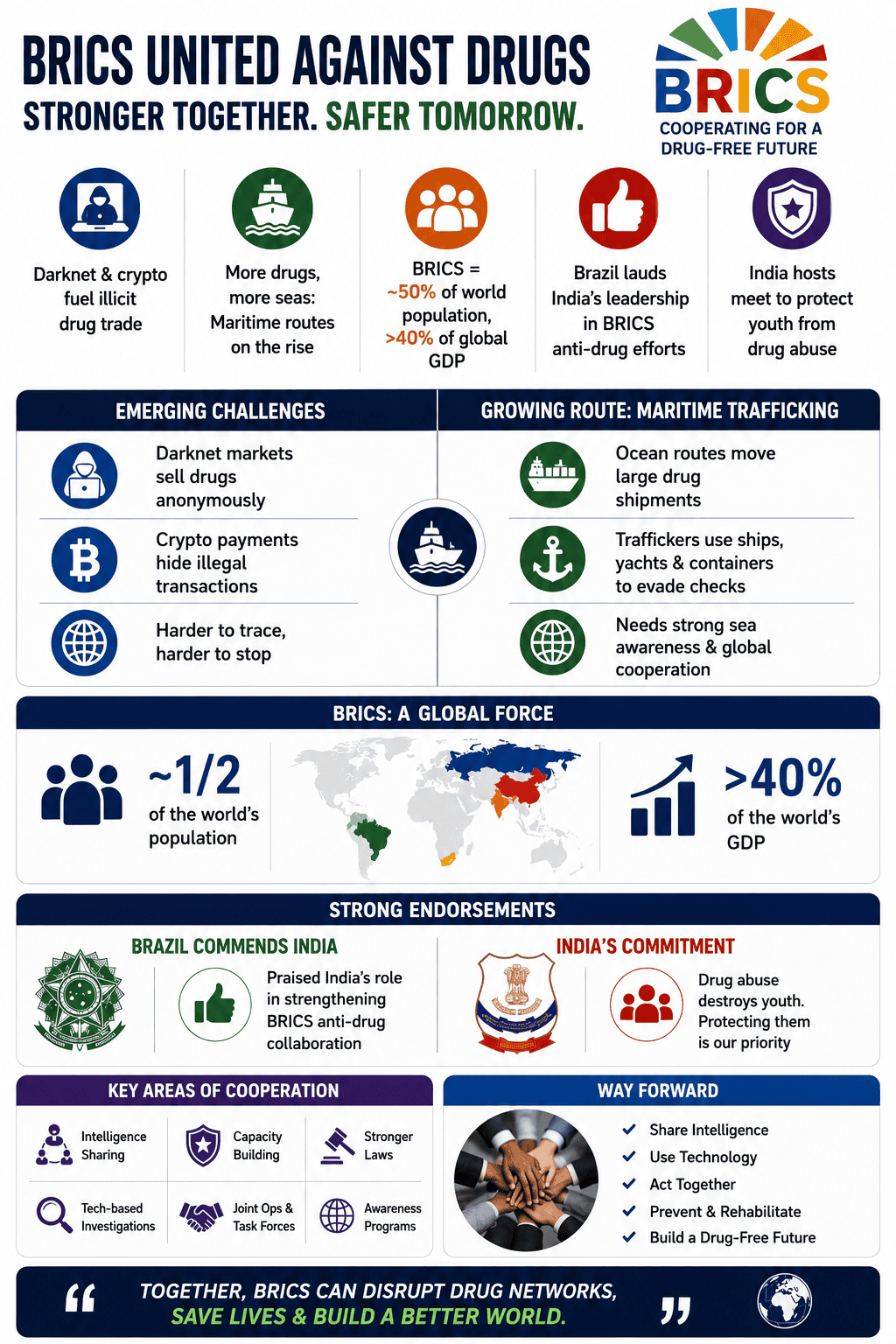
- Delegates at the BRICS meeting focused on emerging challenges in narcotics enforcement, including darknet marketplaces and cryptocurrency use for illicit transactions.
- The discussions also covered the increasing use of maritime routes for drug trafficking, highlighting the transnational nature of the threat.
- BRICS member countries collectively account for nearly half of the global population and over 40% of the world’s Gross Domestic Product.
- Brazil's Ministry of Foreign Affairs commended India's role in strengthening the BRICS anti-drug working group's collaborative efforts.
- The Narcotics Control Bureau (NCB) emphasized the severe impact of drug abuse on youth as a primary reason for India hosting the meeting.
Key Concepts Involved:
- BRICS: An intergovernmental organization of major emerging markets and developing countries.
- Drug Trafficking: The illegal trade and distribution of controlled substances across national borders.
- Darknet Marketplaces: Hidden online platforms used for illicit transactions, often involving drugs.
- Cryptocurrencies: Digital or virtual currencies secured by cryptography, used for anonymous transactions.

SuperKalam is your personal mentor for UPSC preparation, guiding you at every step of the exam journey.
Download the App


STUDY RESOURCES
CONTACT US
ⓒ Snapstack Technologies Private Limited