GS 3: Environment & EcologyGS 2: GovernanceGS 3: Science & TechnologyPrelims
Reinforcing the case for a One Health approach, Pg9
Global push for 'One Health' approach intensifies post-COVID, integrating human, animal, and environmental health for pandemic preparedness and coordinated solutions.
Practice MCQs
797 Students attempted
Key Highlights:
- The One Health approach, emphasizing the interconnectedness of human, animal, and environmental health, is gaining global traction following the COVID-19 pandemic.
- The WHO Pandemic Agreement, adopted on May 20, 2025, is a legally binding international treaty to enhance global pandemic prevention and response.
- The Quadripartite collaboration, including WHO, FAO, UNEP, and WOAH, launched the One Health Joint Plan of Action in October 2022.
- India has mobilized the National One Health Mission to integrate human, animal, and environmental health sectors for better pandemic preparedness and disease control.
- The One Health Summit in Lyon, France is currently underway, focusing on factors contributing to infectious and non-communicable diseases.
Detailed Insights:
- The One Health concept gained prominence after the SARS outbreak in 2003-2004 and the spread of avian influenza H5N1, highlighting the link between human and animal health.
- The COVID-19 pandemic demonstrated the importance of coordination and data sharing, such as SARS-CoV-2 genetic data, in international vaccine development efforts.
- The WHO Pandemic Agreement focuses on equity by establishing a Pathogen Access and Benefit-Sharing system for rapid data sharing and equitable access to vaccines and treatments.
- India's National One Health Mission aims to enhance pandemic preparedness, disease surveillance, and control of zoonotic diseases through collaborative efforts.
- State-led initiatives like Odisha’s Climate Budget, Kerala’s carbon-neutral plan, and Tamil Nadu’s Green Climate Company serve as examples for climate-resilient development.
- The One Health Summit addresses factors like zoonotic reservoirs, antimicrobial resistance (AMR), and sustainable food systems to strengthen health systems globally.
Key Concepts Involved:
- One Health: An integrated approach to sustainably balance and optimize the health of people, animals, and ecosystems.
- Zoonotic Disease: A disease that can be transmitted to humans from animals.
- Antimicrobial Resistance (AMR): The ability of a microorganism to resist the effects of an antimicrobial drug.
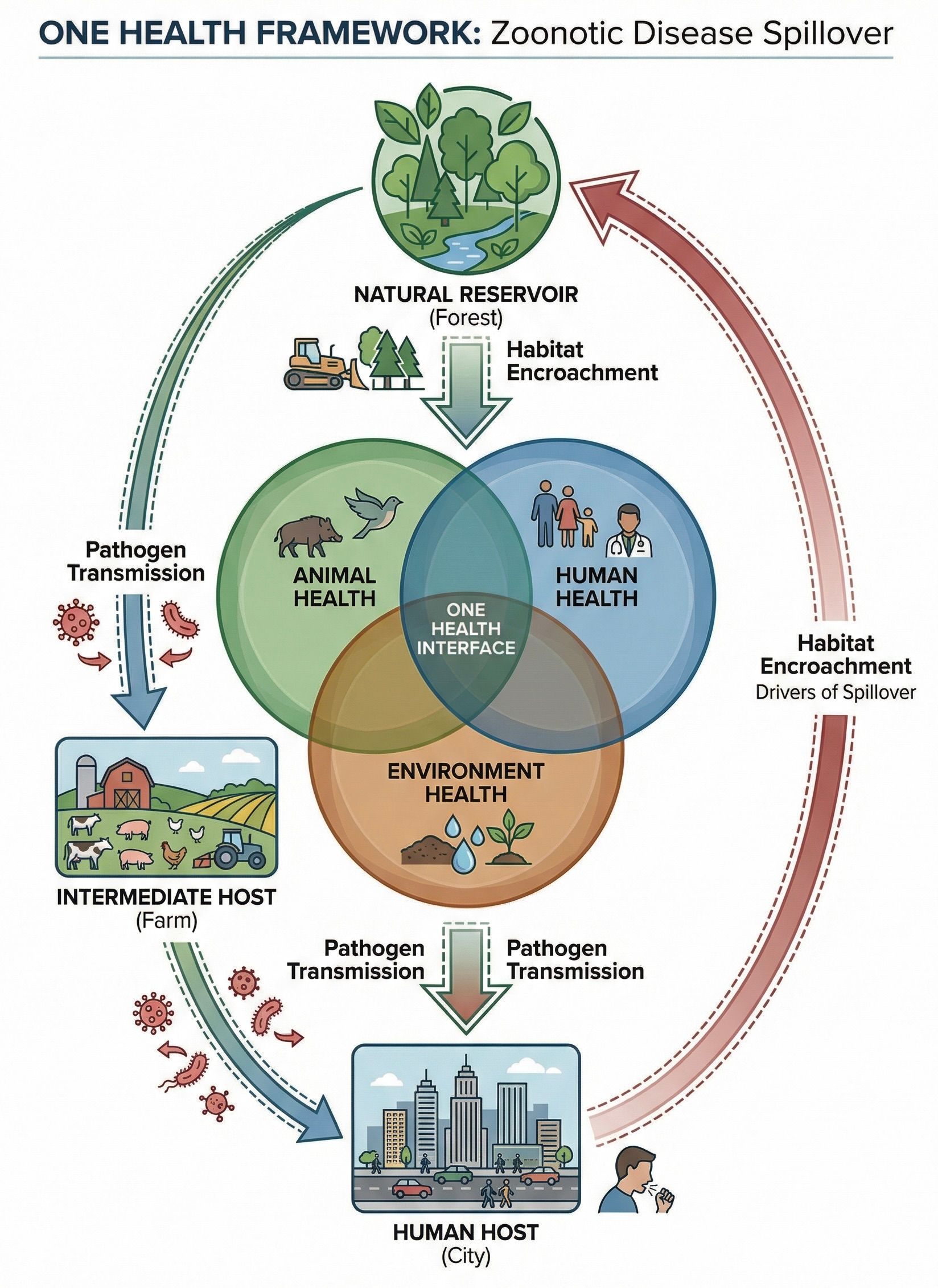
One Health

SuperKalam is your personal mentor for UPSC preparation, guiding you at every step of the exam journey.
Download the App


STUDY RESOURCES
CONTACT US
ⓒ Snapstack Technologies Private Limited