GS 3: Science & TechnologyPrelimsEthics
Synthetic cell: machine that could, Pg2
University of Minnesota researchers engineer synthetic cell capable of growth, division, and natural selection, challenging traditional views on life's origins.
Practice MCQs
811 Students attempted
Key Highlights:
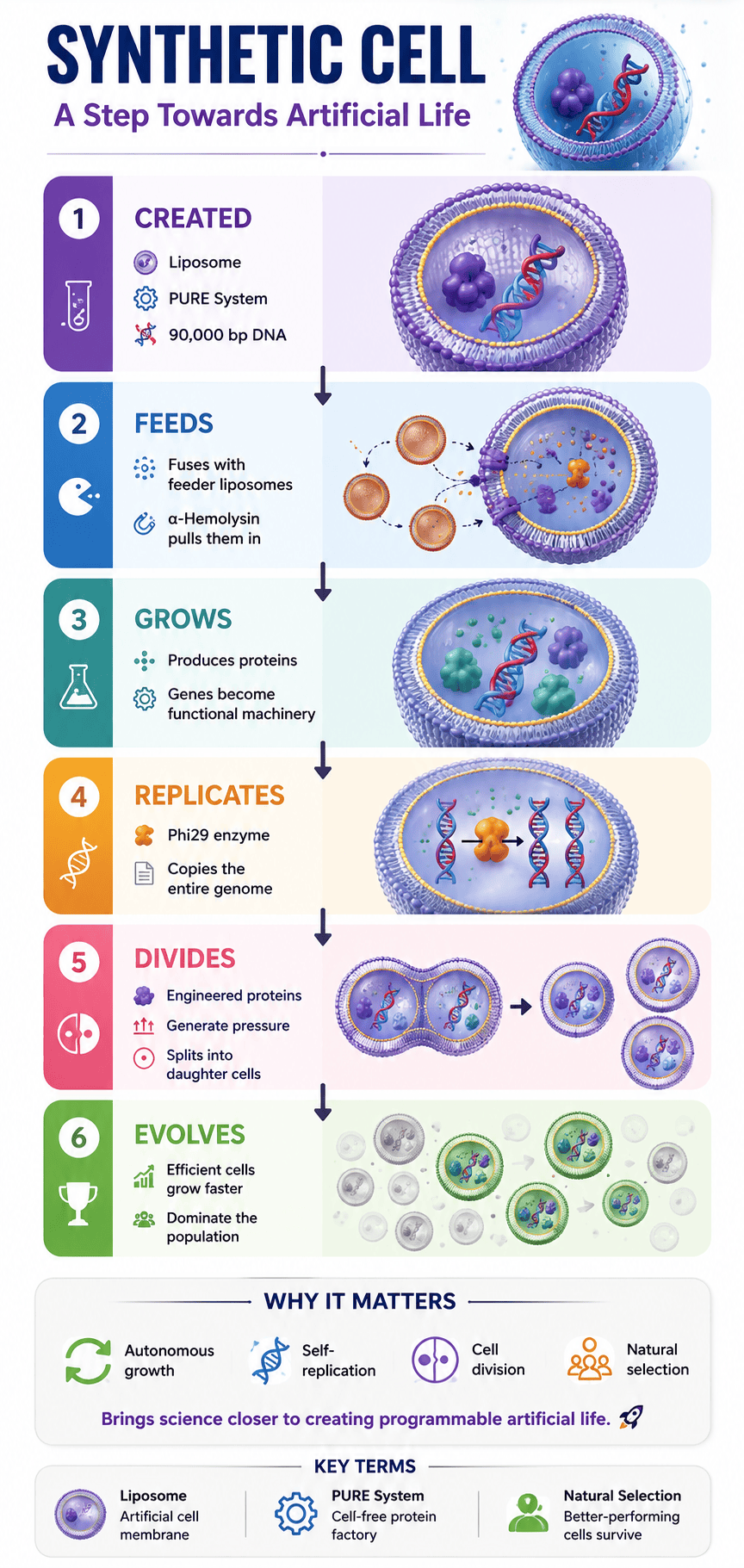
- Researchers at the University of Minnesota developed a synthetic cell capable of growth and division.
- The cell was initiated as a liposome containing a PURE protein-making system and a 90,000 base pair DNA.
- It "eats" by fusing with smaller feeder liposomes, using a protein called alpha-hemolysin to pull them in.
- The synthetic cell replicates its genome using the Phi29 enzyme and divides through engineered proteins creating physical pressure.
- The researchers demonstrated that these cells could undergo natural selection, with more efficient cells dominating the population.
Synthetic cell.png
Detailed Insights:
- The synthetic cell's ability to grow and divide autonomously marks a significant step towards creating artificial life.
- Liposomes are artificial vesicles made of lipid bilayers, mimicking the basic structure of biological cell membranes.
- The PURE system (Protein synthesis Using Recombinant Elements) is a cell-free protein synthesis system used to express genes.
- The alpha-hemolysin protein acts as a "hook" to capture and integrate nutrients from feeder liposomes for growth.
- Phi29 is a highly processive DNA polymerase known for its ability to replicate DNA efficiently.
- The engineered biological division mechanism, using proteins to create membrane pressure, mimics natural cell division processes.
- Demonstrating natural selection in synthetic cells provides insights into the fundamental principles of evolution and life's origins.
- This research contributes to understanding the minimal requirements for life and could have implications for biotechnology and medicine.
Scientific/Technical Concepts Involved:
- Synthetic Cell: An artificial construct designed to mimic the fundamental properties of living cells, such as growth, metabolism, and division.
- Liposome: A spherical vesicle composed of a lipid bilayer, often used as a model for cell membranes or for drug delivery.
- DNA Replication: The biological process of producing two identical replicas of DNA from one original DNA molecule.
- Natural Selection: The process where organisms better adapted to their environment tend to survive and produce more offspring.

SuperKalam is your personal mentor for UPSC preparation, guiding you at every step of the exam journey.
Download the App


STUDY RESOURCES
CONTACT US
ⓒ Snapstack Technologies Private Limited