GS 2: International RelationsGS 3: EconomyGS 2: GovernanceGS 3: Internal SecurityPrelims
Hormuz to home, India’s resilience in uncertain times, Pg6
India expertly navigates Strait of Hormuz crisis, safeguarding energy security and macroeconomic stability through strategic policy and robust institutional coordination amidst global disruptions.
Practice MCQs
811 Students attempted
Key Highlights:
- The Strait of Hormuz is a critical maritime route through which nearly a fifth of global oil consumption passes, making it vital for energy security and international trade.
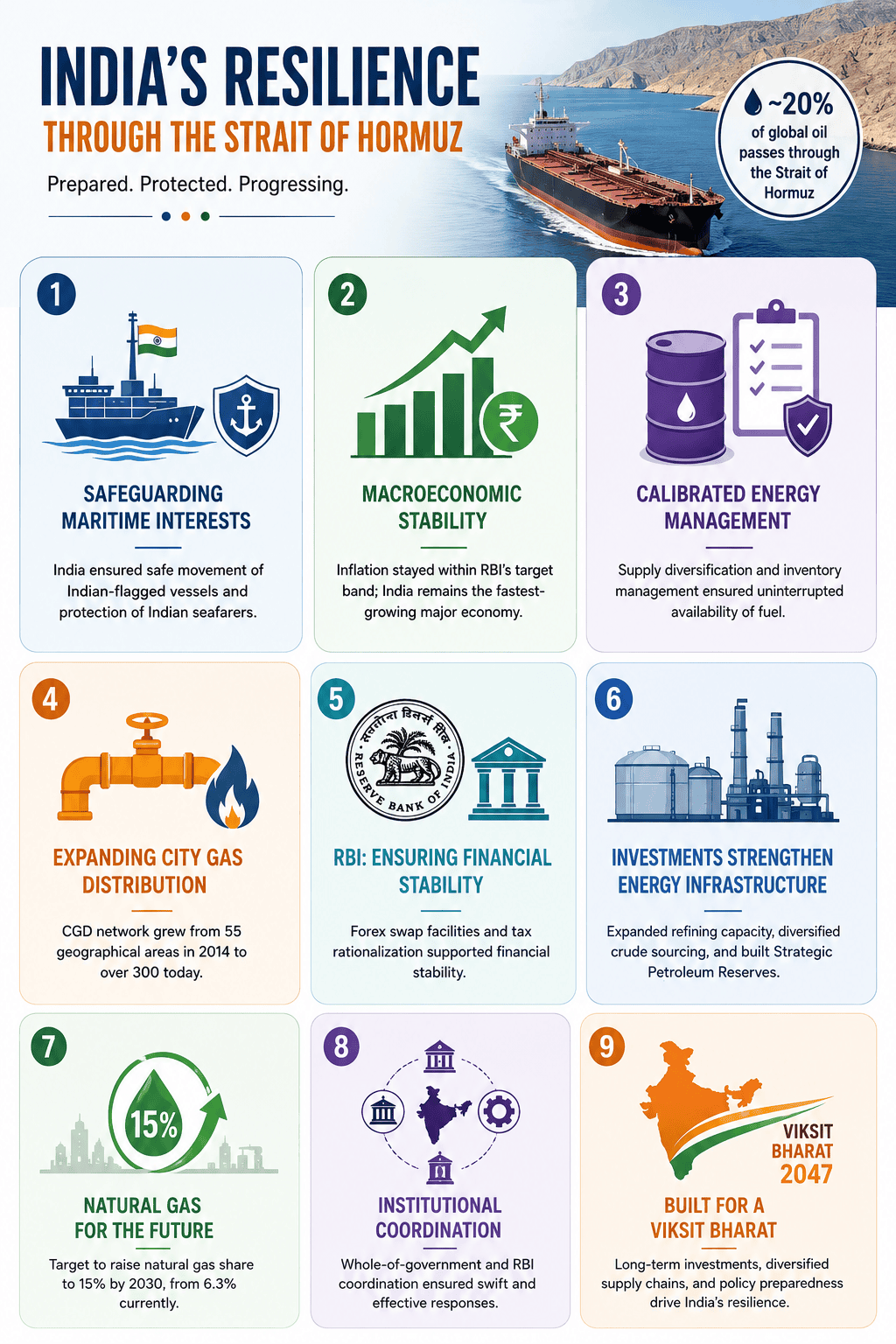
- India demonstrated swift and coordinated responses to disruptions in the Strait of Hormuz, ensuring the safe movement of Indian-flagged vessels and protection of Indian seafarers.
- Despite global headwinds, India maintained macroeconomic stability, with inflation largely within the Reserve Bank of India (RBI)'s target band and continued status as the fastest-growing major economy.
- The government adopted a calibrated energy management strategy, including supply diversification and inventory management, to protect consumers and ensure uninterrupted availability of petroleum products.
- India's City Gas Distribution (CGD) network has expanded significantly, growing from 55 geographical areas in 2014 to over 300 today, enhancing natural gas access.
India's resilience.png
Detailed Insights:
- The Strait of Hormuz connects the Persian Gulf with the Gulf of Oman and the Arabian Sea, serving as a crucial chokepoint for global energy trade.
- India imports approximately 85% of its crude oil, with a significant portion originating from Persian Gulf countries that rely on the Strait for exports.
- The government's "whole-of-government approach" involved close coordination among various ministries, state governments, and public sector energy companies to manage energy challenges.
- The RBI complemented government efforts by maintaining financial stability through measures like forex swap facilities and rationalization of taxes on foreign portfolio investors.
- Investments over the past decade have strengthened India's energy infrastructure, including expanding refining capacity, diversifying crude sourcing, and building Strategic Petroleum Reserves.
- The expansion of the City Gas Distribution (CGD) network aims to increase the share of natural gas in India's energy mix to 15% by 2030, from 6.3% currently.
- India's resilience is built on long-term investments in infrastructure, diversified supply chains, institutional coordination, and policy preparedness, aligning with the vision of Viksit Bharat by 2047.
Key Concepts Involved:
- Strait of Hormuz: A narrow, strategically critical waterway connecting the Persian Gulf with the Gulf of Oman, essential for global oil and gas trade.
- Macroeconomic Fundamentals: Key economic indicators like inflation, GDP growth, and fiscal stability that reflect the overall health of an economy.
- City Gas Distribution (CGD) network: Infrastructure for supplying natural gas (PNG) to domestic, commercial, and industrial consumers, and Compressed Natural Gas (CNG) to the automotive sector.
- Viksit Bharat by 2047: The Government of India's vision to transform India into a developed nation by its 100th year of independence in 2047, focusing on economic prosperity, social advancement, and modern governance.

SuperKalam is your personal mentor for UPSC preparation, guiding you at every step of the exam journey.
Download the App


STUDY RESOURCES
CONTACT US
ⓒ Snapstack Technologies Private Limited