GS 3: Environment & EcologyGS 2: GovernancePrelims
Elastic rules, Pg6
India's plastic waste rules amended again, mandates recycled content, allows target deferrals, raising concerns about effectiveness and enforcement.
Practice MCQs
790 Students attempted
Key Highlights:
- India's Plastic Waste Management Rules, initially introduced in 2016, have been amended to address plastic waste collection and recycling.
- Since 2022, the Extended Producer Responsibility (EPR) regime requires producers to collect and process a percentage of their plastic waste, reaching 100% by 2024-25.
- The 2026 amendments mandate a minimum percentage of recycled content in plastic packaging, such as 30% in rigid plastic by 2026-27, increasing to 60% by 2028-29.
- Companies can carry forward shortfalls in meeting targets for up to three years, provided they address at least one-third of the deficit annually.
Detailed Insights:
- The inherent qualities of plastic—adaptability, ease of production, and flexibility—contribute to the difficulty in incentivizing its collection and reuse.
- The EPR regime places responsibility on producers, importers, and brand owners to manage plastic waste equivalent to the amount they introduce into the market.
- Government data indicates that companies are currently collecting only 50%-60% of their obligations, despite the 100% target set for 2024-25.
- The new rules include provisions for using 'trading certificates,' suggesting a reliance on market economics to address the environmental problem of plastic waste.
- Without proper collection and recycling targets, the new reuse targets risk being ignored, undermining the intent of the EPR regime.
Key Concepts Involved:
- Extended Producer Responsibility (EPR): A policy approach where producers are responsible for the end-of-life management of their products.
- Plastic Waste Management Rules: Regulations aimed at managing plastic waste through collection, segregation, recycling, and reducing plastic usage.
- Recycled Content: The proportion of recycled material used in the production of new products or packaging.
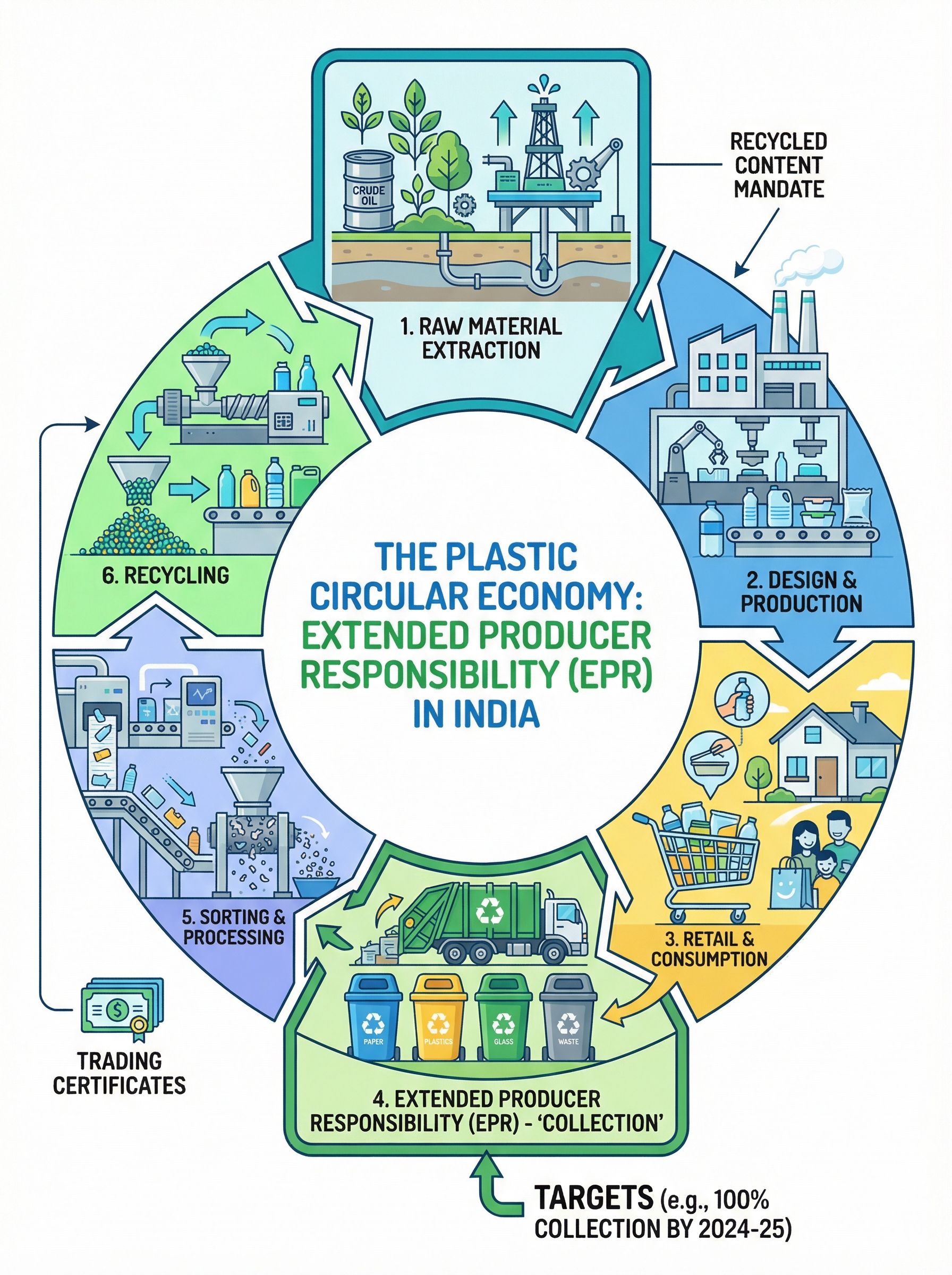
Plastic circular economy EPR India

SuperKalam is your personal mentor for UPSC preparation, guiding you at every step of the exam journey.
Download the App


STUDY RESOURCES
CONTACT US
ⓒ Snapstack Technologies Private Limited