GS 2: PolityGS 2: GovernanceGS 3: Internal SecurityGS 3: Science & TechnologyPrelims
Why are there concerns over WhatsApp usernames?, Pg13
Indian government confronts WhatsApp, Telegram over new username feature, warning of massive online fraud and impersonation risks under IT Act.
Practice MCQs
804 Students attempted
Key Highlights:
- On July 1, 2026, the Ministry of Electronics and Information Technology (MeitY) issued a notice to Meta, urging it to halt the rollout of WhatsApp's new username feature.
- The government expressed concerns that hiding phone numbers and using only usernames could escalate online fraud, phishing, and impersonation attacks.
- WhatsApp's username feature is optional and allows users to chat without sharing their mobile numbers, displaying only a chosen username.
- Similar notices were subsequently sent to Telegram, Signal, and Arattai, which already offer username features.
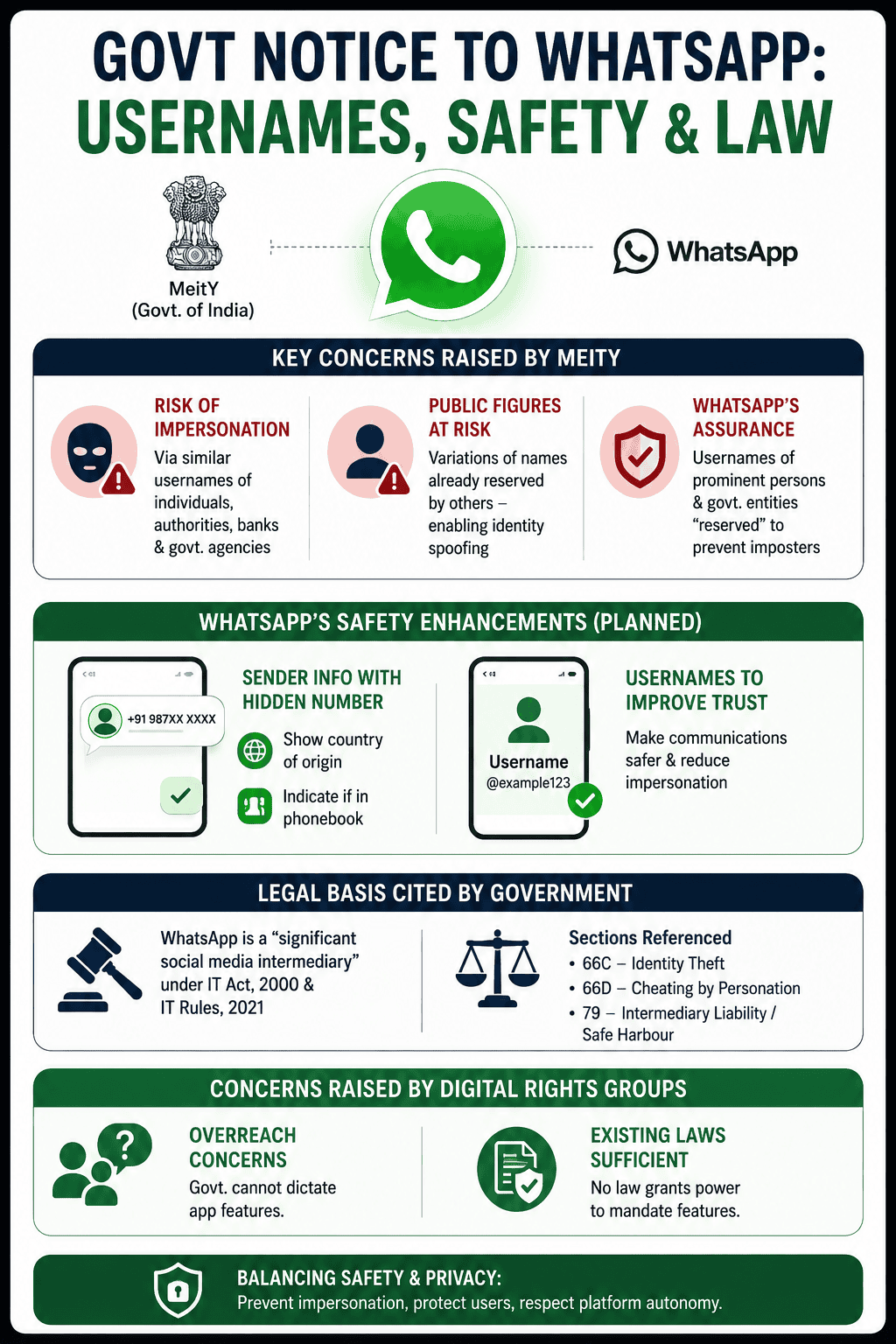
Whatsapp username.png
Detailed Insights:
- MeitY specifically highlighted the risk of impersonation of individuals, public authorities, financial institutions, and government agencies through similar usernames.
- Public figures have already reported instances where variations of their names were reserved by other users, raising concerns about identity spoofing.
- WhatsApp stated it has "reserved" usernames of prominent personalities, including public figures and government entities, to prevent imposters.
- The platform also plans to display the sender’s country of origin and indicate if they are in the phonebook when a message is received from a user with a hidden number.
- The government's notice cited WhatsApp as a "significant social media intermediary" under the Information Technology Act, 2000, and Information Technology Rules, 2021.
- Sections 66C (identity theft), 66D (cheating by personation), and 79 (intermediary liability/safe harbour) of the Information Technology Act, 2000, were also referenced in the notice.
- Digital rights groups like the Internet Freedom Foundation (IFF) questioned the government's authority to dictate app features, arguing that existing laws do not grant such power.
Key Concepts Involved:
- Ministry of Electronics and Information Technology (MeitY): The nodal government agency responsible for policy, promotion, and development in the electronics and IT sectors in India.
- Information Technology Act, 2000: The primary law in India dealing with cybercrime and electronic commerce, providing legal recognition for electronic transactions.
- Significant Social Media Intermediary: A social media platform with more than 50 lakh (5 million) registered users in India, subject to specific due diligence obligations under Indian law.
- Intermediary Liability/Safe Harbour: Legal provisions that protect online platforms from liability for content posted by users, provided they adhere to certain due diligence requirements.

SuperKalam is your personal mentor for UPSC preparation, guiding you at every step of the exam journey.
Download the App


STUDY RESOURCES
CONTACT US
ⓒ Snapstack Technologies Private Limited