GS 3: EconomyGS 2: PolityPrelims
Unwelcome surge, Pg10
India's June GST collections surged 13.9% to ₹1.95 lakh crore, but imported inflation and rupee depreciation, not domestic growth, fueled this 'unwelcome' buoyancy.
Practice MCQs
790 Students attempted
Key Highlights:
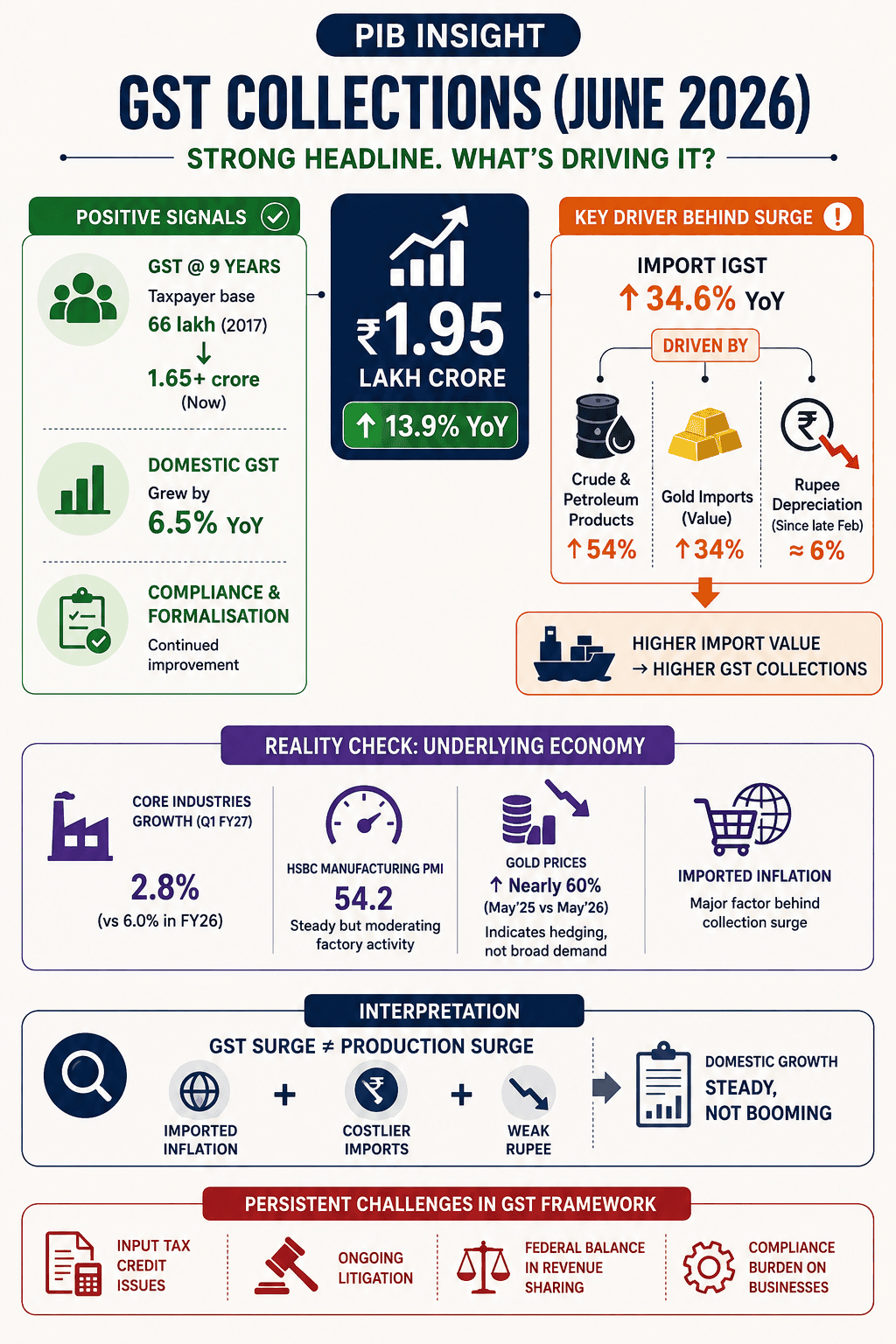
- India’s June GST collections increased by 13.9% year-on-year, reaching ₹1.95 lakh crore.
- The surge was primarily driven by a 34.6% rise in import IGST, while domestic GST grew by a more modest 6.5%.
- Significant contributors to the import growth in May included a 54% rise in crude and petroleum products and a 34% rise in gold imports by value.
- The government increased the gold import duty from 6% to 15% on May 13 to curb rising imports.
- The Indian rupee depreciated by almost 6% against the U.S. dollar since late February, contributing to higher import costs.
GST.png
Detailed Insights:
- The substantial increase in import IGST is largely attributed to imported inflation and currency depreciation rather than robust domestic production growth.
- The nearly 60% surge in gold prices between last May and this May suggests hedging during uncertain times, not broad-based economic activity.
- The performance of India’s eight core industries showed subdued growth of 2.8% in Q1 FY27, significantly lower than 6% in the previous year.
- The HSBC Manufacturing PMI recorded 54.2, indicating steady but moderating factory activity and marking the second-lowest expansion in 13 months.
- GST has completed nine years, expanding the taxpayer base from 66 lakh in 2017 to over 1.65 crore, reflecting improved compliance and formalization.
- Persistent challenges within the GST framework include issues related to Input Tax Credit, ongoing litigation, and federal balance in revenue sharing.
Key Concepts Involved:
- GST (Goods and Services Tax): A unified, multi-stage, destination-based indirect tax levied on goods and services.
- IGST (Integrated Goods and Services Tax): A component of GST levied on inter-state supply of goods and services and on imports.
- Eight Core Industries: Key sectors (coal, crude oil, natural gas, refinery products, fertilizers, steel, cement, electricity) that significantly influence industrial production.
- HSBC Manufacturing PMI: A monthly indicator reflecting the economic health of the manufacturing sector based on surveys of purchasing managers.
- Imported Inflation: An increase in the general price level within a country due to higher costs of imported goods or services.
- Input Tax Credit: The mechanism allowing businesses to claim credit for taxes paid on inputs used in manufacturing goods or providing services.

SuperKalam is your personal mentor for UPSC preparation, guiding you at every step of the exam journey.
Download the App


STUDY RESOURCES
CONTACT US
ⓒ Snapstack Technologies Private Limited