GS 3: EconomyPrelims
The waning sheen, Pg6
GST collections surge 8.1% in February, import IGST spikes 17%, rupee depreciation and rising input costs threaten price stability.
Practice MCQs
761 Students attempted
Key Highlights:
- February's GST collections rose by 8.1% year-on-year, reaching approximately ₹1.83 lakh crore.
- Import IGST surged by over 17% in February compared to the previous year, reaching about ₹47,800 crore.
- The rupee weakened by about 4% against the dollar between February 2025 and February 2026.
- Crude oil, semiconductors, copper, and aluminium constitute about 35% of India's merchandise imports.
Detailed Insights:
- The GST framework rationalization in September 2025 into a two-tiered rate structure of 5% and 18% boosted consumption expenditure.
- A five-year comparison shows a nearly 41% rise in February IGST collections from ₹33,800 crore in February 2022 to ₹47,800 crore in February 2026.
- India relies heavily on imports for semiconductors (over 90%), crude oil (over a quarter of total imports), copper, and aluminium.
- Rising global prices and a weaker rupee inflate the assessable value on which IGST is levied, increasing input costs for sectors like automobiles and appliances.
- Major states like Tamil Nadu, Maharashtra, and West Bengal lagged the national GST growth rate of 8% in February, indicating uneven domestic demand.
- Import IGST now constitutes roughly 27% of gross GST collections in April 2025-February 2026, up from about 24% in the previous year.
- Higher input costs from imports could offset the price relief from GST rationalization, potentially leading to increased costs for consumers.
Key Concepts Involved:
- GST (Goods and Services Tax): An indirect tax levied on the supply of goods and services.
- IGST (Integrated Goods and Services Tax): A tax levied on all inter-state supplies of goods and services.
- GST Rationalization: The process of simplifying the GST rate structure and reducing the number of tax slabs.
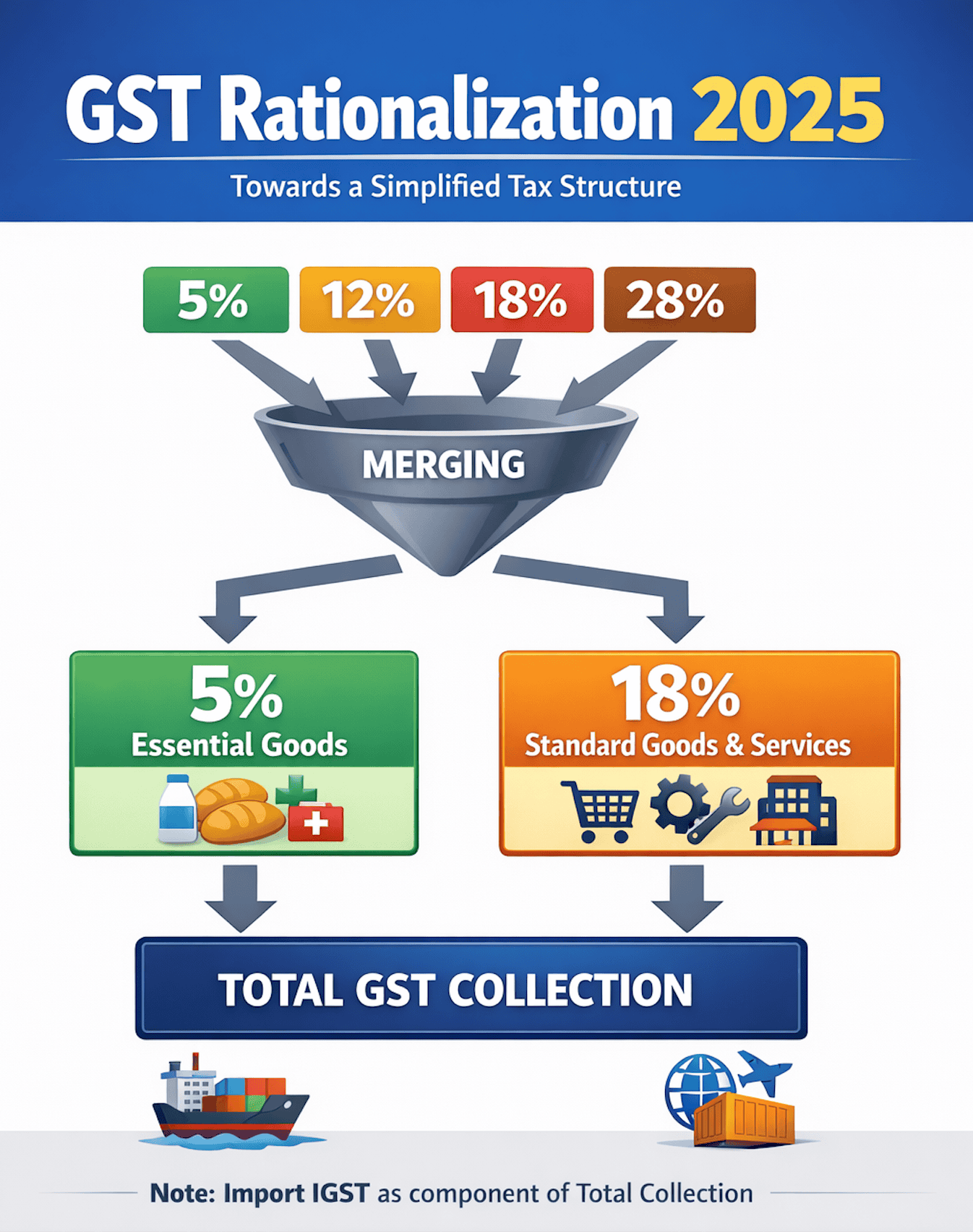
GST Rationalisation

SuperKalam is your personal mentor for UPSC preparation, guiding you at every step of the exam journey.
Download the App


STUDY RESOURCES
CONTACT US
ⓒ Snapstack Technologies Private Limited