GS 2: Social JusticeGS 3: EconomyPrelims
Joy and pain, Pg6
NFHS-6 data reveals India's progress in child health, TFR stabilization, and rising obesity, highlighting dual public health burden.
Practice MCQs
775 Students attempted
Key Highlights:
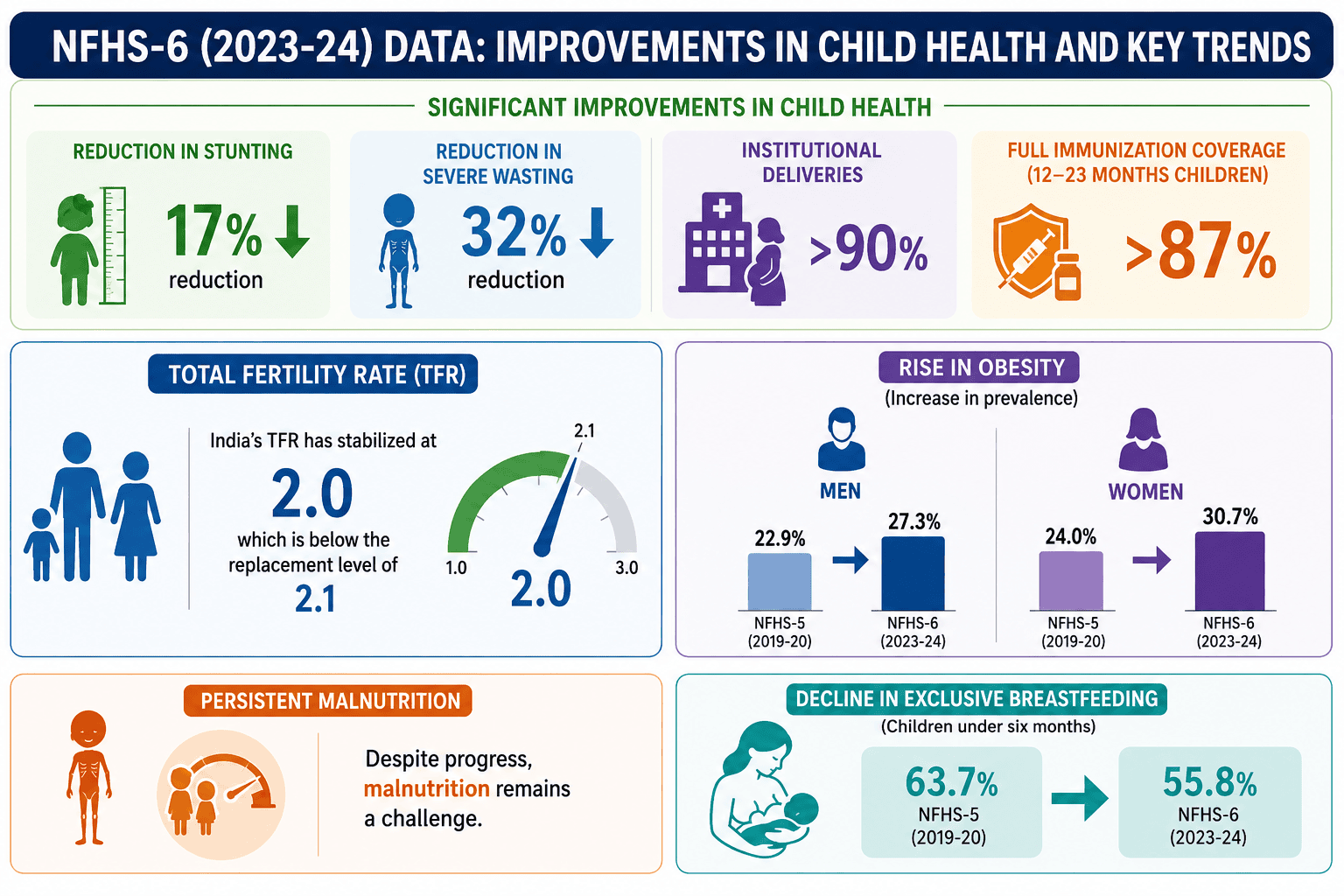
- NFHS-6 (2023-24) data reveals significant improvements in child health, including a 17% reduction in stunting and a 32% reduction in severe wasting.
- Institutional deliveries have exceeded 90%, and full immunization coverage for children aged 12-23 months has risen to over 87%.
- India's Total Fertility Rate (TFR) has stabilized at 2.0, which is below the replacement level of 2.1.
- The survey indicates a rise in obesity among men (from 22.9% to 27.3%) and women (from 24% to 30.7%) alongside persistent malnutrition.
- Exclusive breastfeeding among children under six months has declined from 63.7% in NFHS-5 to 55.8% in NFHS-6.
NFHS-6.png
Detailed Insights:
- The NFHS is a crucial tool for defining public policy, promoting evidence-based governance, and tracking development indicators.
- Despite gains in child health, India faces a 'dual public health burden' with rising obesity and continued malnutrition, along with an increase in lifestyle diseases.
- Declining rates of exclusive breastfeeding can negatively impact infant nutrition and overall health outcomes.
- Other surveys like the SRS and National Health Accounts Survey highlight a lack of focus and funding for lifestyle diseases and metabolic disorders.
- Addressing the rise in NCDs requires comprehensive screening programs, nationwide behavior change communication on diet and exercise, and higher taxes on unhealthy foods and beverages.
- Strengthening health systems at all levels is essential to manage NCDs effectively as India's population ages.
Key Concepts Involved:
- Stunting: Impaired growth and development that children experience from poor nutrition, repeated infection, and inadequate psychosocial stimulation.
- Total Fertility Rate (TFR): The average number of children a woman is expected to have during her reproductive years.
- NCDs (Non-Communicable Diseases): Diseases that are not infectious or transmissible, such as heart disease, stroke, cancer, diabetes, and chronic respiratory diseases.

SuperKalam is your personal mentor for UPSC preparation, guiding you at every step of the exam journey.
Download the App


STUDY RESOURCES
CONTACT US
ⓒ Snapstack Technologies Private Limited