GS 2: PolityGS 2: GovernanceGS 3: Science & TechnologyPrelims
Criminal justice system’s digital push aims for a full roll-out by next year, Pg12
India's criminal justice system targets full digital rollout by 2027, integrating police, courts, and forensics under new criminal laws.
Practice MCQs
775 Students attempted
Key Highlights:
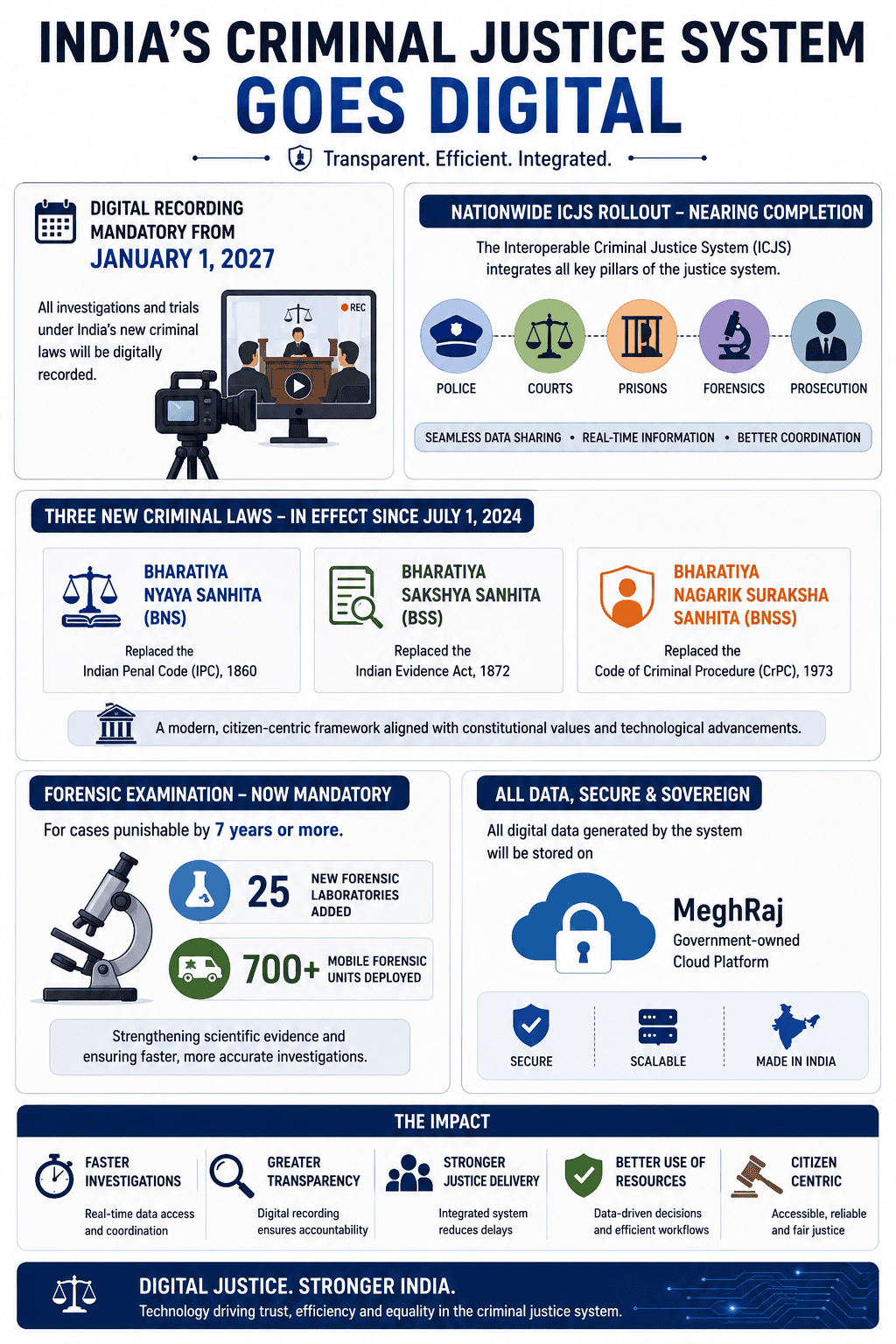
- Procedures for all investigations and trials under India's new criminal laws will be digitally recorded starting January 1, 2027.
- The nationwide rollout of the Interoperable Criminal Justice System (ICJS), which integrates police, courts, prisons, forensics, and prosecution, is expected to be completed soon.
- The three new criminal laws, Bharatiya Nyaya Sanhita (BNS), Bharatiya Sakshya Sanhita (BSS), and Bharatiya Nagarik Suraksha Sanhita (BNSS), replaced the colonial-era criminal codes on July 1, 2024.
- Forensic examination is now mandatory for cases punishable by seven years or more, leading to the addition of 25 new forensic laboratories and over 700 mobile forensic units.
- All digital data generated by the system will be stored on the government-owned cloud platform MeghRaj.
Criminal Justice system.png
Detailed Insights:
- The ICJS aims to achieve an end-to-end digital workflow, ensuring that data is entered once and accessible across all five pillars of the criminal justice system.
- The BNS replaced the Indian Penal Code (1860), the BSS replaced the Indian Evidence Act (1872), and the BNSS replaced the Code of Criminal Procedure (1898).
- States and Union Territories have been given five years to implement the necessary infrastructure and forensic capabilities required by the new laws.
- The BNSS provides statutory backing to Zero-FIRs, allowing them to be filed irrespective of jurisdiction, a provision that existed earlier but now has legal force.
- The Crime and Criminal Tracking and Network Systems (CCTNS) platform, used by over 16,000 police stations, facilitates FIR registration and has been upgraded to support the new criminal laws.
- The national implementation score for the new laws increased from 46.47% in January 2025 to 70.06% by June 2026.
- Challenges to full implementation include improving internet connectivity, standardizing processes across states, ensuring full interoperability, and training personnel.
Key Concepts Involved:
- Interoperable Criminal Justice System (ICJS): A national platform integrating police, courts, prisons, forensics, and prosecution for seamless data exchange and efficient justice delivery.
- Bharatiya Nyaya Sanhita (BNS): The new substantive criminal law that replaced the Indian Penal Code (1860), defining offenses and punishments.
- Bharatiya Sakshya Sanhita (BSS): The new law governing the admissibility of evidence in Indian courts, replacing the Indian Evidence Act (1872).
- Bharatiya Nagarik Suraksha Sanhita (BNSS): The new procedural law that replaced the Code of Criminal Procedure (1898), outlining procedures for arrest, investigation, and trial.
- Zero-FIR: An FIR that can be registered at any police station, regardless of the territorial jurisdiction where the crime occurred, and then transferred to the appropriate station.
- MeghRaj: The Government of India's cloud computing initiative, providing secure and scalable cloud services for government departments and e-governance applications.
- Crime and Criminal Tracking and Network Systems (CCTNS): A project to create a comprehensive national database of crimes and criminals, linking police stations across the country.

SuperKalam is your personal mentor for UPSC preparation, guiding you at every step of the exam journey.
Download the App


STUDY RESOURCES
CONTACT US
ⓒ Snapstack Technologies Private Limited