GS 2: GovernanceGS 3: Science & TechnologyPrelimsGS 2: Government policies and interventions for development in various sectorsGS 3: Biotechnology
Peptide boom: Miracle molecules or hype?, Pg15
Unregulated peptides fuel wellness craze, but experts warn of severe health risks due to absent scientific evidence and regulatory oversight, unlike approved medicines.
Practice MCQs
818 Students attempted
Key Highlights:
- Peptides, short chains of amino acids, are being widely marketed for wellness, weight loss, muscle recovery, anti-ageing, and longevity.
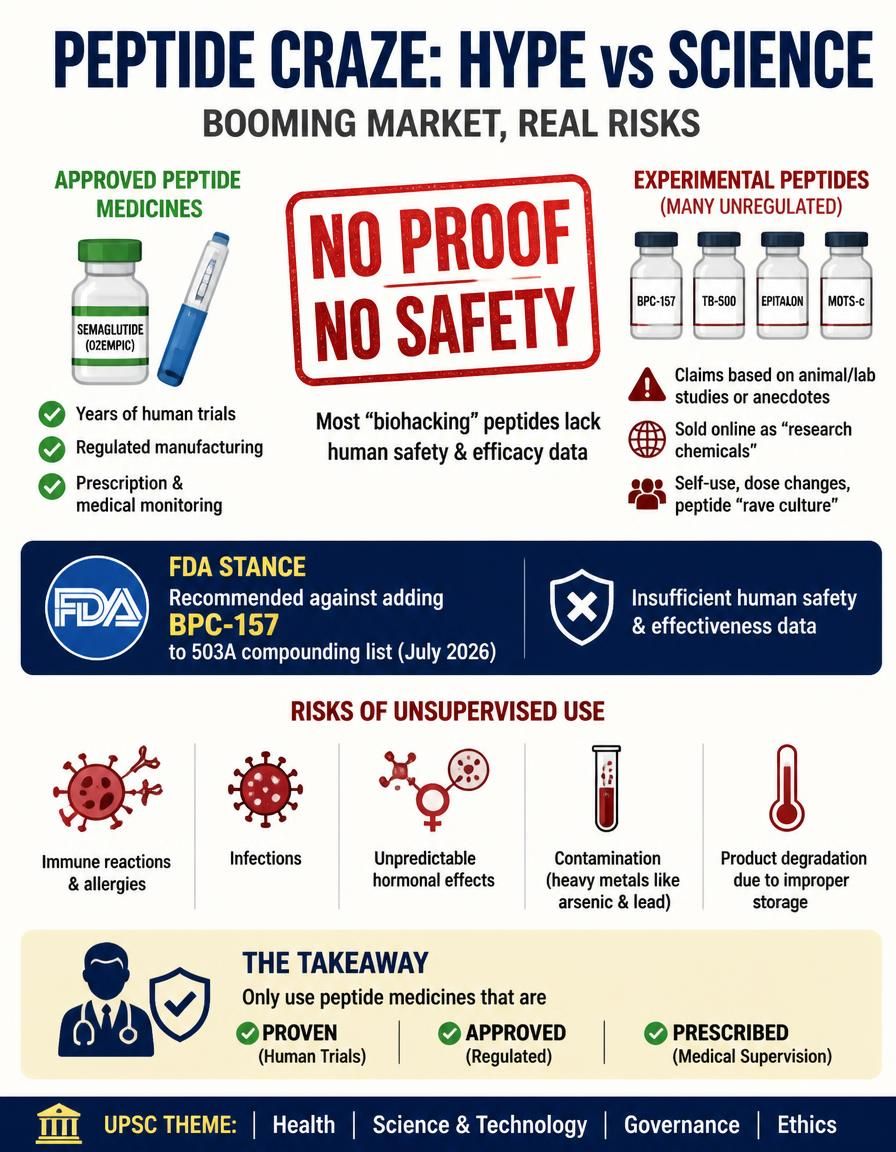
- A significant distinction exists between rigorously tested peptide medicines like semaglutide and insulin, and many experimental compounds sold online.
- Many peptides promoted for "biohacking" lack adequate evidence from human clinical trials regarding their safety and efficacy.
- The US FDA recommended against adding BPC-157 to the 503A compounding list in July 2026, citing insufficient human safety and effectiveness data.
- Unsupervised use of unregulated peptides carries substantial health risks, including immune reactions, infections, unpredictable hormonal effects, and contamination.
Peptide.jpg
Detailed Insights:
- The highly visible success of approved drugs such as Ozempic, which contains semaglutide, has significantly fueled the general peptide craze.
- Biohacking culture, celebrity endorsements, and aggressive social media promotion further contribute to the rapidly expanding market for unregulated peptides.
- Experimental peptides like BPC-157, TB-500, epitalon, and MOTS-c are sold openly online as "research chemicals" or offered off-label by wellness clinics.
- Claims for these unregulated peptides are often based on animal studies, laboratory findings, theoretical mechanisms, or personal anecdotes, not controlled human trials.
- "Peptide rave parties" and online communities normalize self-administration, dose changes, and combining peptides without professional medical oversight.
- Approved peptide medicines undergo years of large-scale human clinical trials, are manufactured in regulated facilities, and are prescribed with appropriate medical monitoring.
- Risks of unsupervised use include non-standardized doses, potential contamination with toxic heavy metals like arsenic and lead, and product degradation due to improper storage.
- Combining peptides ("stacking") and self-directed dose adjustments based on anecdotal evidence can sharply increase health risks due to unknown interactions and effects.
- Self-injection introduces additional dangers such as improper mixing or dilution, inadequate sterility, unsafe needle practices, and local infections like cellulitis or abscesses.
- There is a critical lack of adequate long-term safety data for many unregulated peptide compounds, especially when used continuously for extended periods.
- Consumers should verify if a peptide is prescribed by a qualified doctor, dispensed by a licensed pharmacy, and supported by credible, published human clinical trial evidence.
Key Concepts Involved:
- Peptides: Short chains of amino acids, smaller than proteins, acting as fundamental biological building blocks.
- Biohacking: A do-it-yourself biology movement aiming to optimize human performance and well-being through various interventions.
- Off-label use: Prescribing a medication for a purpose or in a manner not specifically approved by regulatory authorities.
- Compounding pharmacies: Pharmacies that prepare customized medications for individual patients based on a specific prescription.
- Research chemical: A substance labeled "not for human consumption" to circumvent regulatory oversight for human therapeutic use.
- Clinical trials: Rigorous research studies conducted in human volunteers to evaluate the safety and efficacy of new medical interventions.
- US FDA: The United States Food and Drug Administration, responsible for protecting public health by ensuring the safety and efficacy of drugs.
Previous13/13

SuperKalam is your personal mentor for UPSC preparation, guiding you at every step of the exam journey.
Download the App


STUDY RESOURCES
CONTACT US
ⓒ Snapstack Technologies Private Limited