GS 2: GovernanceGS 2: International RelationsGS 3: EconomyPrelimsGS 3: Indian Economy, Planning, Mobilization of Resources, Growth, Development and Employment
New investment treaties may include qualified most-favoured nation rule, Pg13
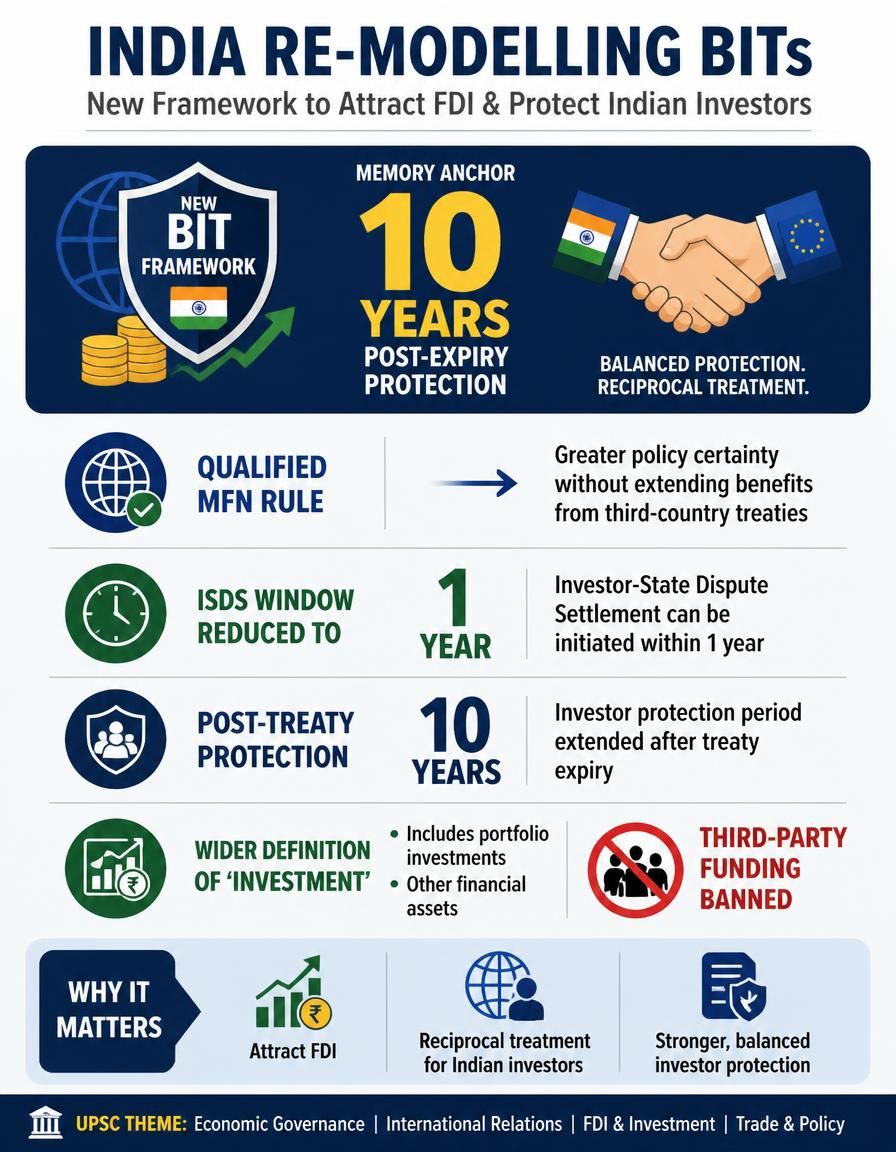
India's proposed BIT revamp includes qualified MFN rule, shorter ISDS window, and expanded investment definition to attract foreign capital.
Practice MCQs
818 Students attempted
Key Highlights:
- India is proposing a re-modelling of its Bilateral Investment Treaties (BITs) to attract foreign investment.
- The new framework may include a qualified Most-Favoured Nation (MFN) rule, differing from the full MFN rule rescinded a decade ago.
- This aims to address investor concerns from major trading partners like the European Union and ensure reciprocal treatment for Indian investors abroad.
- The Finance Ministry has circulated a Draft Cabinet note outlining proposed changes to the BIT framework.
- Proposals include reducing the Investor-State Dispute Settlement (ISDS) window to one year and doubling investor protection post-treaty expiry to 10 years.
- The definition of 'investment' will be widened to include portfolio investments and other financial assets.
BIT Remodelling.jpg
Detailed Insights:
- The qualified MFN provision is designed to offer investors greater policy certainty without opening the door to broader claims based on provisions in treaties signed with third countries.
- This strategic move is considered essential for both attracting foreign capital and enabling Indian investors to receive similar treatment in major economies like the US and EU.
- An open approach to granting qualified MFN status could also provide significant leverage in bilateral negotiations.
- The Draft Cabinet note further proposes banning third-party funding of litigation in investment disputes.
- The 2015 BIT rule, which did not grant open-ended MFN or full Fair and Equitable Treatment (FET) standards, will be retained.
- This cautious approach reflects India's concerns stemming from the legacy of past investment disputes.
Key Concepts Involved:
- Bilateral Investment Treaties (BITs): Agreements between two countries for the reciprocal promotion and protection of investments by investors in each other's territories.
- Most-Favoured Nation (MFN) Rule: A principle requiring a country to provide the same favorable treatment to all its trading partners as it gives to its "most favored" one.
- Qualified MFN Rule: A restricted form of MFN treatment, offering specific benefits without extending all provisions from other treaties.
- Investor-State Dispute Settlement (ISDS): A mechanism allowing foreign investors to sue host governments directly for alleged breaches of investment treaty obligations.
- Fair and Equitable Treatment (FET): A common standard in BITs requiring host states to treat foreign investors justly and equitably, often a source of broad claims.
- Portfolio Investments: Investments in financial assets such as stocks and bonds, rather than direct investment in productive assets.

SuperKalam is your personal mentor for UPSC preparation, guiding you at every step of the exam journey.
Download the App


STUDY RESOURCES
CONTACT US
ⓒ Snapstack Technologies Private Limited