GS 3: Science & TechnologyPrelimsGS 3: Achievements of Indians in Science and TechnologyGS 3: Indigenization of Technology and New Technology DevelopmentGS 3: Science and Technology in Everyday Life
India's 'Own GPS', Which New ISRO Satellite Can Restore, Pg11
ISRO's NVS-03 launch aims to restore India's indigenous NavIC satellite navigation system, overcoming past atomic clock failures and ensuring strategic autonomy.
Practice MCQs
825 Students attempted
Key Highlights:
- The Indian Space Research Organisation (ISRO) launched NVS-03, its third new-generation navigation satellite, to restore the functioning of India's satellite-based positioning system, NavIC.
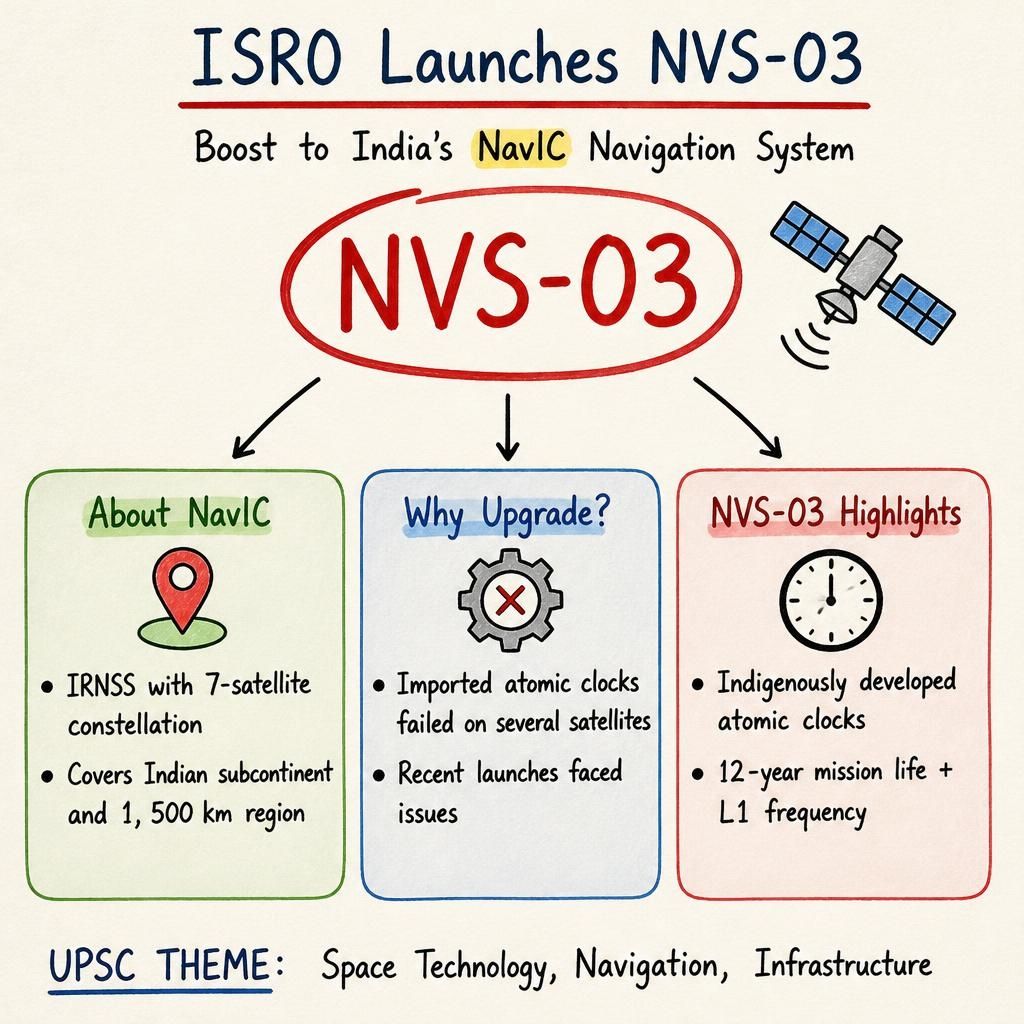
- NavIC, or Navigation with Indian Constellation, is the operational name for the Indian Regional Navigation Satellite System (IRNSS), a seven-satellite constellation covering the Indian subcontinent and a 1,500 km surrounding region.
- The system had ceased providing location data primarily due to the failure of imported atomic clocks on several satellites and issues with recent launches.
- India is the only country with a regional navigation system, designed to offer location accuracy up to 10 meters for public use and a more accurate service for strategic users.
- The new generation of satellites, starting with NVS-01, features indigenously developed atomic clocks with a longer 12-year mission life and transmits signals on the L1 frequency for enhanced interoperability.
ISRO Launch.jpg
Detailed Insights:
- NavIC was designed to provide superior coverage over the Indian landmass compared to the GPS, especially in challenging terrains like valleys and forests.
- Since July 2013, ISRO has launched 11 navigation satellites for the approximately Rs 2,250-crore system, but six have failed.
- The Comptroller and Auditor General (CAG) reported in 2018 that the development of consumer-end receivers for NavIC began only in 2017, years after the first satellite IRNSS-1A was launched in 2013.
- Failed replacement attempts included IRNSS-1H, which could not be placed in orbit due to a shield failure, and NVS-02, which suffered a propulsion system malfunction.
- The new NVS-03 satellite, like NVS-01, includes the L1 frequency, which is commonly used by GPS, facilitating integration with other systems and wearable devices.
Key Concepts Involved:
- NavIC (Navigation with Indian Constellation): India's indigenous regional satellite navigation system providing positioning services.
- IRNSS (Indian Regional Navigation Satellite System): The formal name for the constellation of satellites that constitute the NavIC system.
- Atomic Clocks: Highly precise timekeeping devices essential for accurate distance measurement and positioning in satellite navigation systems.
- L1 Frequency: A specific radio frequency band used by satellite navigation systems, widely adopted for interoperability with devices like smartphones and smartwatches.

SuperKalam is your personal mentor for UPSC preparation, guiding you at every step of the exam journey.
Download the App


STUDY RESOURCES
CONTACT US
ⓒ Snapstack Technologies Private Limited