GS 2: GovernanceGS 3: Science & TechnologyGS 2: Social JusticePrelimsGS 2: Government policies and interventions for development in various sectors
On antibiotics, problem isn't just overprescribing, Pg14
India's antibiotic overuse, driven by systemic healthcare weaknesses, necessitates urgent reforms in infection control, diagnostics, and public education to combat antimicrobial resistance.
Practice MCQs
804 Students attempted
Key Highlights:
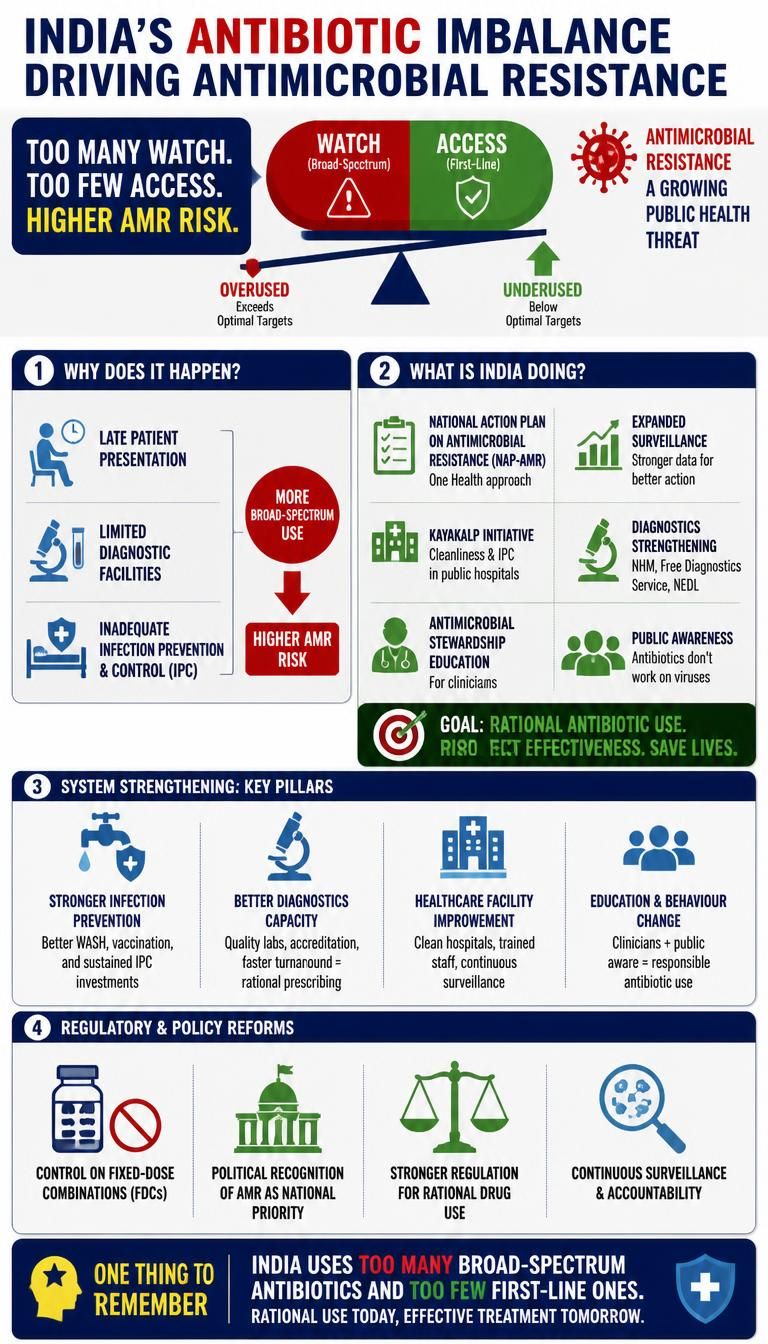
- A recent global study in The Lancet Public Health indicates India's antibiotic consumption is skewed towards broad-spectrum "watch" antibiotics, exceeding optimal targets.
- India uses too many broad-spectrum antibiotics and too few first-line "access" antibiotics, a pattern contributing to antimicrobial resistance.
- The overuse is driven by factors such as late patient presentation, limited diagnostic facilities, and inadequate infection prevention and control in healthcare settings.
- India has launched a National Action Plan on Antimicrobial Resistance (NAP-AMR) and expanded surveillance to combat this growing public health threat.
Antibiotic.jpg
Detailed Insights:
- The tendency to prescribe broad-spectrum antibiotics often compensates for systemic weaknesses in the healthcare system, where definitive diagnoses are delayed.
- Strengthening infection prevention through improved Water, Sanitation, and Hygiene (WASH), wider vaccination, and sustained investment in Infection Prevention and Control (IPC) programs is crucial to reduce the burden of infections requiring antibiotics.
- Enhancing diagnostic capacity, including laboratory quality, accreditation, and faster turnaround times, is essential for enabling rational antibiotic prescribing.
- Government initiatives like Kayakalp aim to improve cleanliness and infection control in public hospitals, though continuous investment in trained personnel and surveillance is needed.
- India's efforts to bolster diagnostics include the National Health Mission, Free Diagnostics Service initiative, and National Essential Diagnostics List.
- Education for clinicians on Antimicrobial Stewardship and public awareness campaigns about antibiotics' ineffectiveness against viral infections are vital.
- Regulatory measures, such as controlling Fixed-Dose Combinations (FDCs), and increased political recognition of AMR as a national priority are significant reforms undertaken by India.
Key Concepts Involved:
- Antimicrobial Resistance (AMR): The ability of microorganisms to resist antimicrobial drugs, making infections harder to treat and increasing the risk of disease spread, severe illness, and death.
- Antimicrobial Stewardship: Coordinated interventions to promote the optimal use of antimicrobial agents to improve patient outcomes, reduce resistance, and decrease unnecessary costs.
- AWaRe Classification: A World Health Organization (WHO) framework categorizing antibiotics into Access, Watch, and Reserve groups based on their resistance potential and importance, to guide appropriate use.
- Fixed-Dose Combinations (FDCs): Pharmaceutical products containing two or more active ingredients in a fixed ratio within a single dosage form, often facing regulatory scrutiny for therapeutic justification.

SuperKalam is your personal mentor for UPSC preparation, guiding you at every step of the exam journey.
Download the App


STUDY RESOURCES
CONTACT US
ⓒ Snapstack Technologies Private Limited