GS 2: International RelationsGS 3: EconomyPrelims
Oman presents Iran with Gulf-backed plan for voluntary fees to use Hormuz, Pg18
Oman unveils Gulf-backed plan for voluntary fees to navigate the strategic Strait of Hormuz, aiming to de-escalate US-Iran conflict and secure global oil and LNG trade.
Practice MCQs
796 Students attempted
Key Highlights:
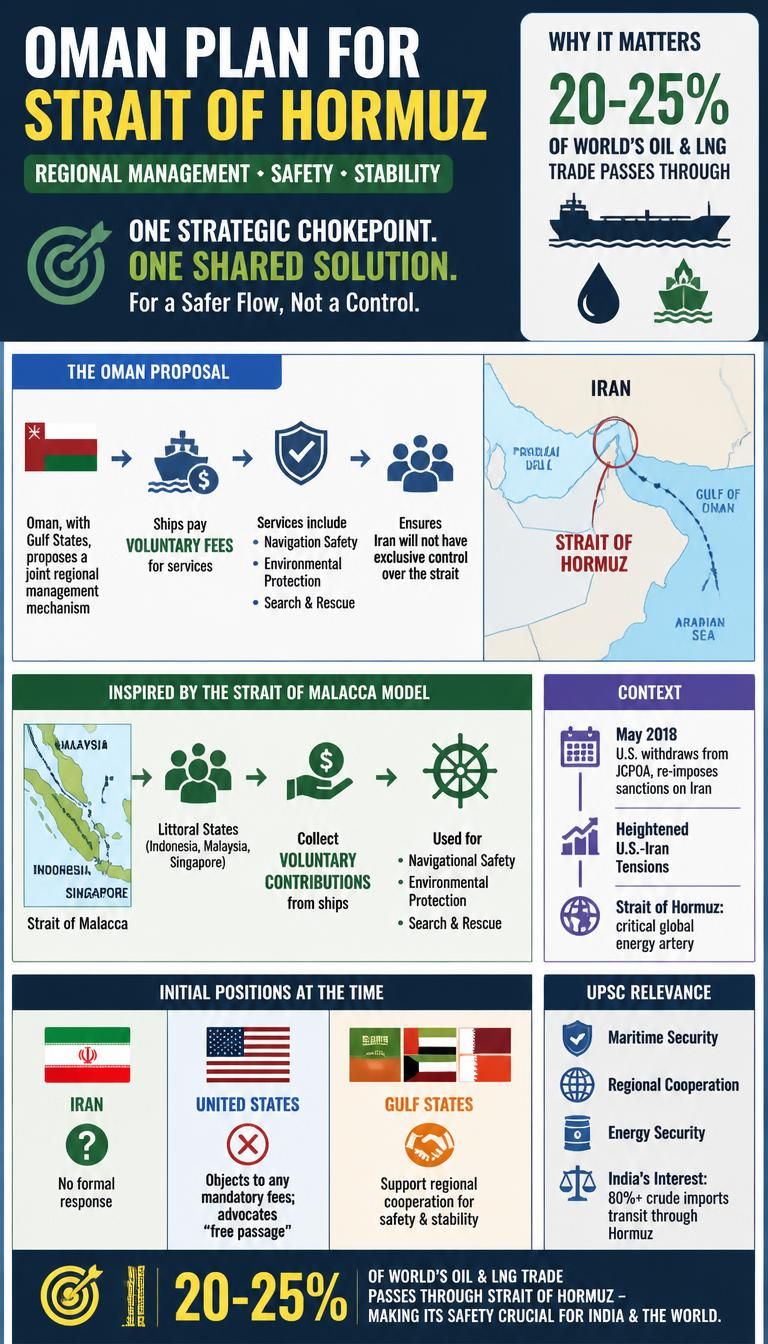
- Oman has presented Iran with a plan, backed by Gulf states, to manage the Strait of Hormuz, proposing the collection of voluntary fees for its use.
- The proposal aims to resolve trade disruptions in the strait, which were caused by the US-Israeli conflict with Iran.
- Iran had previously shut the strait to non-Iranian ships after February 28, following attacks by the United States and Israel.
- The plan suggests Iran would not exercise sole control, and fees would be voluntary, similar to the system in the Strait of Malacca.
Oman Plan.jpg
Detailed Insights:
- The Strait of Hormuz is a critical maritime corridor through which approximately one-fifth of global oil and liquefied natural gas flowed before the conflict.
- The US-Israeli conflict with Iran led to significant disruption, with Iran effectively closing the strait to most shipping.
- A previous agreement between the US and Iran to partially reopen the strait collapsed in early July after Iran fired on ships.
- Iran had expressed a desire to manage the strait alongside Oman and charge service fees to passing vessels.
- The United States advocates for a return to the pre-war status quo, where ships could pass freely without payments, considering mandatory fees illegal.
- The Omani proposal draws an analogy to the Strait of Malacca, where Indonesia, Malaysia, and Singapore request voluntary contributions for navigation, environmental protection, and search-and-rescue operations.
Key Concepts Involved:
- Strait of Hormuz: A narrow sea passage connecting the Persian Gulf to the Arabian Sea, strategically vital for global oil and gas transport.
- Strait of Malacca: A narrow, 800 km stretch of water between the Malay Peninsula and the Indonesian island of Sumatra, serving as a major global shipping lane.

SuperKalam is your personal mentor for UPSC preparation, guiding you at every step of the exam journey.
Download the App


STUDY RESOURCES
CONTACT US
ⓒ Snapstack Technologies Private Limited