GS 2: GovernanceGS 3: Environment & EcologyGS 3: EconomyPrelims
Italy prepares to bring back nuclear power 40 yrs after Chernobyl disaster, Pg18
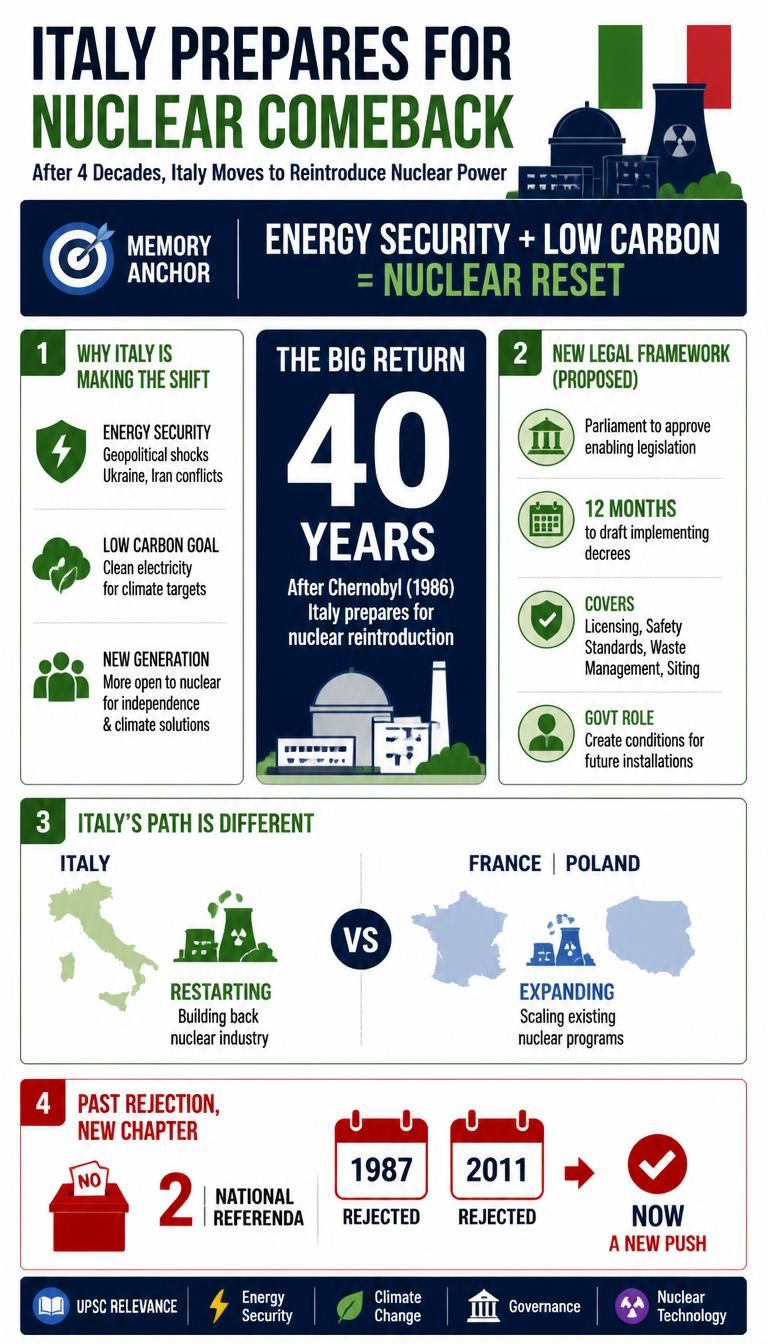
Italy's Meloni government pushes nuclear power return, 40 years post-Chernobyl, to bolster energy security and combat climate change.
Practice MCQs
796 Students attempted
Key Highlights:
- Italy is preparing to reintroduce nuclear power, four decades after the Chernobyl disaster led to its abandonment.
- Premier Giorgia Meloni's government aims to enhance energy security and achieve low-carbon electricity goals.
- Parliament is expected to approve legislation establishing a legal framework for next-generation nuclear technologies.
- The initiative seeks to overcome past public opposition, including two national referenda that rejected nuclear power.
Italy.jpg
Detailed Insights:
- The government's push is motivated by the need for stable energy supplies amidst geopolitical shocks from conflicts like those in Ukraine and Iran.
- A new generation of Italians is seen as more receptive to nuclear power, viewing it as a solution for climate change and energy independence.
- The proposed legislation will grant the government 12 months to draft implementing decrees for reactor licensing, safety standards, waste management, and siting.
- Gilberto Pichetto Fratin, Minister for the Environment and Energy Security, stated the government's role is to create conditions for future installations.
- Italy's effort to rebuild its nuclear industry differs from other European nations like France and Poland, which are expanding existing programs.
- Italy previously held national referenda in 1987 and 2011, both of which resulted in the rejection of nuclear power.
Key Concepts Involved:
- Nuclear Power: Energy generated from controlled nuclear reactions, typically fission, used for electricity production.
- Energy Security: The uninterrupted availability of energy sources at an affordable price.
- Referendum: A direct vote by the electorate on a particular proposal or law.
- Next-generation nuclear technologies: Advanced reactor designs, including Small Modular Reactors (SMRs), offering enhanced safety and efficiency.
Previous20/20

SuperKalam is your personal mentor for UPSC preparation, guiding you at every step of the exam journey.
Download the App


STUDY RESOURCES
CONTACT US
ⓒ Snapstack Technologies Private Limited