GS 2: GovernanceGS 2: PolityGS 2: Social JusticePrelimsGS 2: Government policies and interventions for development in various sectors
Keralam House Passes Bill to Protect Senior Citizens' Rights, Pg6
Kerala Assembly passes India's first state-level Senior Citizens Bill, ensuring rights-based elder care, regulating centers, and recognizing living wills for dignified end-of-life choices.
Practice MCQs
804 Students attempted
Key Highlights:
- The Keralam Legislative Assembly passed the Senior Citizens (Care and Protection of Rights) Bill, 2026, on Monday.
- This legislation is India’s first state-level legal framework specifically aimed at elder welfare.
- Chief Minister V D Satheesan piloted the Bill, highlighting the need to address demographic transition.
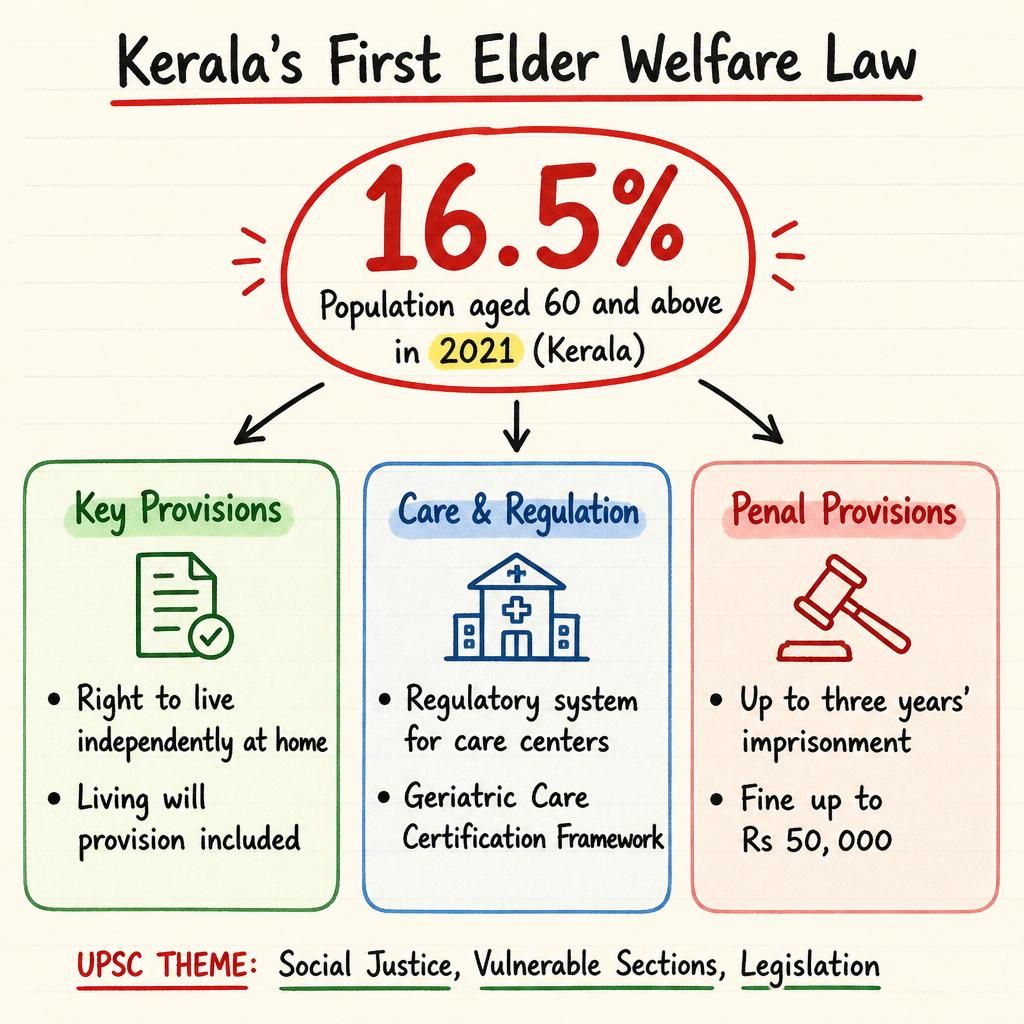
- The Bill recognizes a senior citizen's right to live independently at home and includes provisions for a living will.
- It establishes a regulatory system for care centers and introduces penal provisions for non-compliance and abuse.
Elder Welfare Law.jpg
Detailed Insights:
- The Bill addresses Kerala's rapidly aging population, where individuals aged 60 and above constituted 16.5% in 2021, projected to reach 20.9% by 2031.
- It aims to make elder care rights-based, regulated, and professional, moving beyond basic needs to include social, recreational, and cultural participation.
- The legislation prioritizes vulnerable senior women, including widows, abandoned individuals, and those with disabilities.
- It mandates senior-friendly public spaces, such as ramps, priority seating, and accessible washrooms.
- The Bill establishes the Keralam Geriatric Care Certification Framework for caregiver training, background verification, and mandatory police clearance.
- Penalties for offenses like illegal possession of property, abuse, or abandonment can lead to up to three years’ imprisonment and a fine of up to Rs 50,000.
- This state legislation complements the central Maintenance and Welfare of Parents and Senior Citizens Act, 2007, which makes it a legal obligation for children to maintain parents and provides for old-age homes.
Key Concepts Involved:
- Living Will: A legal document allowing an individual to state their preferences for end-of-life medical treatment.
- Demographic Transition: The shift in a population from high birth and death rates to low birth and death rates, often leading to an aging population.
- Cognisable Offence: An offense for which a police officer can arrest an accused person without a warrant.

SuperKalam is your personal mentor for UPSC preparation, guiding you at every step of the exam journey.
Download the App


STUDY RESOURCES
CONTACT US
ⓒ Snapstack Technologies Private Limited