GS 3: Science & TechnologyGS 2: International RelationsGS 3: EconomyPrelimsGS 3: Indian Economy, Planning, Mobilization of Resources, Growth, Development and Employment
CBDT issues crypto asset reporting note aligned with OECD framework, Pg15
CBDT unveils 198-page crypto-asset reporting guidance, aligning with OECD framework to boost global tax transparency and combat evasion from 2025.
Practice MCQs
782 Students attempted
Key Highlights:
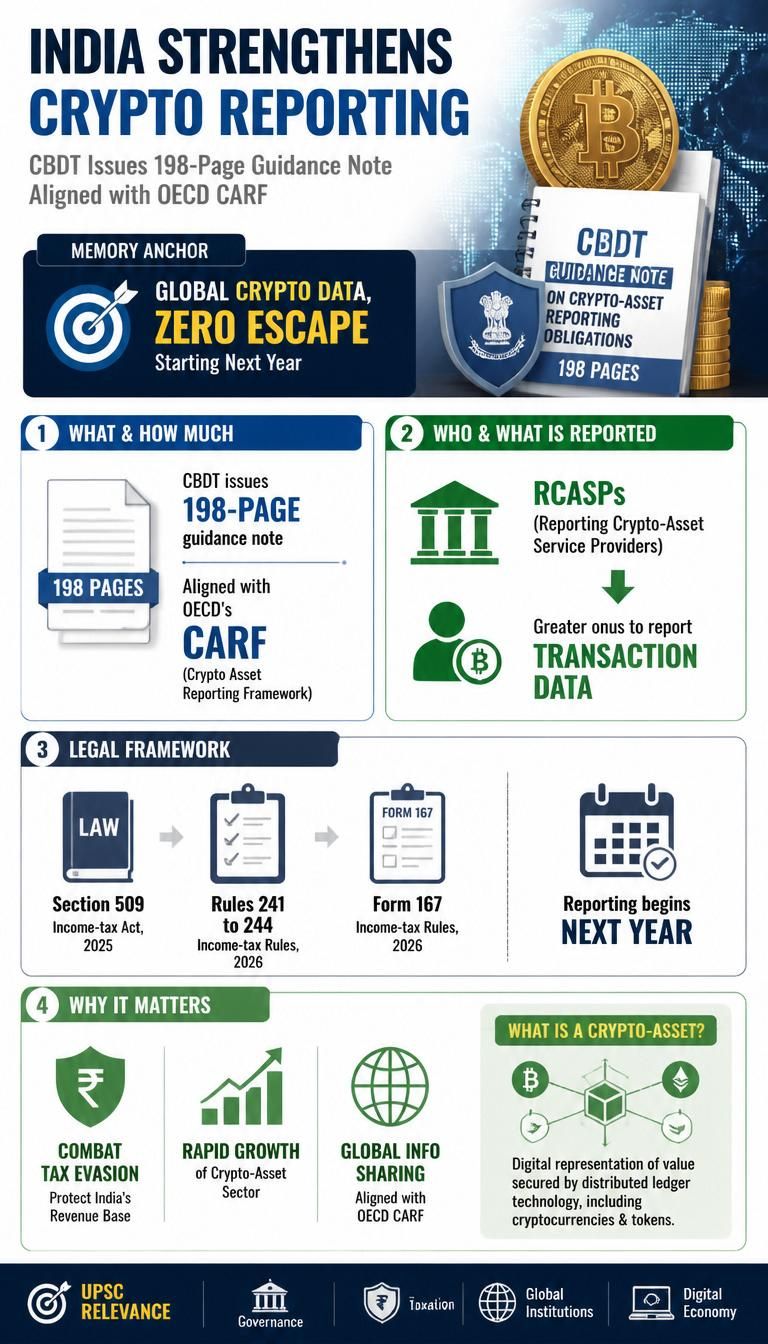
- The Central Board of Direct Taxes (CBDT) has issued a 198-page guidance note on crypto-asset reporting obligations.
- This initiative aligns with the Crypto Asset Reporting Framework (CARF) developed by the Organisation for Economic Co-operation and Development (OECD).
- The guidance aims to facilitate global sharing of information on crypto transactions, starting from next year.
- It places a greater onus on Reporting Crypto-Asset Service Providers (RCASPs) to provide transactional data.
- The note clarifies reporting obligations under Section 509 of the Income-tax Act, 2025, and Rules 241 to 244 and Form 167 of the Income-tax Rules, 2026.
Crypto.jpg
Detailed Insights:
- The guidance note is a strategic move to combat tax evasion and safeguard India's revenue base amidst the rapid growth of the crypto-asset sector.
- The CARF broadly defines "Crypto-Assets" as digital representations of value secured by distributed ledger technology, including cryptocurrencies and tokens.
- RCASPs are mandated to identify their users and report specific transactions to ensure annualised reporting of tax-relevant information.
- Information gathered by tax authorities will be automatically exchanged with other jurisdictions based on established international agreements.
- While the note does not introduce new filing requirements for taxpayers, it significantly increases the importance of accurate record-keeping for crypto transactions.
- Taxpayers are advised to maintain proper records of purchases, sales, transfers, and wallet movements, ensuring consistency with their income-tax returns.
Key Concepts Involved:
- Central Board of Direct Taxes (CBDT): The apex policy-making body for direct taxes in India, functioning under the Ministry of Finance.
- Crypto Asset Reporting Framework (CARF): An international standard developed by the OECD for the automatic exchange of information on crypto-asset transactions between tax authorities.
- Organisation for Economic Co-operation and Development (OECD): An intergovernmental economic organization of 38 member countries, founded to stimulate economic progress and world trade.
- Reporting Crypto-Asset Service Providers (RCASPs): Entities such as crypto exchanges and other service providers responsible for collecting and reporting information on crypto-asset transactions.

SuperKalam is your personal mentor for UPSC preparation, guiding you at every step of the exam journey.
Download the App


STUDY RESOURCES
CONTACT US
ⓒ Snapstack Technologies Private Limited