GS 2: International RelationsGS 1: Art & CulturePrelimsGS 2: Important International Institutions, Agencies and Fora
UNESCO adds West Bank site, Lebanese castles to Heritage List, Pg2
UNESCO designates West Bank's Sebastia and Lebanese castles as World Heritage, citing West Asia conflicts, despite Israel's strong objections.
Practice MCQs
767 Students attempted
Key Highlights:
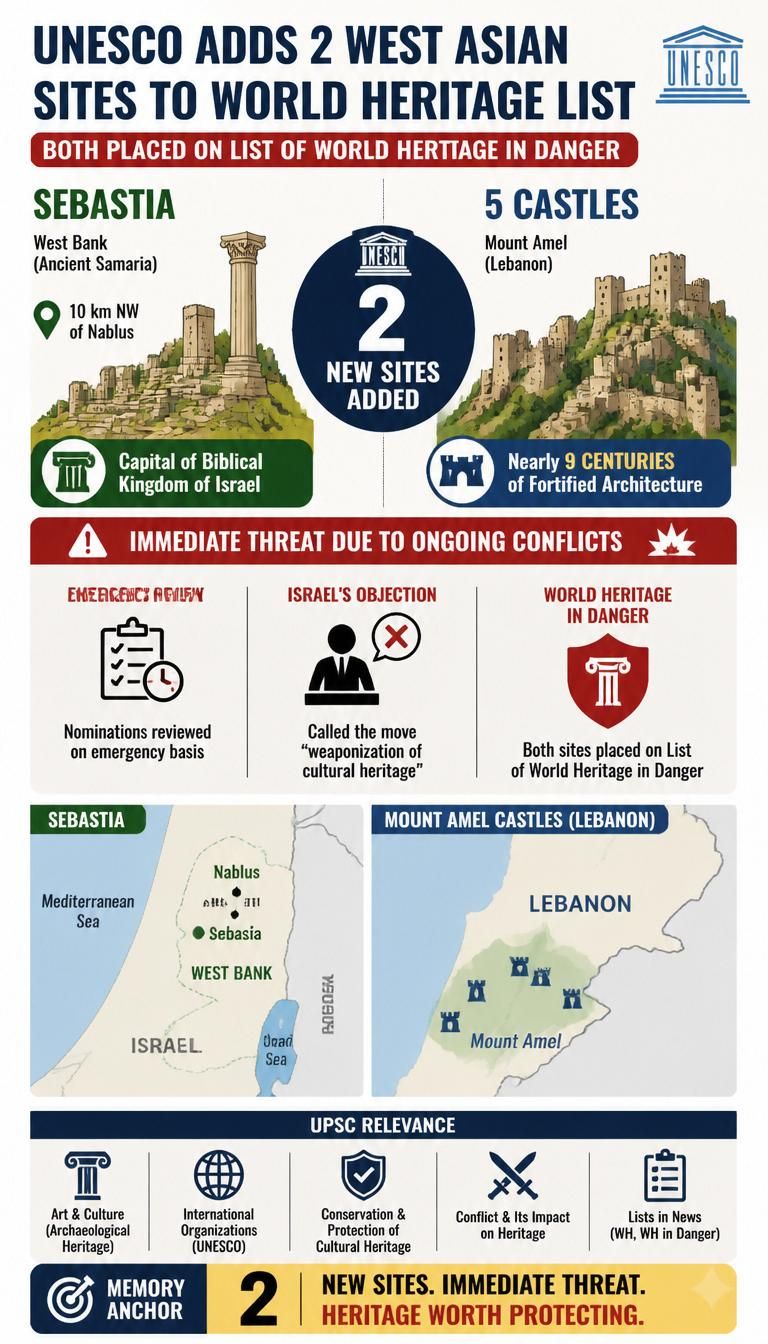
- UNESCO has added the archaeological site of Sebastia in the West Bank and five castles in Lebanon's Mount Amel region to its World Heritage List.
- Both sites were also immediately placed on the List of World Heritage in Danger due to ongoing conflicts in West Asia.
- The decision was made at a UNESCO committee meeting in South Korea, despite objections from Israel.
- Sebastia is historically identified as ancient Samaria, the capital of the biblical Kingdom of Israel.
UNESCO.jpg
Detailed Insights:
- Israel's foreign ministry had urged the UNESCO committee to reject the nominations, labeling the move as a "weaponization of cultural heritage."
- The nominations were reviewed on an emergency basis, acknowledging the immediate threats posed by regional instability.
- Sebastia is a hilltop town located approximately 10 kilometers northwest of Nablus in the Israeli-occupied West Bank.
- The five castles in Lebanon's Mount Amel area are recognized for their layered architectural heritage, reflecting nearly nine centuries of fortified architecture.
- Their inclusion on the List of World Heritage in Danger underscores the international community's commitment to their protection amid threats and damage from conflict.
Key Concepts Involved:
- UNESCO World Heritage List: A list of sites recognized for their outstanding universal value to humanity, promoting their conservation for future generations.
- List of World Heritage in Danger: A sub-list of World Heritage Sites facing serious threats from various factors like armed conflict, natural disasters, or pollution, requiring major conservation efforts.
- West Bank: A landlocked territory in Western Asia, forming a significant portion of the Palestinian territories, with profound historical and religious significance.

SuperKalam is your personal mentor for UPSC preparation, guiding you at every step of the exam journey.
Download the App


STUDY RESOURCES
CONTACT US
ⓒ Snapstack Technologies Private Limited